Theodore Roosevelt National Park ended up being one of the most memorable stops on our Dakotas road trip.
Unlike some national parks that feel crowded and highly developed, Theodore Roosevelt National Park is still wide open and a little wild. Quiet roads wind through eroded badlands, prairie grasslands, and river valleys where wildlife often outnumbers people.
The park thrilled us not because of one famous landmark, but because of the atmosphere: bison grazing near the road, panoramic overlooks with almost no crowds, wild horses roaming the hills, and a landscape that balances rugged terrain with quiet prairie beauty.
We visited both the South Unit near Medora and the quieter North Unit as part of a larger Dakotas road trip that included Badlands National Park, Devils Tower National Monument, Custer State Park, and Mount Rushmore National Memorial.
If you’re planning a similar route, Theodore Roosevelt National Park fits naturally into a broader western Dakotas itinerary.
Affiliate Disclosure: This guide may contain affiliate links. If you make a purchase through one of these links, we may earn a small commission at no additional cost to you. We only recommend companies and products we use or genuinely believe add value to your trip planning.
What Makes Theodore Roosevelt National Park Unique
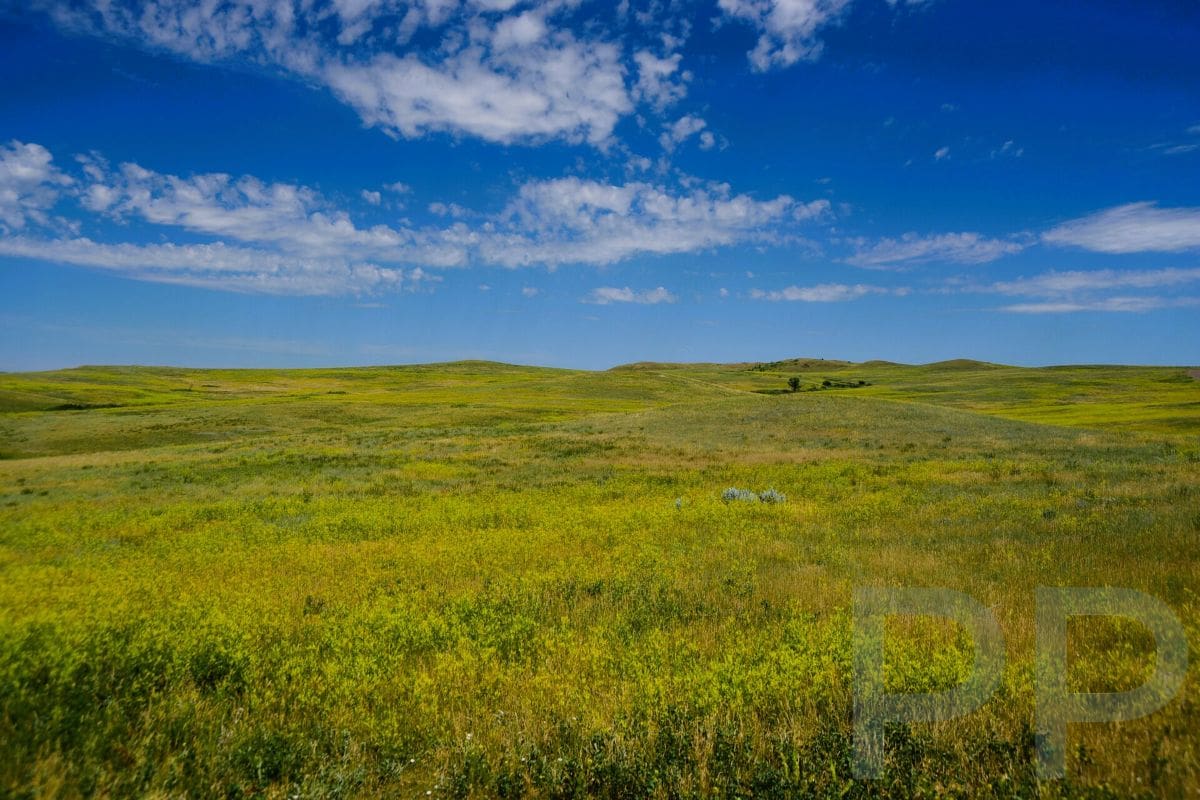
Compared to nearby Badlands National Park, Theodore Roosevelt National Park is softer, greener, and more connected to prairie and wildlife.
Here, rolling prairie grasslands blend into eroded badlands formations, creating a landscape that is far more alive than many visitors expect. The winding Little Missouri River cuts through portions of the park, supporting wildlife and adding contrast to the colorful terrain.
Wildlife, prairie, and open space shape the park just as much as the badlands themselves.
Understanding the Park Layout
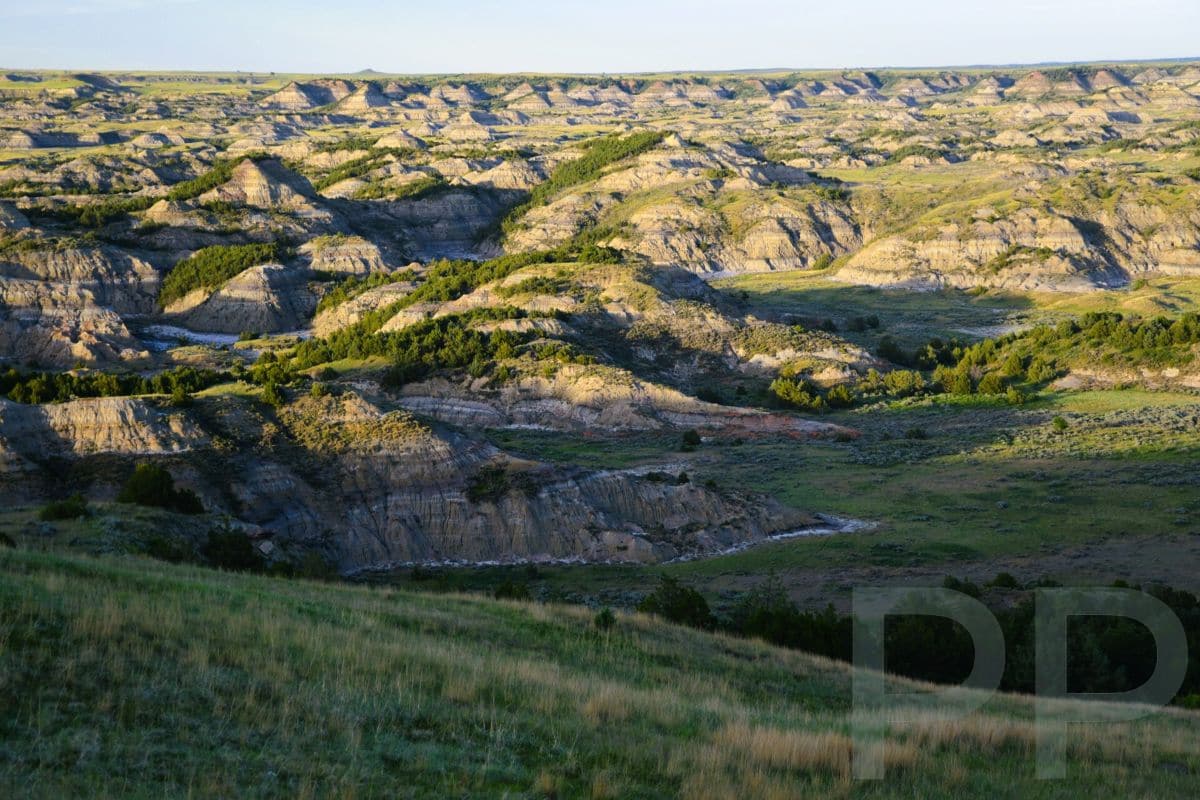
The park is divided into two main sections:
- South Unit near Medora
- North Unit near Watford City
The two units are separated by roughly 70 miles and about 1 hour 15 minutes of driving. There’s no direct road connecting them through the park itself.
Many articles suggest visiting the North Unit first, but in reality, the best order depends entirely on your route, lodging, timing, and energy level.
We visited the South Unit first because we were driving north from Badlands National Park through Sturgis toward Medora. That route made perfect sense logistically and allowed us to enjoy the South Unit in beautiful evening light.
The next morning, we got up early and drove to the North Unit before continuing west toward Devils Tower National Monument.
That pacing worked well for us and was far more relaxed than trying to fit both units into one very long day.
How Much Time Do You Need?
Half Day or Evening Visit
If you only have limited time, focus on the South Unit.
You can comfortably experience:
- the South Unit Scenic Drive
- Painted Canyon Overlook
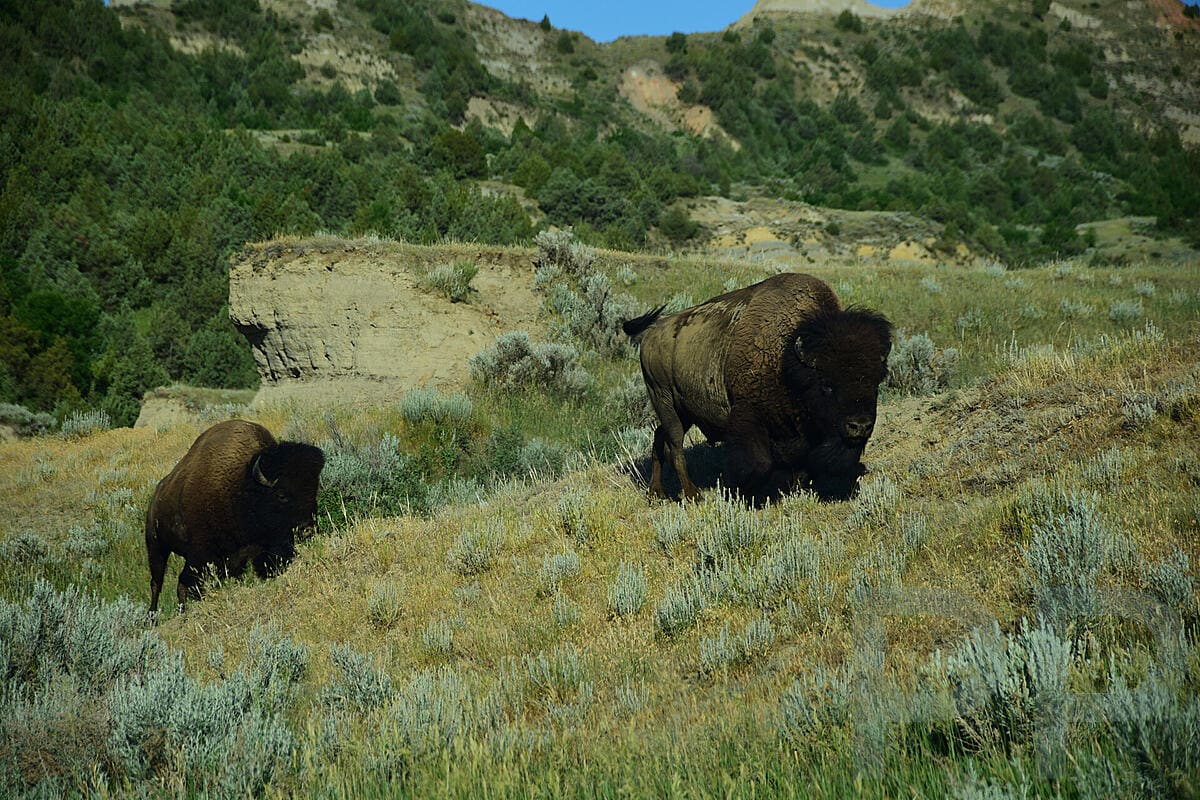
- wildlife viewing
- Buck Hill
- Wind Canyon Trail
- sunset viewpoints near Medora
This is the easiest and most accessible way to experience Theodore Roosevelt National Park.
One Full Day
If you have a full day, consider adding the North Unit.
The extra driving is significant, but so is the payoff. The North Unit is quieter, more rugged, and noticeably more isolated than the South Unit.
We debated whether the additional drive would be worth it ourselves, and in the end we were very glad we made the trip north, especially for the Caprock Coulee Loop trail and Oxbow Overlook.
Two-Part Visit
This is the approach we’d probably recommend most often.
- South Unit on arrival day
- Overnight in Medora
- North Unit the following morning
This pacing allows:
- better light
- cooler hiking temperatures
- less driving fatigue
- more flexibility during hot weather
When we arrived in Medora in June, temperatures were already above 90 degrees by mid-morning. The exposed badlands terrain offers very little shade, and the heat significantly affected how much hiking we wanted to do during the middle of the day.
We ended up slowing down, spending part of the afternoon indoors, and returning to the park later once temperatures and lighting improved.
That experience is one reason we’d strongly consider shoulder season for a return visit.
Exploring the South Unit
The South Unit is the park’s most visited area and the section most travelers experience first.
Much of the experience here revolves around the scenic drive. The road gradually moves deeper into the badlands, with wildlife pullouts, short trails, and overlooks unfolding naturally along the route.
Painted Canyon Overlook
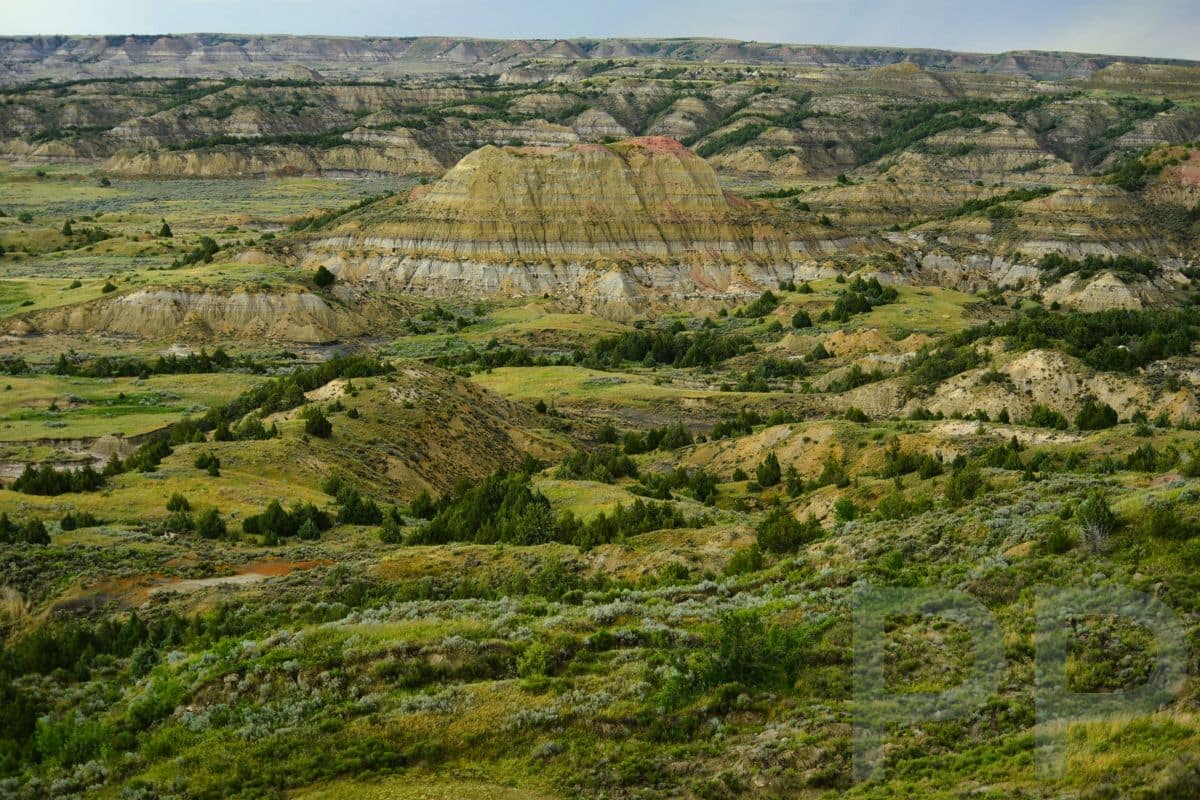
Before even reaching Medora, many travelers stop at Painted Canyon Overlook just off I-94.
- Expansive eroded badlands views
- Easy access directly from the interstate
- Excellent introduction to the park
For many visitors, this becomes their first glimpse of Theodore Roosevelt National Park.
Entering the South Unit from Medora
The South Unit entrance sits directly beside Medora, making it easy to return to town for breaks during hotter parts of the day.
We stayed at Badlands Motel, which worked especially well for this kind of flexible pacing.
South Unit Scenic Drive
The scenic drive is the backbone of most South Unit visits.
- Approximately 36 miles roundtrip
- Frequent overlooks and pullouts
- Excellent wildlife viewing
- Best explored in softer evening light
We saw multiple bison near the road during our visit, and the changing light on the badlands made even simple pullouts memorable.
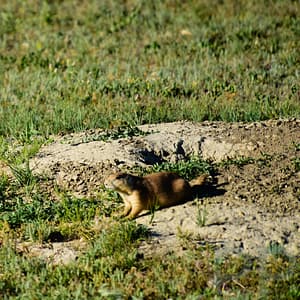
Prairie Dog Town
One of the South Unit’s liveliest roadside stops.
- Constant prairie dog activity
- Great for families and photographers
- Easy roadside stop
Prairie dogs dart constantly between burrows here, making this one of the park’s most animated roadside stops.
Wind Canyon Trail
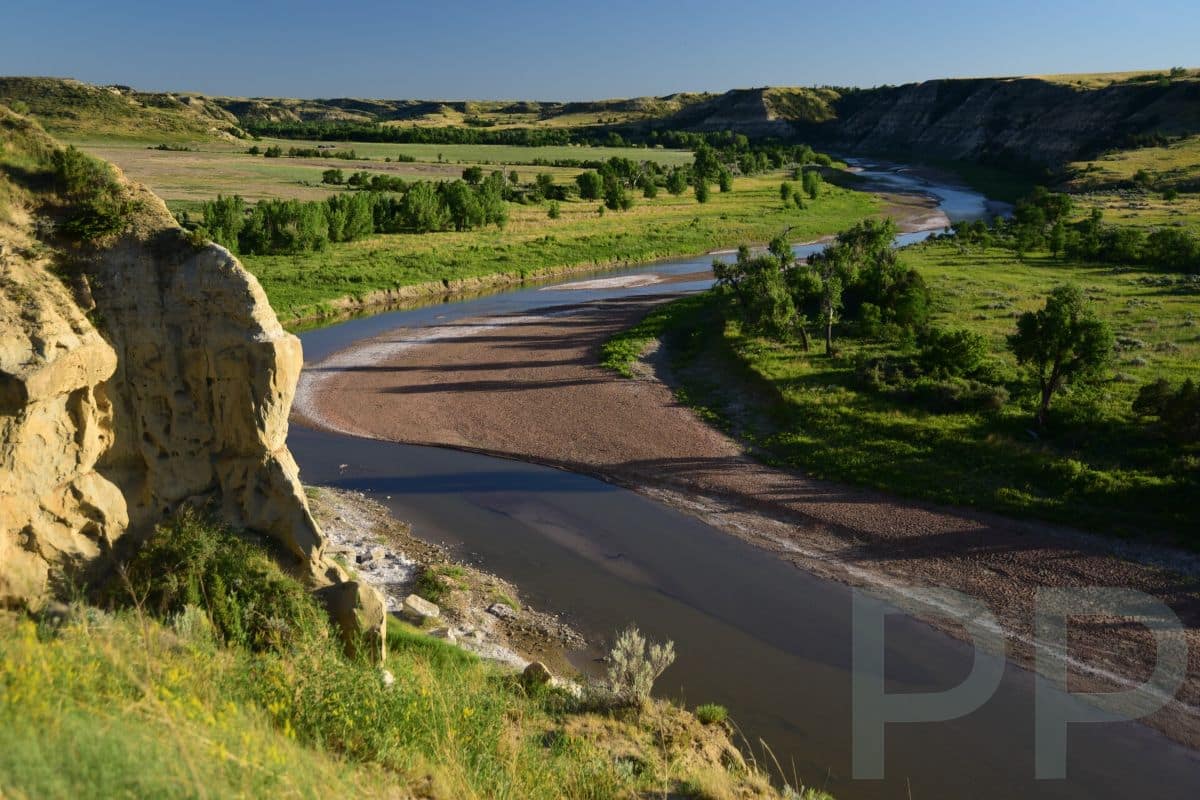
Easy walk overlooking the Little Missouri River.
- Short and mostly flat
- Scenic river views and textured terrain
- Especially attractive in softer light
Compared to some of the harsher badlands scenery, this trail is greener and more connected to the river landscape.
Coal Vein Trail
One of the park’s more unusual short trails.
- Flat interpretive loop
- Landscape shaped by ancient underground coal fires
- Sparse vegetation and altered terrain
It’s a reminder that this landscape is still geologically active in subtle ways.
Ridgeline Trail
A short but rewarding panoramic hike.
- Exposed ridgeline hiking
- Excellent views for relatively little effort
- One of the South Unit’s more popular short trails
This is a great option if you want a quick hike with a strong visual payoff.
Boicourt Overlook
Classic Theodore Roosevelt badlands scenery.
- Quick scenic pullout
- Banded formations and open views
- Especially attractive in late-day light
Buck Hill
Short climb to one of the best viewpoints in the South Unit.
- Wide panoramic views
- Particularly beautiful near sunset
- Easy stop along the scenic drive
Maltese Cross Cabin
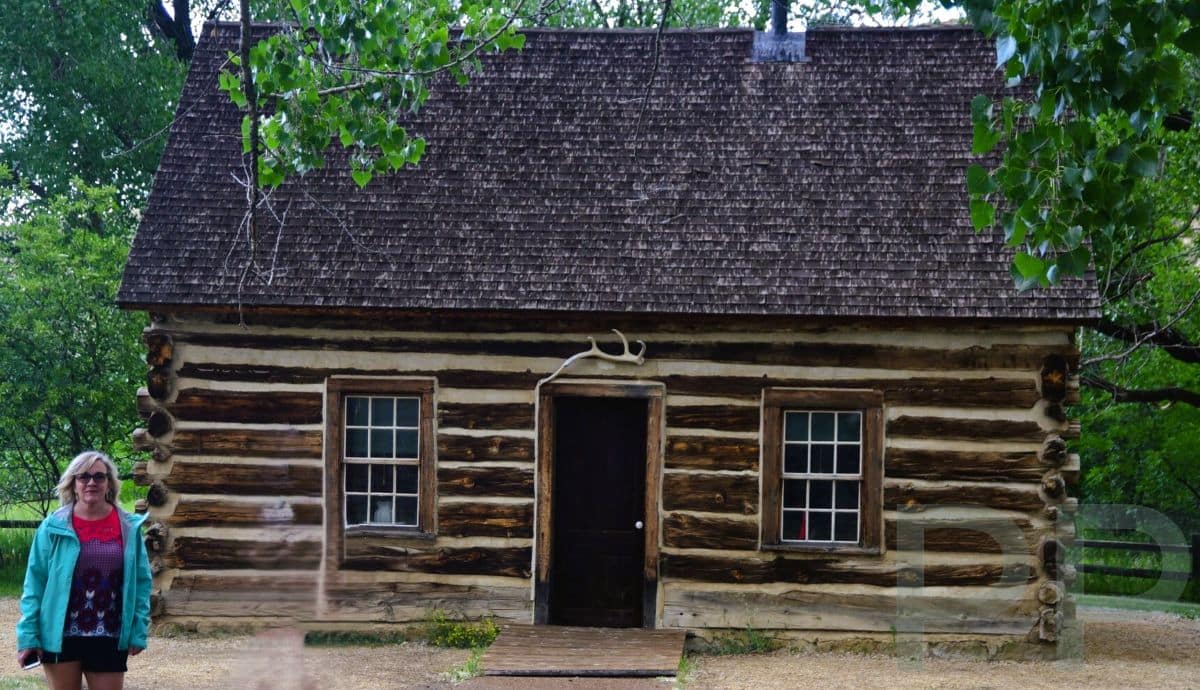
Near the visitor center, the historic Maltese Cross Cabin adds important historical context to the park.
The cabin is associated with Theodore Roosevelt’s ranching years in North Dakota and helps connect the park to the man.
Medora: Theodore Roosevelt’s Gateway Town
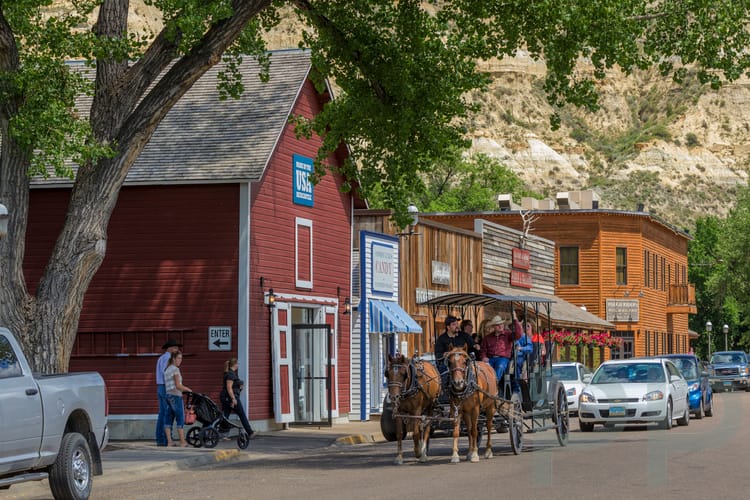
For most visitors, Medora becomes the base for exploring Theodore Roosevelt National Park.
The town leans fully into its Old West atmosphere, and honestly, it works.
Medora is small, walkable, and tourist-friendly, with western storefronts, restaurants, ice cream shops, and easy access to the South Unit entrance.
One of the town’s biggest attractions is the Medora Musical, a long-running outdoor western-themed variety show performed in a large hillside amphitheater overlooking the badlands.
We didn’t attend ourselves, but it remains extremely popular during the summer season and seems especially appealing for families and travelers who enjoy classic Americana-style entertainment.
Even if you skip the show, Medora adds personality and atmosphere to a visit to Theodore Roosevelt National Park.
Exploring the North Unit
The North Unit offers a quieter, more rugged experience than the South Unit.
There are fewer services, fewer people, and a stronger sense of isolation.
For us, this section of the park offered the strongest sense of isolation.
North Unit Scenic Drive
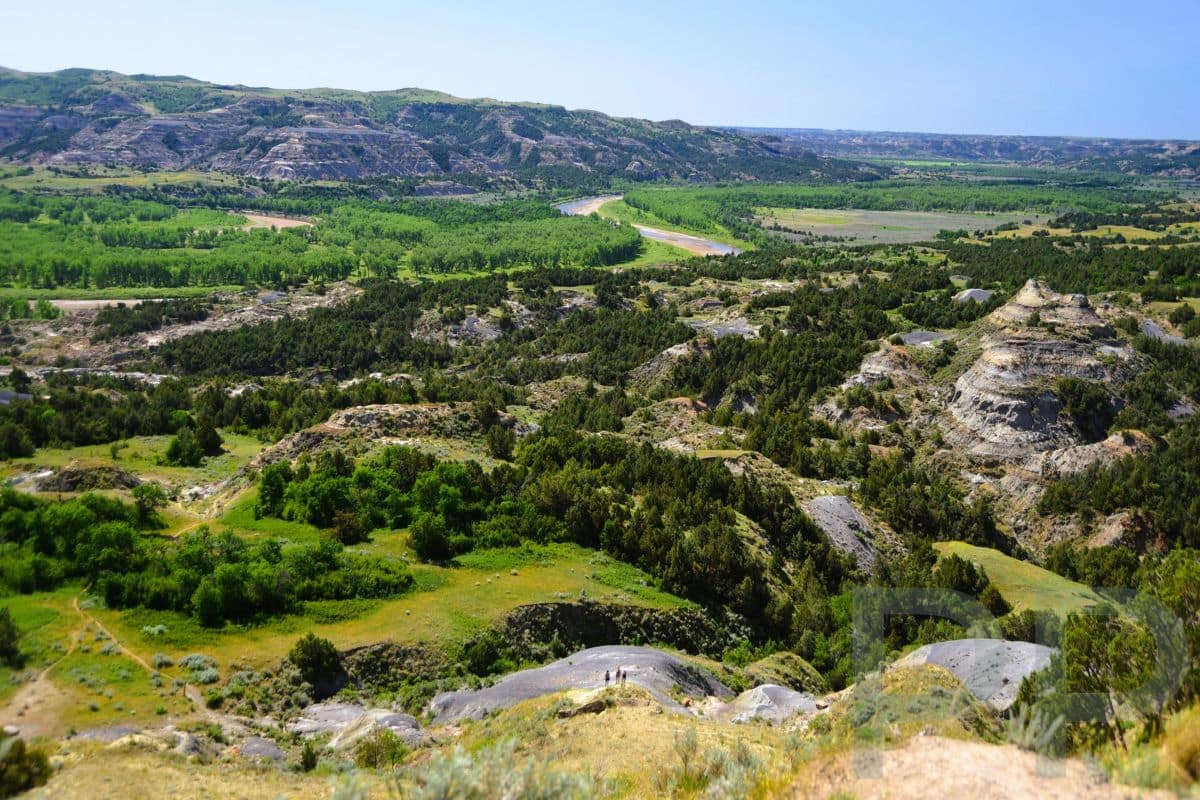
Much of the appeal of the North Unit comes from the drive itself.
- Approximately 28 miles roundtrip
- Sweeping river valley views
- Frequent wildlife sightings
- Far lighter traffic than many western parks
The farther north you drive, the more expansive and isolated the landscape becomes.
Caprock Coulee Loop
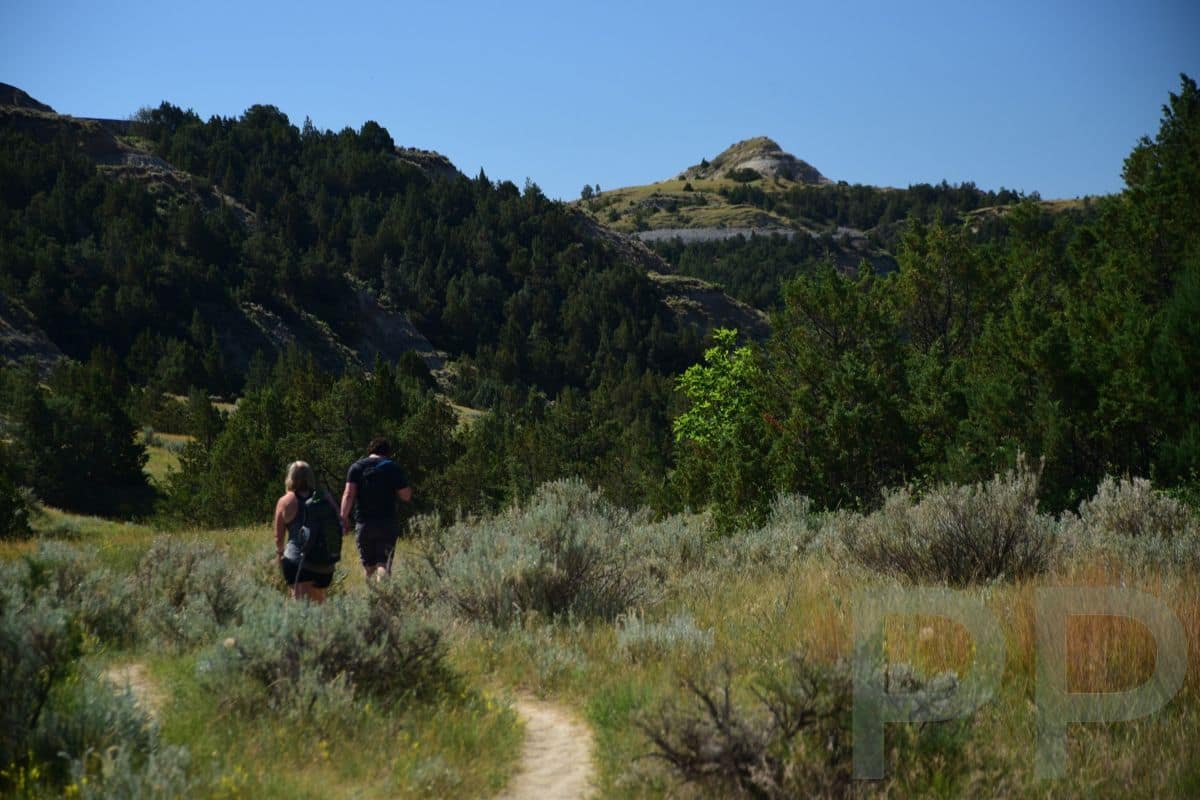
Our favorite hike in the park.
- Roughly 4.5 miles
- Combines prairie, ridgelines, and badlands terrain
- Sweeping views throughout the hike
- More immersive and remote than many South Unit trails
If we could recommend just one hike in Theodore Roosevelt National Park, this would be it.
Note: Compared to the shorter scenic trails in the South Unit, the Caprock Coulee Loop is more like a true half-day hike, especially in warm weather. There’s very little shade, and temperatures can rise quickly later in the day. We were glad we tackled it early in the morning before the heat became too intense.
River Bend Overlook
Big scenery with minimal effort.
- Short walk from parking area
- Dramatic river bend below
- Excellent photography stop
Oxbow Overlook
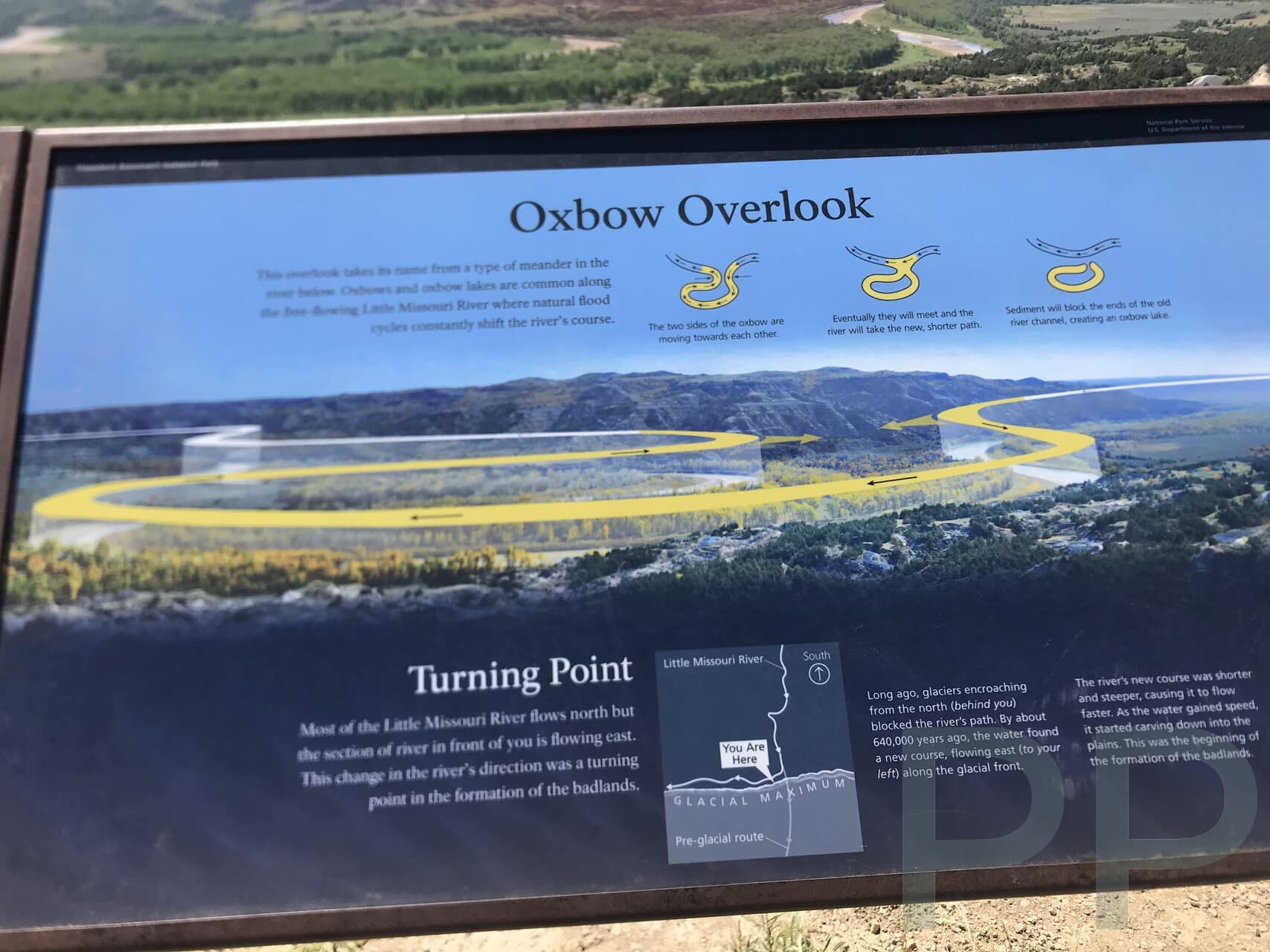
The signature overlook of the North Unit.
- Located near the end of the scenic drive
- Sweeping Little Missouri River views
- One of the park’s best panoramic viewpoints
Open prairie and uninterrupted badlands scenery give the overlook an enormous sense of scale.
Buckhorn Trail
Longer trail for visitors seeking a quieter hiking experience.
- Prairie and badlands scenery
- Less crowded
- More rugged
Theodore Roosevelt’s Ranching Legacy
The park protects more than dramatic scenery. It also preserves the landscape that deeply shaped Theodore Roosevelt himself.
After the deaths of both his wife and mother on the same day in 1884, Roosevelt came to the North Dakota badlands to ranch, hunt, and rebuild his life. He later credited this period with influencing both his conservation philosophy and his appreciation for the American West.
Visitors to the South Unit can stop at the historic Maltese Cross Cabin, while more adventurous travelers can visit the remote Elkhorn Ranch Unit, the site of Roosevelt’s former ranch headquarters and reportedly his favorite place in North Dakota.
Wild Horses & Wildlife
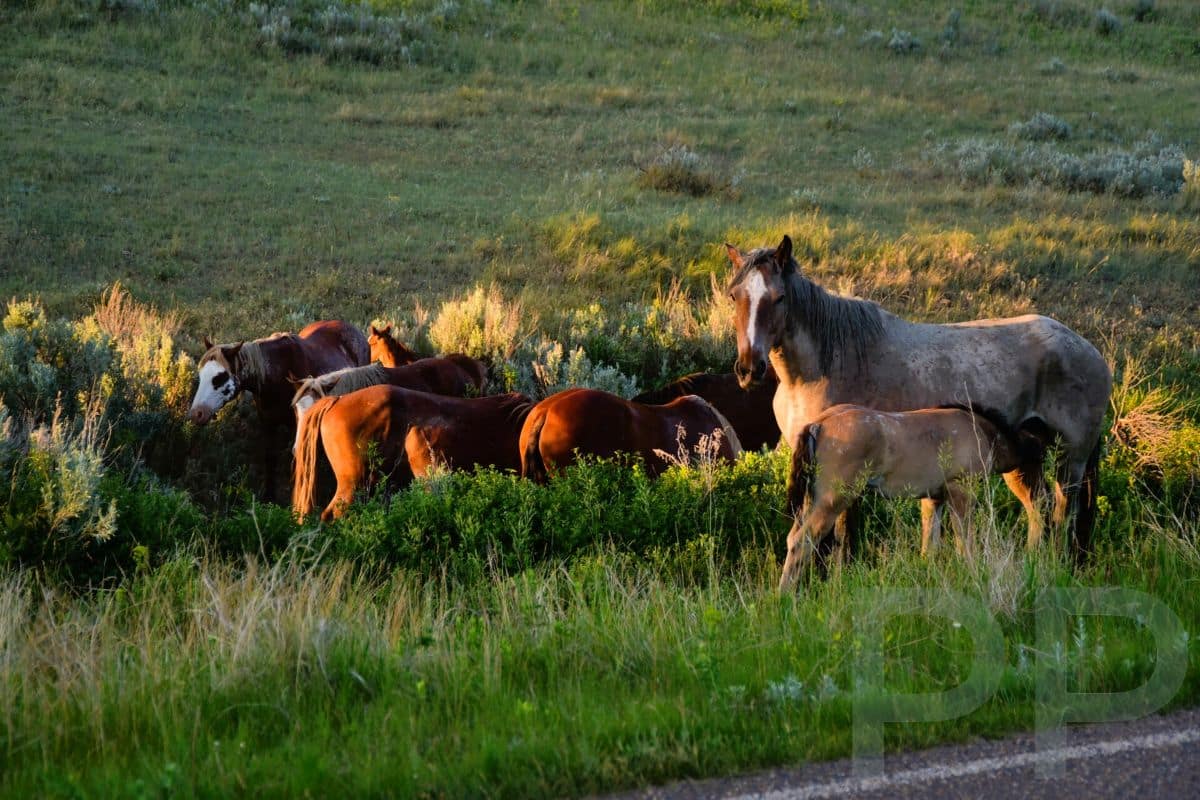
One of the most memorable parts of our visit was seeing large groups of wild horses roaming the South Unit.
We encountered them multiple times during the scenic drive, often standing against the backdrop of the badlands or grazing near the road. It gave the park a distinctly western atmosphere unlike most national parks we’ve visited.
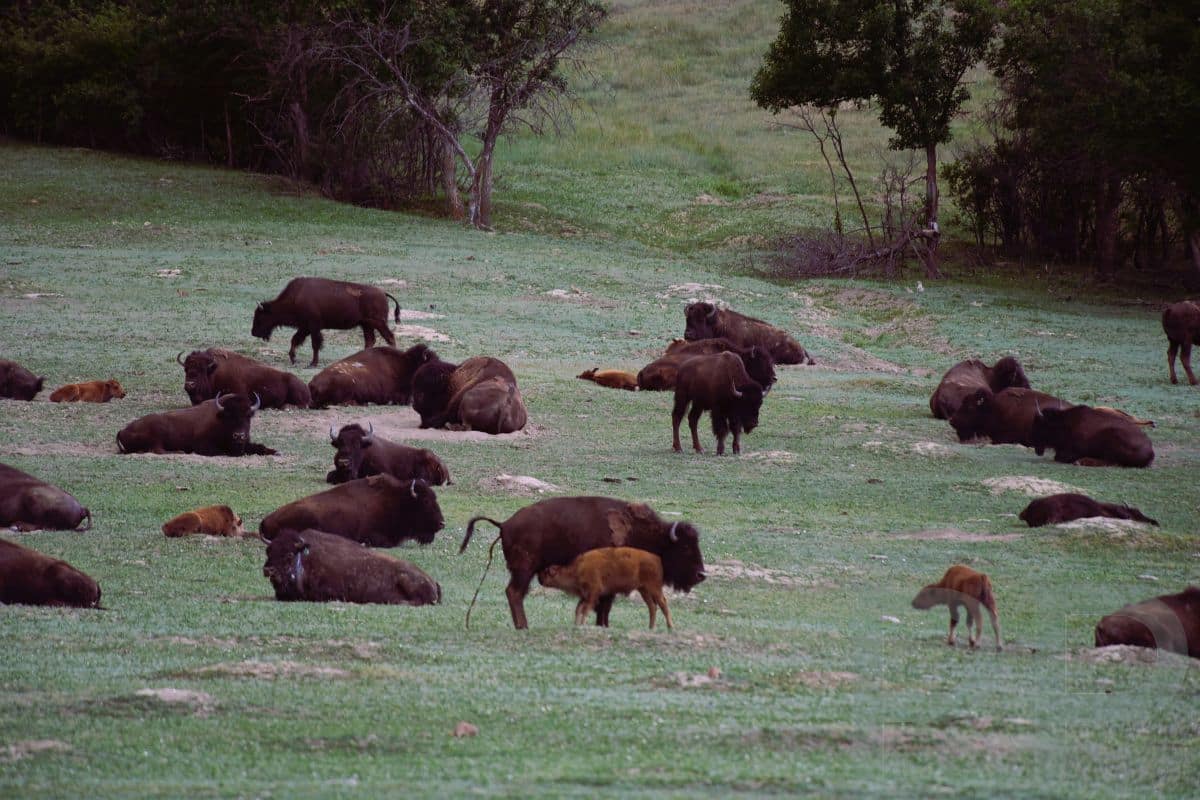
Wildlife viewing overall was excellent during our visit. We also saw:
- bison
- prairie dogs
- deer
Other animals sometimes seen in the park include:
- coyotes
- bighorn sheep
Wildlife activity is usually best:
- early morning
- late afternoon
- near sunset
Geological Features to Look For
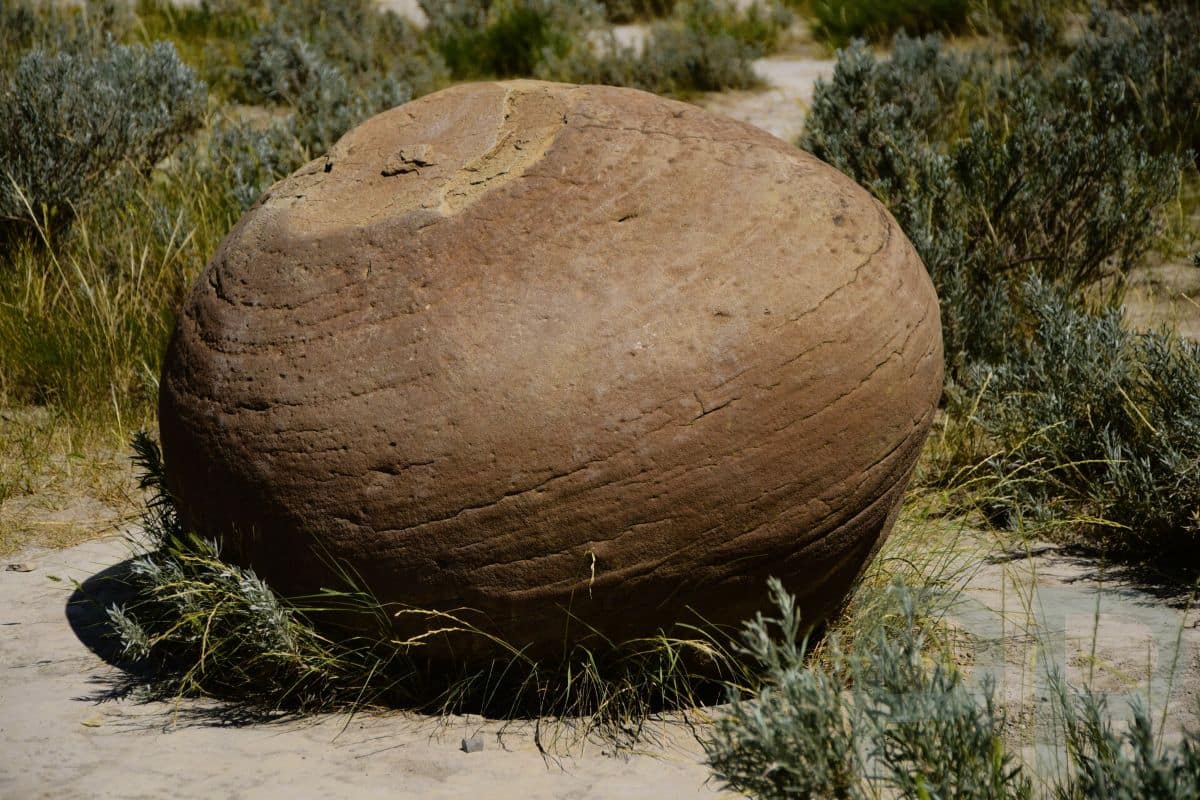
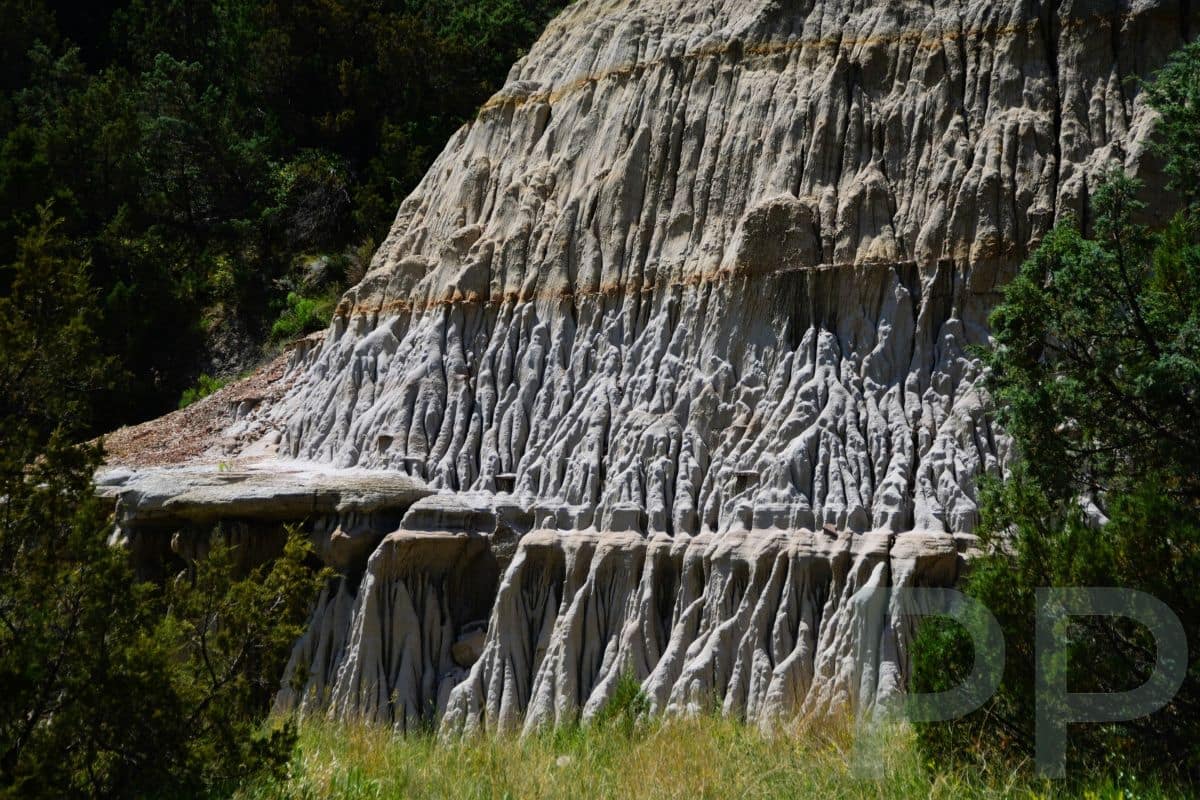
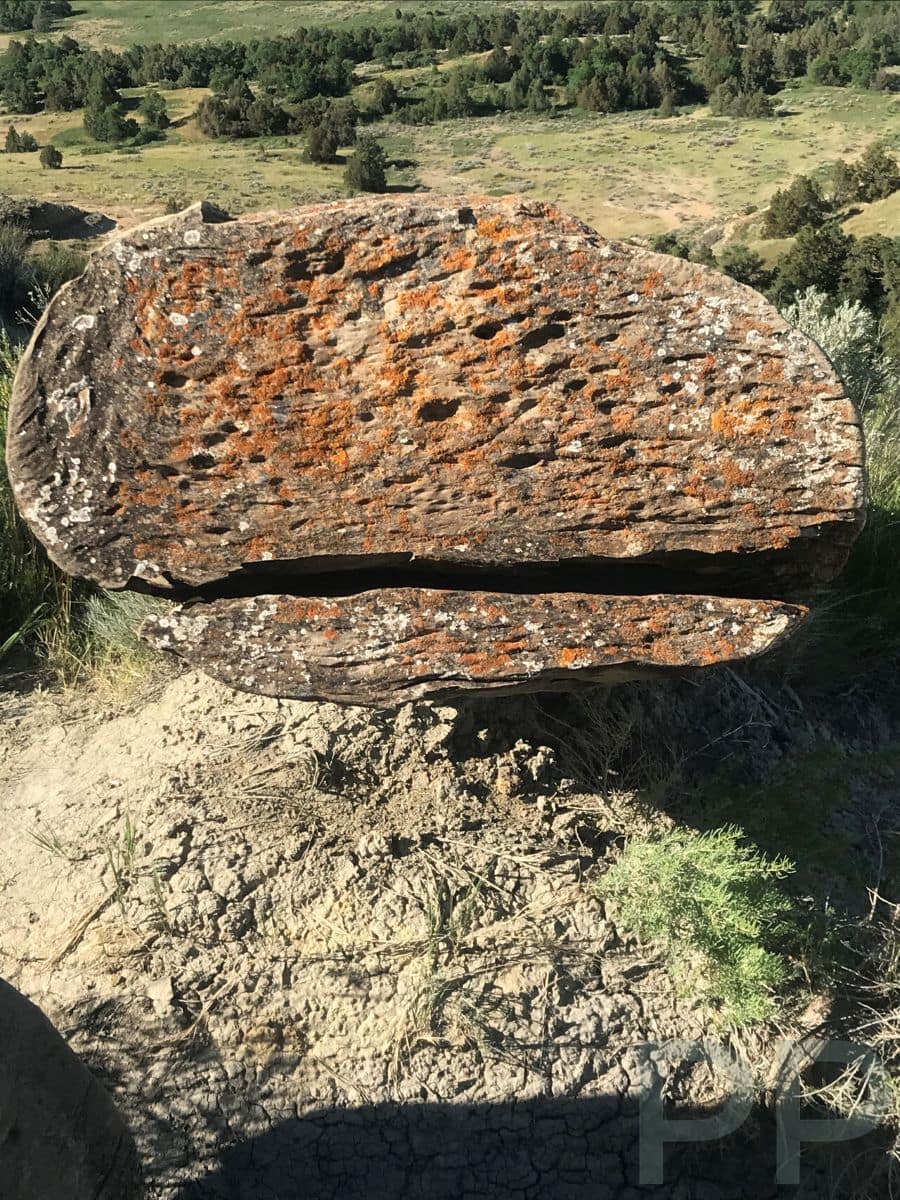
Beyond the striated badlands scenery, Theodore Roosevelt National Park also contains scattered petrified wood, remnants of ancient subtropical forests that once covered this region millions of years ago.
The park’s geology reveals a landscape that has changed dramatically over time:
- ancient forests became petrified
- underground coal seams burned beneath the surface
- erosion exposed colorful layers and strange formations like the Cannonball Concretions
These details add another layer of interest to the park without overwhelming the overall experience.
Stargazing & Night Skies
If you’re staying overnight near Theodore Roosevelt National Park, consider spending some time outside after dark.
Because of the park’s remote location and limited development, Theodore Roosevelt National Park is known for excellent night sky viewing. On clear nights, visitors can often see the Milky Way stretching across the sky, along with meteor showers and occasionally even the northern lights.
The wide-open prairie and lack of crowds make nighttime here feel especially peaceful, particularly after most day visitors have left the park.
Best Time to Visit Theodore Roosevelt National Park
In our opinion, Theodore Roosevelt National Park is best visited during the shoulder seasons, particularly May, early June, September, and early October.
Summer brings the warmest temperatures and longest days, but the exposed badlands terrain can become extremely hot by midday.
Shoulder season often offers:
- cooler hiking temperatures
- fewer crowds
- better wildlife viewing
- softer photography light
Winter visits are possible, but weather conditions can affect roads, trails, and visitor services.
Admission & Passes
Theodore Roosevelt National Park charges a standard national park entrance fee and is also covered by the America the Beautiful annual national parks pass. Your fee covers entrance to both the north and south units. Purchase your pass online in advance, and for more information, visit the national parks’ website.
If you’re visiting multiple parks on a Dakotas or western road trip, the annual pass can quickly pay for itself.
Unlike some heavily visited national parks, Theodore Roosevelt National Park currently does not require timed-entry reservations.
Plan Ahead: Distances, Heat & Lodging
- The North and South Units are about 1 hour 15 minutes apart
- Summer temperatures can become extremely hot by midday
- Bring far more water than you think you’ll need
- Wildlife frequently blocks roads and trails, so give animals plenty of space
- Medora lodging fills quickly in summer, especially on weekends
We strongly recommend booking accommodations early if visiting between June and September.
Where to Stay near Roosevelt National Park
For most visitors, Medora is the most convenient base for exploring Theodore Roosevelt National Park.
The town sits directly beside the South Unit entrance and offers:
- easy access to the scenic drive
- restaurants and basic services
- sunset viewpoints
- attractions like the Medora Musical
We stayed at Badlands Motel during our visit, which worked well for the pacing we wanted. Being close to the park made it easy to return to our room during the hottest part of the afternoon before heading back out later in the evening.
If you plan to visit both units, staying overnight in Medora also makes it much easier to reach the North Unit early the next morning before temperatures rise.
Browse hotels and lodging options near Theodore Roosevelt National Park below (affiliate link).
Pairing Theodore Roosevelt National Park with Other Dakotas Highlights
Many travelers visit Theodore Roosevelt National Park as part of a larger Dakotas road trip.
Our own route began in Rapid City before continuing to:
- Badlands National Park
- Sturgis
- Theodore Roosevelt National Park
- Devils Tower National Monument
- Custer State Park
- Mount Rushmore National Memorial
Theodore Roosevelt National Park works especially well between the Black Hills region and eastern Wyoming because the driving distances are manageable and the scenery changes dramatically from stop to stop.
For our complete route, planning tips, and day-by-day itinerary: One Week in the Dakotas: 3 National Parks, a National Monument, an Epic State Park & Historic Towns
Final Thoughts
Theodore Roosevelt National Park combines wildlife, prairie, badlands, history, and more hiking variety than many visitors expect.
This is not a park built around one famous landmark or one bucket-list trail. Instead, it’s a place that gradually becomes more rewarding through scenic drives, quiet overlooks, wildlife encounters, and the quiet atmosphere of the North Dakota badlands.
For travelers who enjoy thoughtful road trips, textured landscapes, and a little more room to breathe, Theodore Roosevelt National Park is an easy place to appreciate and an even easier place to remember.