Spain and Portugal had been sitting at the top of our bucket list for years. We pictured wandering cobbled streets that feel like movie sets, standing in awe of castles and cathedrals, soaking up the everyday energy of plazas buzzing with life, and savoring local delicacies. When we finally pulled the trigger on this trip, our expectations were sky-high — and the best part? Nearly every city, meal, and experience didn’t just deliver, it blew past the hype.
In this guide, we’re sharing our 3-week Spain and Portugal itinerary, along with ideas to help you adjust it to your own schedule and travel style. With the right planning, this isn’t just another getaway — it’s the kind of trip you’ll remember for a lifetime.
Disclosure: This post may contain affiliate links. If you book through them, we may earn a small commission—at no extra cost to you. We only recommend places and services we’ve used ourselves or genuinely believe add value to a trip.
How Much Time Do You Need?
If you have two weeks or less, it’s best to focus on just one country and save the other for a future trip. Two weeks simply isn’t enough to cover all of Spain’s diverse regions, let alone Portugal. For example, we didn’t make it to the Basque region in the north — it’s still on our list for next time.
Two weeks is enough time to see Portugal more fully, but even then you’ll want to be selective. On our trip, we devoted a week to Portugal and concentrated on the central and southern regions rather than venturing north of Lisbon.
Best Time of Year to Visit Spain and Portugal
For both countries, the shoulder seasons of spring and fall are ideal.
We traveled at the end of April through most of May and found spring to be an excellent time to visit. The days were long enough for sightseeing, and evenings were pleasant for paseos (evening strolls with the locals) and outdoor dining. Visiting before the peak summer holidays also meant lighter crowds.
Fall, particularly after August, offers similar advantages — comfortable weather, fewer tourists, and plenty of daylight for exploring. See our When to Go tips page for reasons to travel in shoulder seasons.
Spain and Portugal Itinerary Highlights
To give you an idea of how to prioritize your time, we’ve provided an overview via our Star Rankings. We begin with cities in Spain, then Portugal. We also include Tangier, Morocco, since this is an option for a visit from southern Spain, even as a day trip.
After our star ranking, we provide a short description and rationale for time to spend in each city. The Spain and Portugal travel itinerary is summarized in a spreadsheet and map as well.
Spain
Spain Rankings (with Detour to Gibraltar)

Barcelona ★★★
No trip to Spain feels complete without time in Barcelona. We recommend giving the city a little more time — at least 3–4 days — to truly soak in its unique character.
Barcelona dazzles with Antoni Gaudí’s whimsical architecture, crowned by the jaw-dropping Sagrada Família cathedral. The city hums with energy, from its sun-drenched beaches to the bustling Las Ramblas promenade. And for a change of pace, a quick train ride whisks you to the Montserrat Monastery, perched dramatically in the mountains just an hour north.
Barcelona is a natural starting point for this itinerary, and staying central makes it easier to explore on foot and by transit. Here are current hotel options in the city:
Madrid ★★☆
Madrid, Spain’s elegant capital, deserves at least 2–3 days on your itinerary. Where Barcelona feels playful, Madrid brims with sophistication.
Here, world-class museums like the Prado and the Reina Sofía invite you to linger among masterpieces, while chic shopping streets and lively tapas bars remind you that Madrid is a city that truly comes alive at night.

Toledo ★★
Just an hour south of Madrid lies Toledo, a walled medieval gem that once served as the seat of Spanish royalty. With its winding cobbled streets, towering Gothic cathedral, and echoes of Christian, Muslim, and Jewish heritage interwoven in its history, Toledo is as atmospheric as it gets.
While it can be done as a day trip, staying overnight lets you savor its beauty after the crowds depart and the city glows at dusk.
Granada ★★★
The southern region of Andalusia, steeped in Moorish history and dotted with white-washed villages, is irresistible. We began in Granada, home of the spectacular Alhambra complex. Wandering its courtyards and gardens feels like stepping into a fairy tale — but be sure to book tickets for the Nasrid Palaces as soon as you know your visit date.
Ronda ★★☆
From Granada, we continued to Ronda, a dramatic hilltop town split by the breathtaking El Tajo Gorge and home to Spain’s oldest bullfighting ring. With its cliffside views and atmospheric streets, Ronda is one of Andalusia’s most memorable towns.
Outdoor Adventure: Caminito del Rey Hike ★★
Between Granada and Ronda, we laced up our boots for the Caminito del Rey, a thrilling 8-km walkway suspended high above the Gaitanes Gorge. Equal parts scenic and exhilarating, this hike is a highlight of southern Spain and a welcome break from city sightseeing.
Gibraltar ★★
Ronda also makes the perfect jumping-off point for a fun detour: the Rock of Gibraltar. This towering limestone monolith, a slice of Britain on the Mediterranean, offers sweeping views, fascinating WWII tunnels, and the antics of the famous Barbary macaques.
Tangier, Morocco ★☆
From Gibraltar, we drove to Tarifa and crossed the Strait of Gibraltar on a ferry to spend a day in Tangier, Morocco. While logistically demanding, Tangier rewards you with a whirlwind introduction to North African culture—labyrinthine medinas, spice-filled markets, and a chance to step onto another continent. Still, we’d rank it lower than Andalusia’s highlights unless you’re eager for that extra adventure.
Arcos de la Frontera ★★

Back in Spain, the white hill town of Arcos de la Frontera awaited us. Perched high on a cliff with sweeping views of the Andalusian countryside, Arcos may fly under the radar, but its charm is enchanting. Wandering its quiet, winding lanes feels like discovering a secret corner of Spain.
Seville ★★★
Our journey through Andalusia ended in Seville, a city that pulses with passion and history. Here, Moorish palaces, grand plazas, and orange-scented courtyards set the scene for unforgettable evenings. Don’t miss a flamenco performance—the raw energy of the dance and music is the heartbeat of Andalusia itself.
Seville works well as a base for exploring much of Andalusia, with easy access to day trips and major sights. These are current lodging options in the city:
Cáceres – A Hidden Gem ★★
On our return journey to Madrid, we stumbled upon Cáceres, a UNESCO World Heritage Site that feels like a step back in time (see our guide). Encircled by medieval walls and crowned with Roman and Moorish influences, Cáceres is both stunning and refreshingly uncrowded. It’s the kind of place where slowing down feels natural—linger over a glass of wine in a stone-paved square, and you’ll be glad you stayed more than just a few hours.
Portugal
The Algarve ★★
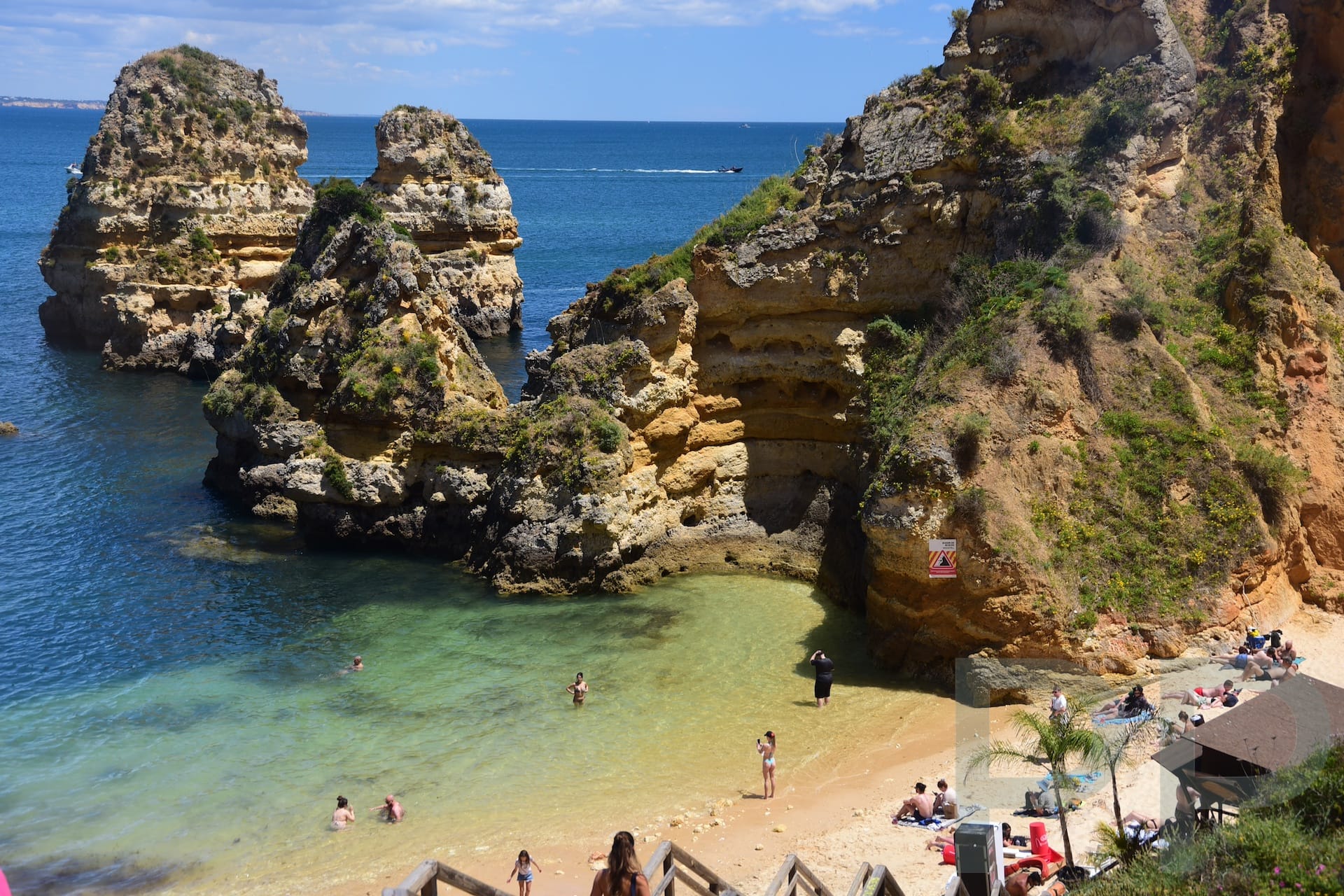
Our Portuguese adventure began in the Algarve, where the southern coast dazzles with golden beaches, towering cliffs, and dramatic sea caves carved by centuries of waves. After two whirlwind weeks in Spain, the Algarve was the perfect place to slow down and soak in the scenery.
But relaxation here doesn’t mean idleness—take a boat tour through hidden grottoes like the Benagil Caves, hike cliffside trails with sweeping ocean views, or stand at the windswept edge of Sagres, the southwestern tip of continental Europe, and feel like you’re at the end of the world. We based in the charming village of Salema, a laid-back fishing village that feels like a true escape.
Évora ★★
From the coast, we drove north to Évora, a UNESCO World Heritage city steeped in history. Its Roman temple, medieval aqueduct, and cobbled squares make it a living museum, while its bakeries tempt you with some of Portugal’s best pastries. Climbing the cathedral rooftop rewards you with panoramic views over the terracotta rooftops and rolling Alentejo countryside. Though we only had half a day here, Évora is well worth an overnight stay to fully enjoy its atmosphere at a slower pace.
Lisbon ★★★

Lisbon is a city that could easily fill three or four days with culture, charm, and sweeping views. The Alfama district, once a humble fishing village, is now a maze of narrow alleys and hidden courtyards, alive with the sound of traditional Fado music in the evenings. Perched above it all, the São Jorge Castle offers a commanding view of the red-roofed city tumbling down to the Tagus River.
In the heart of Lisbon, the Baixa and Chiado neighborhoods buzz with energy—grand plazas, elegant shopping streets, and lively cafés. Bairro Alto, set on a hill overlooking the city, is a hub of nightlife, music, and history, where each street corner seems to tell its own story.
Lisbon makes an excellent base for exploring the city itself as well as nearby destinations like Belém and Sintra. Here are current hotel options in the city:
Belém ★★
Just a short tram ride from the city center, Belém is Lisbon’s treasure trove of monuments and museums. The Jerónimos Monastery, with its soaring Gothic architecture, is nothing short of spectacular (purchase tickets well in advance), and nearby Belém Tower stands as a symbol of Portugal’s seafaring past. And of course, no visit is complete without tasting a warm, custard-filled pastel de nata at Pastéis de Belém—the original bakery where this sweet tradition began. Tip: Arrive early in the day, as both the monastery and the bakery draw big crowds during peak season.

Sintra ★★☆
A fairytale world just 40 minutes from Lisbon, Sintra feels like stepping into another realm. Once a summer retreat for Portuguese royalty, it’s now a showcase of fantastical palaces, lush gardens, and dramatic ruins. The colorful Pena Palace, perched high on a hill, looks like it was plucked straight from a storybook. The Quinta da Regaleira enchants visitors with its whimsical gardens and mysterious initiation well, while the Moorish Castle offers rugged stone walls and sweeping vistas across the countryside.
Easily reached by train from the Rossio Station in Lisbon, Sintra makes for a full, unforgettable day trip.
Booking Popular Attractions (So You Don’t Miss Out)
For several of the most popular sights on this itinerary—Park Güell in Barcelona, the Royal Palace in Madrid, and the Seville Cathedral —we found that the official tickets were sold out at the times we wanted. Rather than reshuffle the entire day, we booked timed-entry tickets and small-group tours through Get Your Guide. It cost a bit more than booking direct, but it let us keep our schedule, skip long ticket lines, and actually get inside the places we’d flown across the ocean to see.
Getting Around Spain and Portugal
As is usually the case in urban centers, the major cities on the Iberian Peninsula are not conducive to driving. For the first part of our trip, Barcelona and Madrid, we used public transportation, the occasional ride share or taxi, and high-speed rail between cities.
For booking train tickets in Spain, we found it helpful to use platforms like Klook, which can simplify the process of securing seats on popular routes — especially during busy travel seasons.
The remainder of the trip is a Spain and Portugal road trip itinerary, so you will need to rent a car. A car provides flexibility and shortened transportation time between towns, allowing us to see more of the sights. Some of the towns, like Salema in the Algarve are accessible by bus, but that mode takes considerably more time than driving. Another important note about the Iberian Peninsula is that train service between Portugal and Spain is surprisingly slow and sparse.
To compare rental options and find competitive pricing, we recommend checking platforms like Rentalcars.com before your trip. Booking ahead can make a big difference in both cost and availability, especially during peak seasons.
The downsides of driving are:
- watching your speed, particularly near speed cameras,
- navigating the narrow lanes in medieval towns, and
- finding parking.
Waze and Google Maps are helpful in navigating and alerting to speed cameras. We were able to book parking in advance with many of our accommodations, which was a helpful simplification. Also, parkopedia for Spain was a helpful site for finding parking near our accommodations that did not offer parking.
We chose to drive from Lisbon back to Madrid (where we rented our car) to see a few sights along the way, but also to avoid a $700 fee for returning the car in a different city than pickup. Another option would be to pay the fee and fly out of Lisbon.
Note: Flex your Transportation Plans in Busy, Tourist Areas
One important note on transportation: for our itinerary, we found that in busy tourist spots, ride share or taxis were not readily available or had considerable wait times. As you might expect, trip costs were adjusted upward accordingly.
In Granada, for example, we found that the public mini-bus system was almost always more handy. Similarly, we had planned to use ride-shares, buses, or tuk-tuks in Sintra, but found those to be very slow due to traffic. While other travel guides touted these modes of transportation, we found it necessary to shift our plans due to congestion at times.
In fact, much of the time we ended up walking. Europeans walk – why shouldn’t we? See our guide How to Get Fit for Travel: Walk Farther, Spend Less, and See More.
Our 3 Week Spain and Portugal Itinerary
The spreadsheet below lays out our day-by-day best Spain and Portugal itinerary, highlighting the key activities and destinations along the way. Think of it as a flexible framework: you can stretch or shorten your journey, linger longer in places that capture your heart, or streamline the schedule to fit your timeframe. To help with that, we’ve also included suggestions for alternative routes and adjustments that let you tailor the trip to your own pace and interests.
Download as Open Document Sheets and use in Excel or a cloud spreadsheet tool (e.g., GoogleDrive or Office 365). Then, update your arrival date in cell A2. Next, get started on your itinerary (automations/equations are embedded to make a few things quicker). This file can serve as a template for other trip plans as well.
Tip: When planning—or even while traveling—we’ve found it incredibly useful to play with a spreadsheet like the one above. Shuffling days around, duplicating or removing rows, and pairing the plan with a map helps you quickly see how the pace and logistics shift with each alternative. It’s a simple tool that makes planning both clearer and more flexible.
Note that this circuit includes several day trips and major stops between towns:
- Montserrat (from Barcelona)
- Caminito del Rey (from Granada, continuing to Ronda)
- Tangier (from Gibraltar, continuing to Arcos)
- Évora (from Algarve, continuing to Lisbon)
- Sintra (from Lisbon)
- Cáceres (from Lisbon, continuing to Madrid)
Alternative Itineraries
The most natural variations on this route are to either reverse it or adjust the length of certain segments. For instance, you might choose to add an extra day in Madrid and skip Toledo altogether, or simplify your return by flying home from Lisbon instead of driving back to Madrid.
One alternative to skipping the day trip from Spain to Tangier. Although the trip is compelling for the reasons noted previously, it takes four hours roundtrip for the ferry including boarding time. The ferry cost and cost of a guide (optional, we toured on our own) are another consideration. Or consider staying a night in Tangier.
A similar option is to skip Gibraltar, perhaps in addition to skipping Tangier.
If we had skipped Tangier, we would have added a night somewhere between Lisbon and Madrid toward the end of the trip. This would have broken up the drive and given us more time to see Cáceres, Salamanca, Segovia (all in Spain) or Coimbra in Portugal. Other options might be to add Cordova in Adalusia or add more time in Madrid.
Frequently Asked Questions About a Spain and Portugal Itinerary
How many days do you need for Spain and Portugal?
Three weeks is the sweet spot for enjoying both countries without rushing. With two weeks, it’s best to focus on one country, or pick highlights from each.
Is it better to start in Spain or Portugal?
Most travelers begin in Barcelona or Madrid, since Spain has more international flight options. Lisbon also works well, especially if your trip is Portugal-focused.
What’s the best time of year to visit Spain and Portugal?
Spring (April–May) and fall (September–October) are ideal, with mild weather, fewer crowds, and long sightseeing days. Summer can be hot, especially in Andalusia and the Algarve.
Do you need a car for this itinerary?
A rental car is strongly recommended for this route. While Spain’s high-speed AVE trains connect major cities like Barcelona, Madrid, and Seville, there is currently no high-speed train between Madrid and Lisbon. Renting a car gives you a practical way to cover that gap, and it’s also needed for efficient travel within Portugal, where public transportation can be slow and limited outside Lisbon and Porto. We rented our car in Madrid and drove south into Portugal, which worked well for reaching Andalusia, the Algarve and later Lisbon.
Can you visit Morocco from Spain?
Yes. From southern Spain, ferries cross the Strait of Gibraltar to Tangier in about an hour. It’s a fascinating day trip or overnight addition to your Iberian Peninsula journey.
Maps
Sites and Driving Route in Spain
The map below shows many of the sights in Spain and the basic driving route for the schedule outlined above.
(Download as a KML file and use in Google Maps, Google My Maps, OpenMaps, or other mobile apps. Start from the full screen view of the map. Click the star next to the map title to view in Google Maps and then save for later reference.)
Sites and Driving Route in Portugal
The map below provides the sights and the portions of the driving route in Portugal. (Note that Google Mymaps has a limiation of number of points and route stops so we divided this route into two maps.)
Please let us know if you have any questions or comments.
Related Guides
Spain
Barcelona: A Well-Paced 3-Day Itinerary
Madrid: A 2-Day Itinerary For Spain’s Regal and Grand Capital
Toledo, Spain: A Complete Guide to Visiting the City of Three Cultures
Granada, Spain Travel Guide: The Alhambra and Beyond
Ronda, Spain Travel Guide: A City Straddling a Gorge
Hiking the Caminito del Rey: Spain’s Most Thrilling Gorge Walk
Arcos de la Frontera: A Perfect Stop Between Gibraltar and Seville
Seville, Spain: A 2-Day Itinerary + Complete Guide to What to See and Do
A Medieval Surprise in Western Spain: Visiting Cáceres
Montserrat Day Trip from Barcelona: What to Know Before You Go
Day Trips from Spain
Gibraltar Travel Guide: How to Visit the Rock from Spain
Is a Day Trip to Tangier Worth It? Our Honest Experience Visiting Morocco from Spain
Portugal
Lisbon in Three Days: A Well-Paced Itinerary with Belém or Sintra
Sintra Day Trip: How to Plan Your Day (Without Trying to See Everything)
Évora Portugal Day Trip: A Historic Detour Worth Taking
Lagos, Salema & Sagres: Exploring Portugal’s Western Algarve
Prepare for Your Trip
How to Get Fit for Travel: Walk Farther, Spend Less, and See More