Sevilla—often written as Seville in English—is one of those cities that feels both vibrant and manageable at the same time.
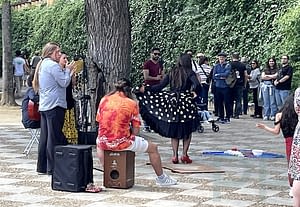
For us, Seville felt joyous and bright, leafy and almost mesmerizing. Orange trees line the streets and sunlight reflects off warm stone.
You’ll catch glimpses of flamenco in the streets, where performers bring its energy to life. That same spirit—passionate, expressive, and full of movement—feels woven into Seville itself.
Add in Seville’s tapas culture, where meals become a series of fun culinary experiences, and it’s easy to see why this city feels so alive.
With a population of around 700,000, Seville feels much more manageable than Madrid or Barcelona—compact and walkable, yet layered with history, culture, and architectural beauty. It’s easy to find your way, which adds to the relaxed enjoyment that defines the experience.
We spent two days here, and it was just enough time to see the highlights, drift through its most charming neighborhoods, and experience the rhythm of the city.
Here’s how we’d structure two memorable days in Seville:
Seville At a Glance
Seville is a compact, walkable city that’s easy to explore in a short amount of time. Most major sights are within a 10–20 minute walk of each other, making it ideal for a 2-day itinerary.
Plan on spending two full days to comfortably see the highlights, including the Cathedral, Alcázar, Barrio Santa Cruz, and Triana. The pace is moderate, with a mix of sightseeing and time to simply .
Staying in or near the historic center (Santa Cruz or Centro) will make getting around simple and help you make the most of your time.
What to Book in Advance
If you’re planning your time in Seville, a couple of reservations are worth making ahead of your visit. The Cathedral and Giralda are extremely popular and often have long lines, making advance tickets a must during busy seasons.
The Royal Alcázar also uses timed entry and can sell out, especially in peak season, so it’s best to secure a ticket in advance. Combo tickets for both attractions are available.
If you’re interested in seeing a flamenco performance, booking ahead will give you more options for venues and times.
Know Before You Go
Seville has a vibrant energy, but timing your day makes a big difference. Midday can be very hot, especially in warmer months, so it’s best to plan indoor sights or a break during the early afternoon and venture outside more in the morning and evening. Meals also run later than you might expect—lunch often starts around 2 pm, and dinner typically begins after 8:30 pm. Comfortable shoes are a must, as much of the city has cobblestone streets.
Where to Stay in Seville
We stayed in an Airbnb on Calle Ximénez de Enciso, right in the heart of Barrio Santa Cruz. It proved to be an ideal base for exploring the city. Being able to step out onto quiet, narrow streets in the morning and walk just minutes to the cathedral and Alcázar made a big difference. The area is full of character, with restaurants, small plazas, and hidden corners around every turn—perfect for both early starts and relaxed evening strolls.
Just beyond Barrio Santa Cruz is El Arenal. Near the river, it offers a slightly more open feel while still being close to everything, with a good mix of hotels and restaurants.
If you’re looking for something more local, consider staying in Triana, across the river. It has a more residential feel, is known for its food scene, and gives you a different perspective on the city while still being within easy reach of the historic center.
If you’re driving, keep in mind that parking in the historic core can be challenging. It’s often easier to choose accommodations with nearby garage access or to park outside the center.
How Many Days in Seville?
- 1 day – You can see the highlights, but it will feel rushed
- 2 days (ideal) – Enough time for major sights + relaxed wandering
- 3 days – A more relaxed pace, with time for a day trip (like Córdoba)
Best Time to Visit Seville
Seville is beautiful year-round, but the weather can vary significantly by season—and it can really shape your experience.
Fall (September–November) – Ideal
We visited in September, and it was just gorgeous. Temperatures were mild and warm, days still long and sunny. For us, this was an ideal time to visit Seville, with slightly lighter crowds than in spring.
Spring (March–May) – Also Excellent
Spring is peak season, especially during Semana Santa (Holy Week) and Feria de Abril. Expect mild temperatures, orange blossoms in bloom, a lively, festive atmosphere—and crowds
Summer (June–August) – Very Hot
Seville is known for its intense summer heat. Temperatures often exceed 100°F (38°C), making midday sightseeing difficult. If you visit in summer, plan early mornings and late evenings, taking a break indoors during the hottest part of the day.
Winter (December–February) – Mild & Quieter
Expect cooler temperatures, but generally mild. With much lighter crowds, Seville can be experienced in winter at a more relaxed pace.
Festivals & Seasonal Highlights
Seville has a strong cultural calendar, and if your visit happens to line up with one of its major festivals, it can completely change the feel of the city. Semana Santa (Holy Week) is one of the most important events of the year, with elaborate processions moving through the streets.
A few weeks later, Feria de Abril (April Fair) brings a lively, colorful atmosphere with music, dancing, and traditional dress. Both are incredible to experience, but they also bring larger crowds and higher prices—something to keep in mind when planning.
Planning a Larger Trip?
Seville fits perfectly into a broader Spain or Iberian itinerary.
If you’re mapping out a multi-city trip, be sure to check out our Spain & Portugal itinerary, where Seville pairs beautifully with cities like Granada, Madrid, and Lisbon.
Getting Around Seville
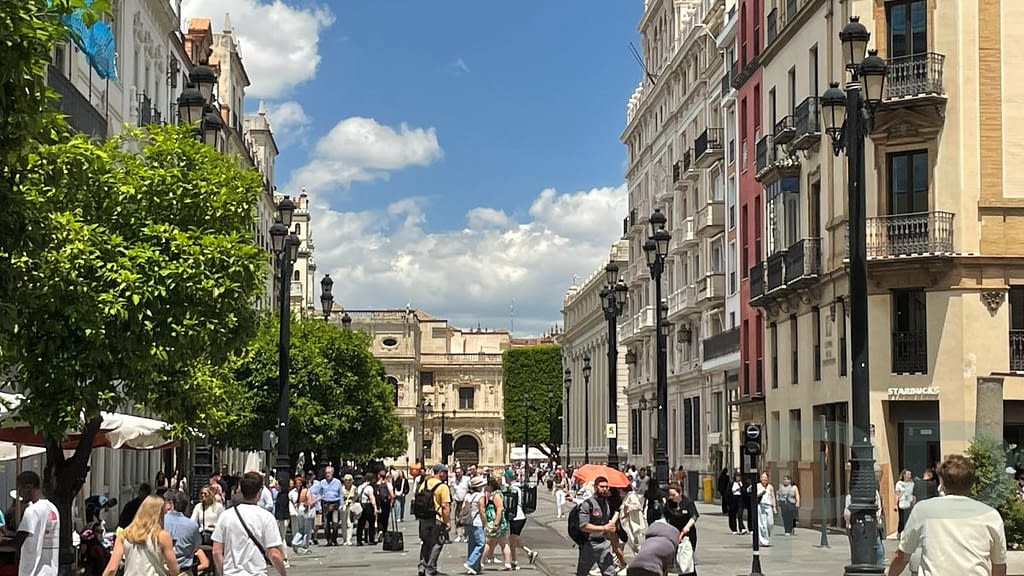
Seville is one of the most walkable cities we’ve visited. The historic center is compact, with most major sights within a 10–20 minute walk. It’s a delight to explore Seville on foot!
Taxis are easy to find and affordable, and can be a good option if you’re tired or short on time.
Dining Culture in Seville
Dining in Seville follows a later rhythm, and once you settle into it, it becomes part of the experience. Lunch typically takes place between 2:00 and 4:00 PM, while dinner starts around 8:30 PM and often stretches late into the evening. You can eat earlier, but dining later tends to feel more local.
Meals are often centered around tapas—small plates meant for sharing—along with raciones, which are larger portions. Rather than ordering everything at once, it’s common to start with a few dishes, share them, and then order more as you go. Whether you stand at the bar for a quick, casual bite or sit down for a more relaxed meal, the experience is meant to unfold slowly.
You’ll find local favorites like jamón ibérico, espinacas con garbanzos (spinach with chickpeas), salmorejo (a creamy cold tomato soup), fried fish, and slow-cooked meats like carrillada.
Tipping is minimal—rounding up or leaving small change is typical—and it’s common for bread to be brought to the table and added to the bill.
Seville in 2 Days: At-a-Glance Itinerary
If you’re short on time, this quick overview helps you see how the days flow before diving into the details.
Day 1: Historic Core & Flamenco
Morning:
Start at the cathedral and climb La Giralda. Spend some time admiring the exterior and lingering in Plaza Virgen de los Reyes to take in the views, take photos and people watch.
Afternoon:
Enjoy a relaxed lunch, then meander through Barrio Santa Cruz—getting pleasantly lost in its narrow streets, small plazas, and hidden corners.
Then head to Las Setas (Metropol Parasol) for a modern contrast and city views.
Evening:
See a flamenco show, followed by a tapas dinner nearby. This is a great night to lean into Seville’s energy and stay out a little later.
Day 2: Alcázar, Plaza de España, River Walk & Triana
Morning:
Start by touring the Royal Alcázar, then continue on to Plaza de España and stroll through Parque de María Luisa.
Afternoon:
Walk along the river, passing Torre del Oro, then cross into Triana for lunch and a neighborhood stroll.
Evening:
Stay in Triana for a relaxed, local-vibe dinner along the river. Alternatively, head back toward the city center for sunset, unwinding with a rooftop drink or an evening of tapas hopping to end the day.
Now that you have a sense of how to structure your time, here’s a closer look at each day with more detail to help you plan your route, pace, and key stops.
Day 1: Cathedral, Alcázar, Barrio Santa Cruz & Las Setas
Seville Cathedral & La Giralda (the bell tower)
A Bit of History
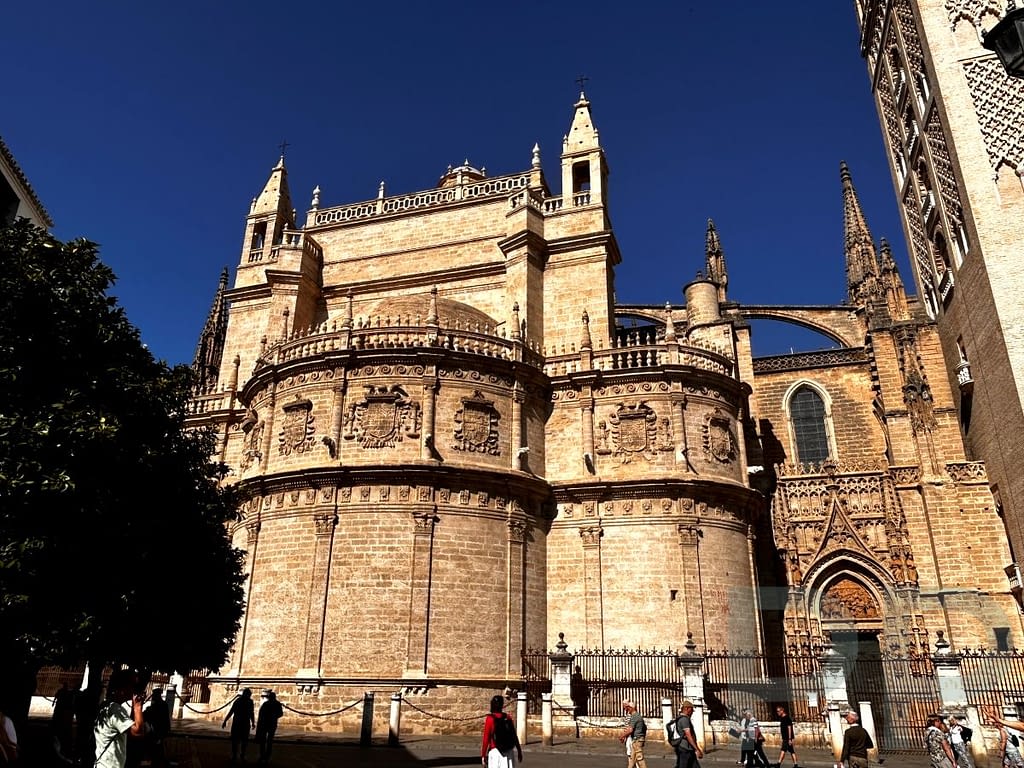
Seville Cathedral stands on the site of a former mosque, and its origins reflect the city’s layered past. After Christians reconquered Seville in 1248, they eventually decided to replace the mosque with a cathedral so grand that, as the story goes, future generations would think they were “mad” for building it.
Construction began in the 15th century, and the result is the largest Gothic cathedral in the world. One of the most fascinating details is that the cathedral didn’t completely erase what came before—the Giralda tower was originally the mosque’s minaret, later adapted into a bell tower. That blend of Islamic and Christian history is part of what makes this site so unique.
Visiting the Cathedral
Seville Cathedral is massive—there’s really no other way to describe it. Stepping inside feels like entering a completely different world.
The Exterior
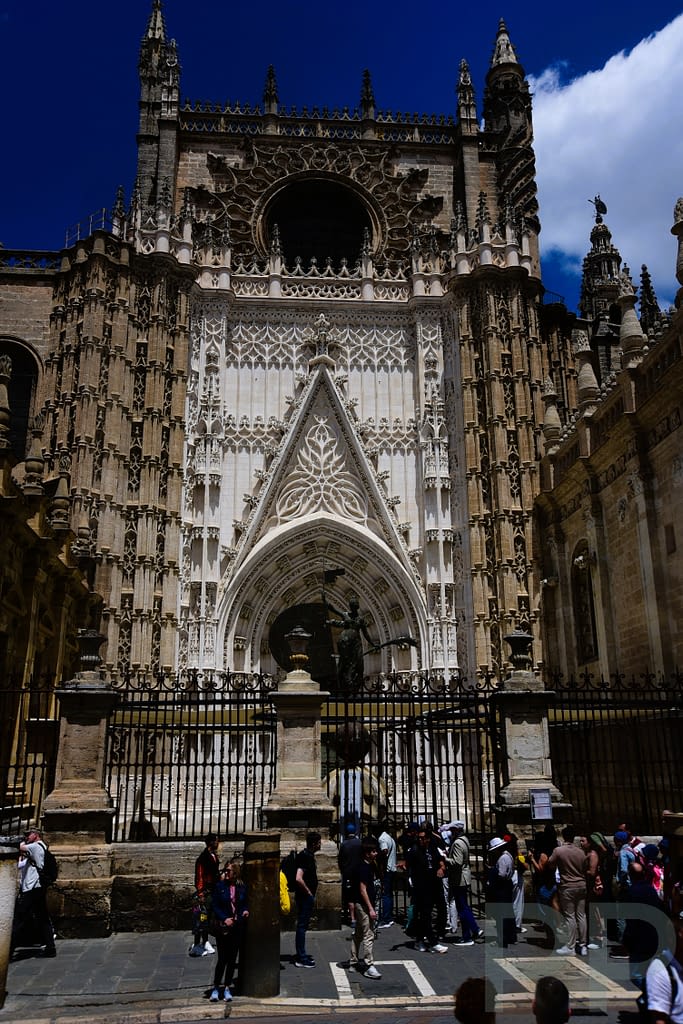
Before heading inside, take a few minutes to walk around the exterior of the cathedral—it’s just as impressive from the outside. The sheer scale is striking, especially as you circle around and notice how the architecture shifts from one side to the next.
In Plaza Virgen de los Reyes, you’ll get classic views of the Giralda rising above the square. Along the sides, look for the intricate Gothic details, flying buttresses, and rows of columns linked by chains—once used to mark sacred ground and offer sanctuary.
On the cathedral’s north side, don’t miss the Puerta del Perdón, a beautifully decorated entrance that hints at the site’s earlier life as a mosque.
The Interior
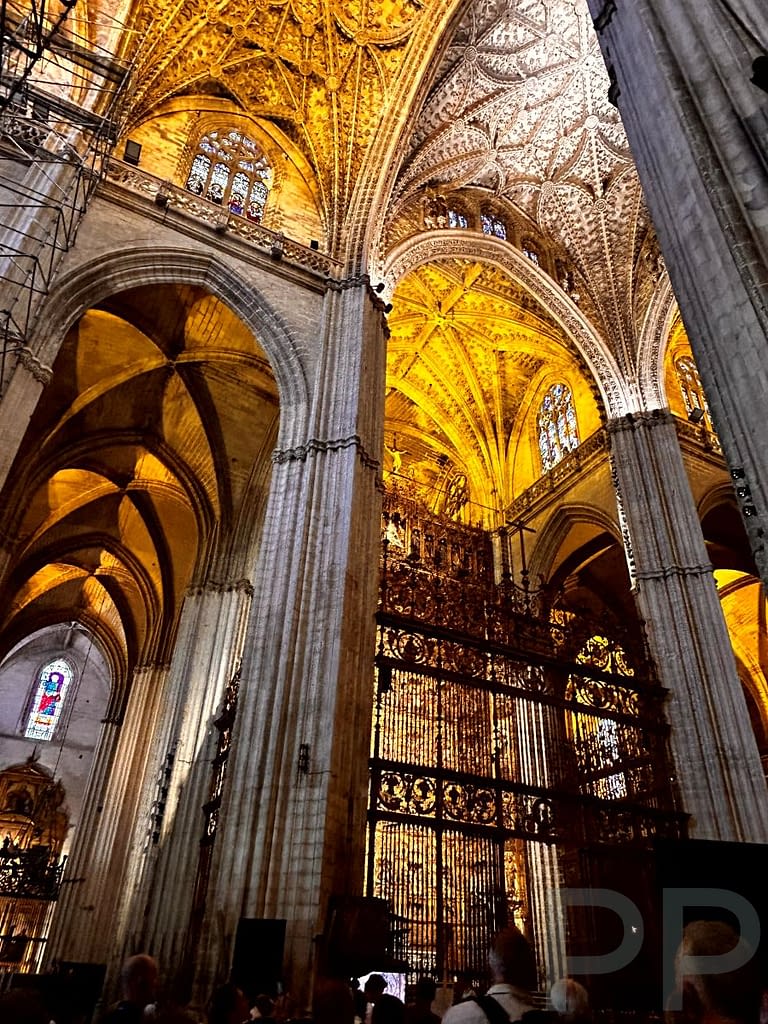
Upon entering, what stood out immediately to us was the contrast of the cool, dim, hushed interior to the bright, sunlit streets outside.
Once inside, don’t miss:
- The central chapel (Capilla Mayor) with its towering gold altarpiece
- Treasury rooms filled with intricate gold and jeweled objects
- The choir area with enormous handwritten choir books dating back to the 15th century
- Artwork along the walls, including works by Murillo
Climbing La Giralda
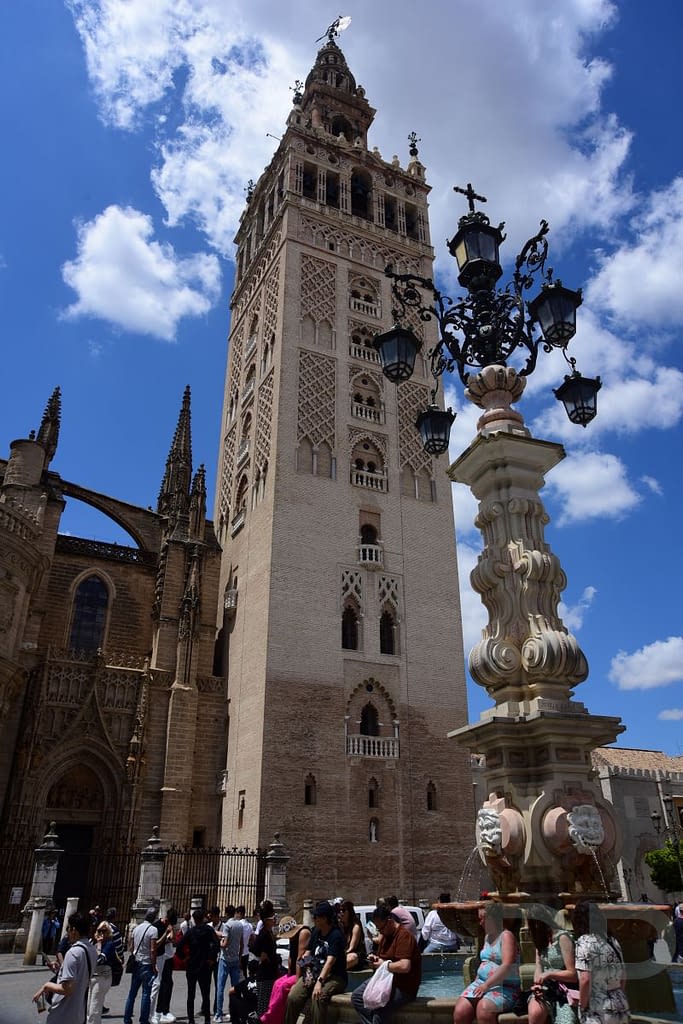
One of the most unique parts of visiting the cathedral is climbing the tower.
Instead of stairs, the climb is made up of a series of gently sloping ramps, originally designed so riders could ascend. The ramps, along with open windows and plenty of light along the way make it manageable for most visitors and a more comfortable option for those who don’t love tight, enclosed spaces.
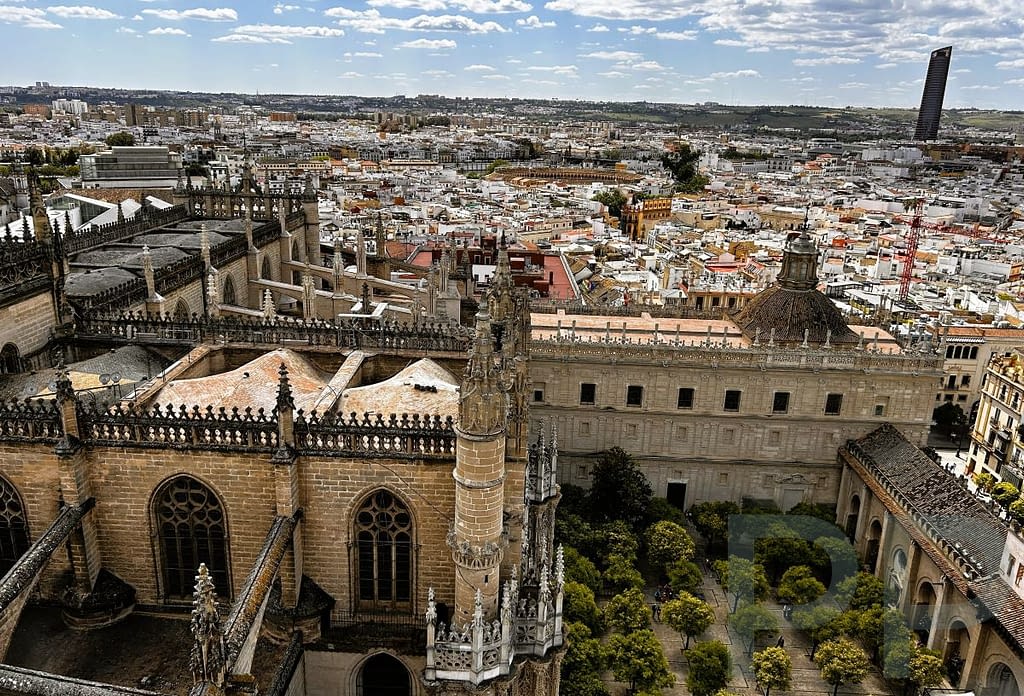
Near the top, you’ll walk through the bell chamber, where the cathedral’s massive bells hang overhead—before stepping out to sweeping views over Seville.
Important: Book Tickets Early
Tickets for the cathedral (and the Giralda tower) sell out in advance, especially for specific time slots.
We originally planned to visit on our own, but couldn’t get tickets at the time we wanted—so we ended up booking a guided tour.
To avoid disappointment, spending more on a guided tour, or if you want to ensure flexibility in your day, book ahead here.
Barrio Santa Cruz
A Bit of History
Barrio Santa Cruz was once Seville’s Jewish quarter (the Judería), a densely packed neighborhood of winding streets that dates back to medieval times. After the Christian reconquest of the city in 1248, the Jewish community remained here for a time, but was eventually expelled in 1492.
Over the centuries, the area fell into decline before being revitalized in the early 20th century, when Seville prepared for the 1929 Ibero-American Exposition. Much of what you see today reflects that restoration—traditional in style, but thoughtfully preserved—layering centuries of history into one of the city’s most atmospheric neighborhoods.
Self-Guided Walking Tour of Barrio Santa Cruz
This is one of the most atmospheric walks in Seville—less about checking off sights and more about experiencing the texture of the city. Plan for about 60–90 minutes, longer if you stop often.
Start: Plaza Virgen de los Reyes
Stand facing the cathedral and take in the scene:
- The Giralda tower rising above
- The Archbishop’s Palace nearby
- Orange trees and constant movement
Walk to Plaza del Triunfo
Move into the open space between the cathedral and the Alcázar.
This square was once at the center of Spain’s global trade, with goods from the New World passing through here.
Enter Patio de Banderas
Pass through the Alcázar walls into a quieter courtyard:
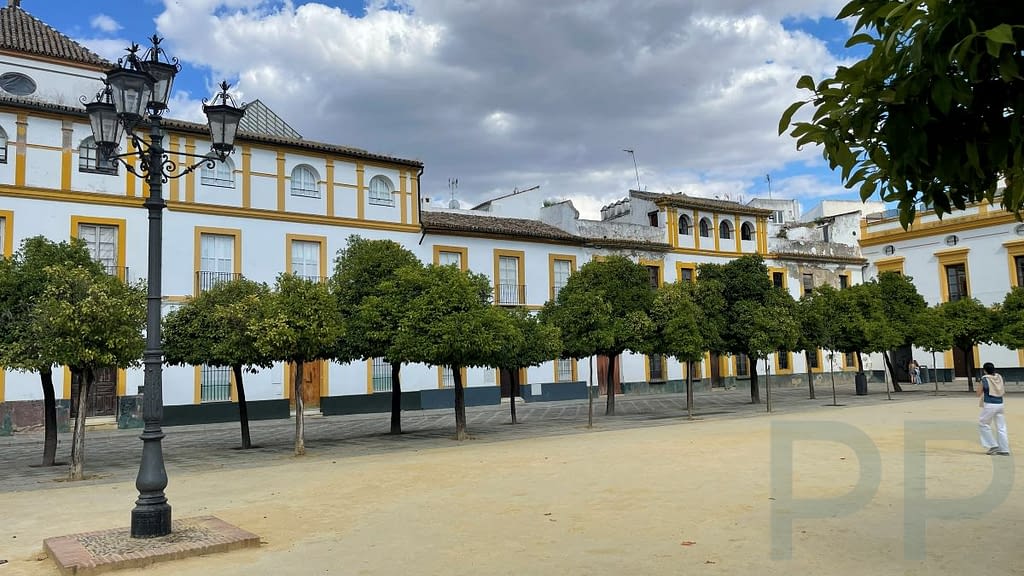
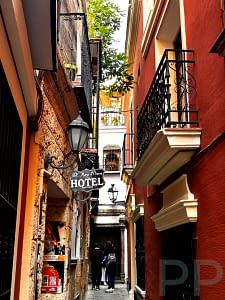
- Orange trees
- Layers of history beneath your feet
- A framed view back toward the Giralda
Into the Judería
Follow the narrow passageways into the old Jewish quarter.
Here, the streets tighten: walls close in, light filters down, and the path curves and feels slightly disorienting.
Calle Agua
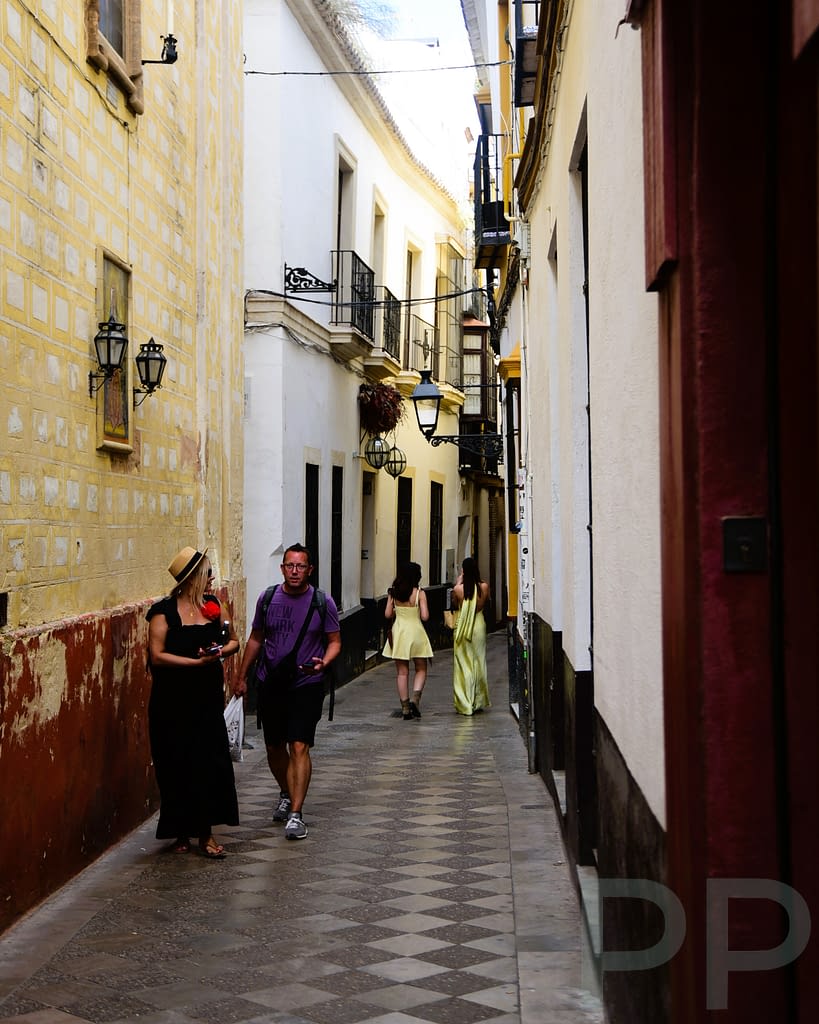
Walk along this narrow lane beside the old wall:
- Glimpse hidden patios through iron gates
- Notice tilework and greenery
- Look for remnants of the old water system
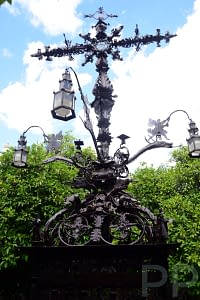
Plaza de Santa Cruz
You’ll emerge into a small, shaded square:
- Orange trees overhead
- A wrought-iron cross at the center, marking the site of a church that once stood here. Today, it remains as a symbol of the neighborhood’s long and layered history.
- A quiet place to pause
Explore the “Kissing Lanes”
From here, stop navigating and get lost in the narrow streets, stopping at attractive plazas, and noticing decorative balconies, tiles, flowers, and hidden details.
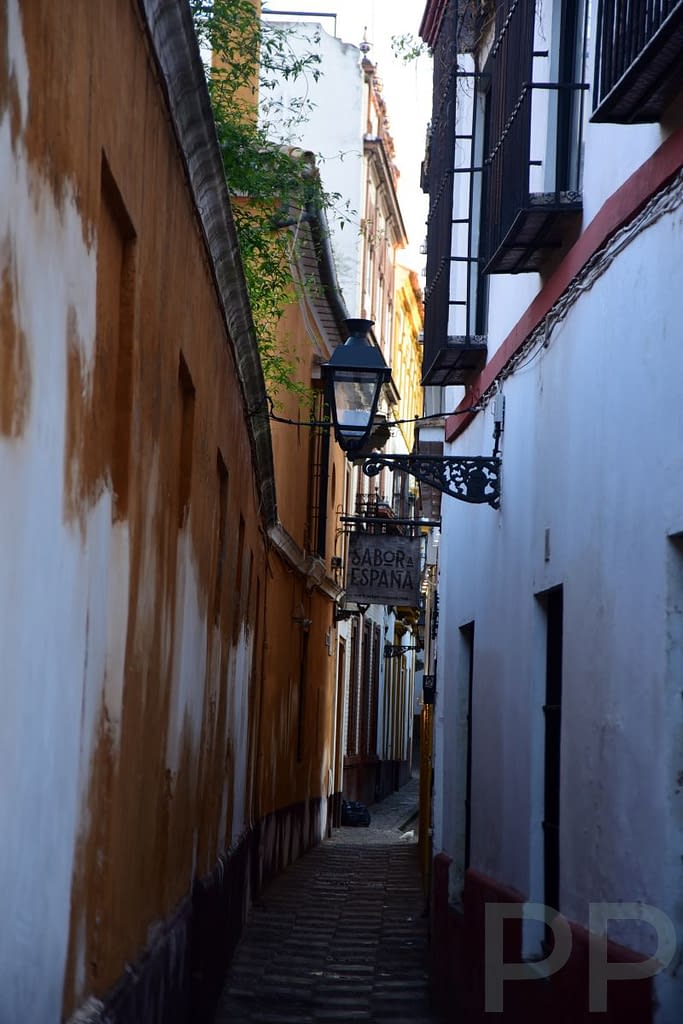
As you leave Barrio Santa Cruz, make your way back toward the cathedral, then continue north toward Las Setas, following one of Seville’s liveliest pedestrian routes.
Walking from the Cathedral to Las Setas
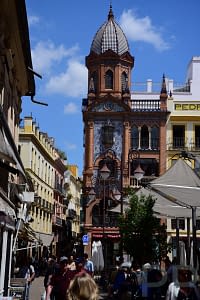
The walk from the cathedral area to Las Setas is one of those routes in Seville that almost happens without thinking—you simply follow the natural flow of people moving through the city.
Most visitors drift north from the cathedral through a network of lively streets, with Calle Sierpes and Calle Tetuán forming the main commercial spine of the city (rather than Calle Francos, which is smaller and more atmospheric).
Along the way, you’ll pass through
- Bustling pedestrian streets filled with locals and visitors
- A mix of Spanish brands and international shops
- Elegant storefronts and window displays
- Cafés, bakeries, and ice cream shops spilling out onto the street
This area feels noticeably different from Barrio Santa Cruz with wider streets, gorgeous architecture, and an energetic, cosmopolitan vibe.
As you continue, the streets gradually open up until you arrive at Plaza de la Encarnación, where the sweeping curves of Las Setas rise above the square.
Setas de Sevilla & Shopping (Refined)
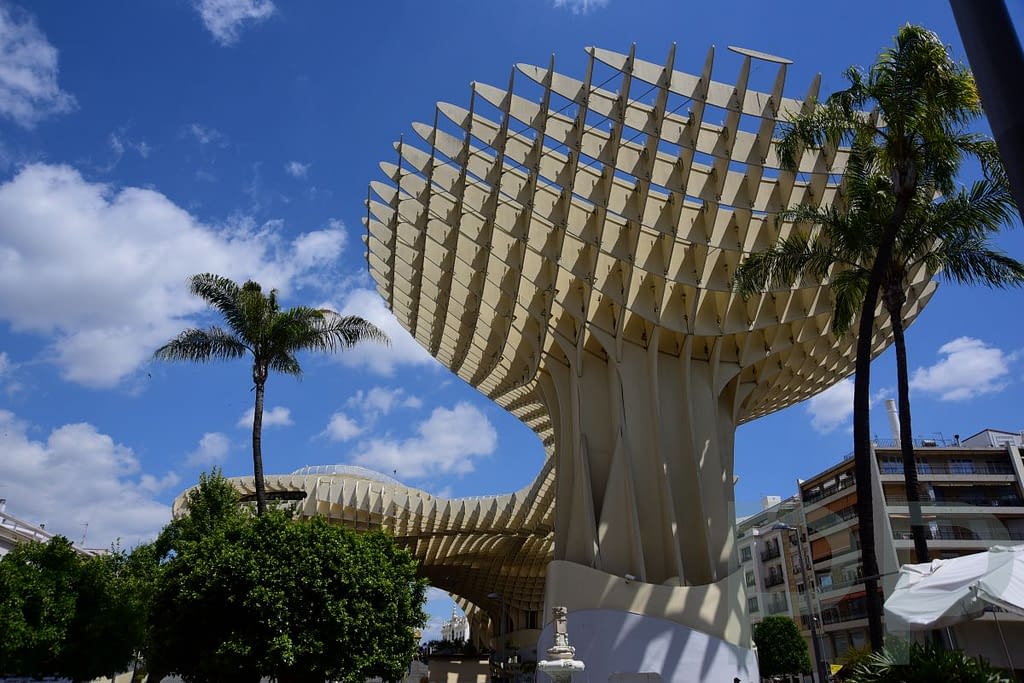
The Setas de Sevilla (Metropol Parasol) is one of the city’s most unexpected landmarks—a striking modern structure that rises above the historic surroundings and offers a completely different perspective on the city.
It’s incredibly photogenic, with sweeping curves and elevated walkways that offer panoramic views over the city, especially at sunset.
Even from below, Las Setas is striking—but going up adds a modern, panoramic perspective that contrasts nicely with Seville’s historic core.
Las Setas Viewpoint (Metropol Parasol)
One of the main attractions at the Setas de Sevilla (Metropol Parasol) is the elevated rooftop walkway and viewpoint that winds across the top of the structure.
Tickets are typically around €10–€15 per adult. You follow a curving walkway across the top for wide views over Seville’s rooftops, including the cathedral in the distance. In the evenings, a light and sound experience is often included.
We didn’t go up ourselves, but from what we saw:
- ✔ Worth it if you enjoy viewpoints, photography, or want a sunset experience
- ✔ A good option if you’re looking for something a bit different from historic sites
- ❌ Skip it if you’re short on time or already planning another high viewpoint (like the Giralda or a rooftop bar)
Flamenco in Seville: How to Choose a Show
After a full first day exploring the historic core, the evening naturally shifts into one of Seville’s most iconic experiences—flamenco.
Seville is widely considered the heart of flamenco. You don’t have to look far to feel flamenco in Seville—street performers often bring its rhythms to life in plazas and along busy streets.
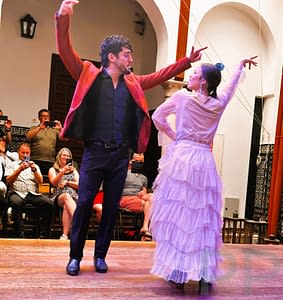
That same energy carries into the city’s performance venues, where flamenco is more than entertainment—it’s part of Seville’s cultural identity. The passionate, expressive spirit you notice in the streets comes into sharper focus on stage—more intense, more refined, and deeply rooted in place. Experiencing it here adds a layer of authenticity that’s hard to replicate anywhere else.
There are a few ways to experience it:
- Traditional tablaos (intimate, focused on performance)
- Dinner + show experiences (more commercial)
- Larger productions (less intimate, more theatrical and still impressive)
We chose a 5:00 PM show at Casa del Flamenco, and it was one of the highlights of our trip. Compared to fancier dinner venues, this show feels stripped down—about 1 hour long, no food or drinks, and a small, intimate setting.
For us, the simplicity made it better—no distractions, just the performance.
If you’re deciding, think about whether you want a focused experience or a full evening out.
Day 2: Royal Alcázar, Plaza de España, River Walk & Triana
Royal Alcázar
A Bit of History
The Royal Alcázar is one of the oldest royal palaces still in use in Europe, and like the cathedral, it reflects Seville’s layered history. The site began as a Moorish palace in the 10th century, and after the Christian reconquest, Spanish kings expanded and redesigned it—while still preserving many of the original Islamic architectural elements.
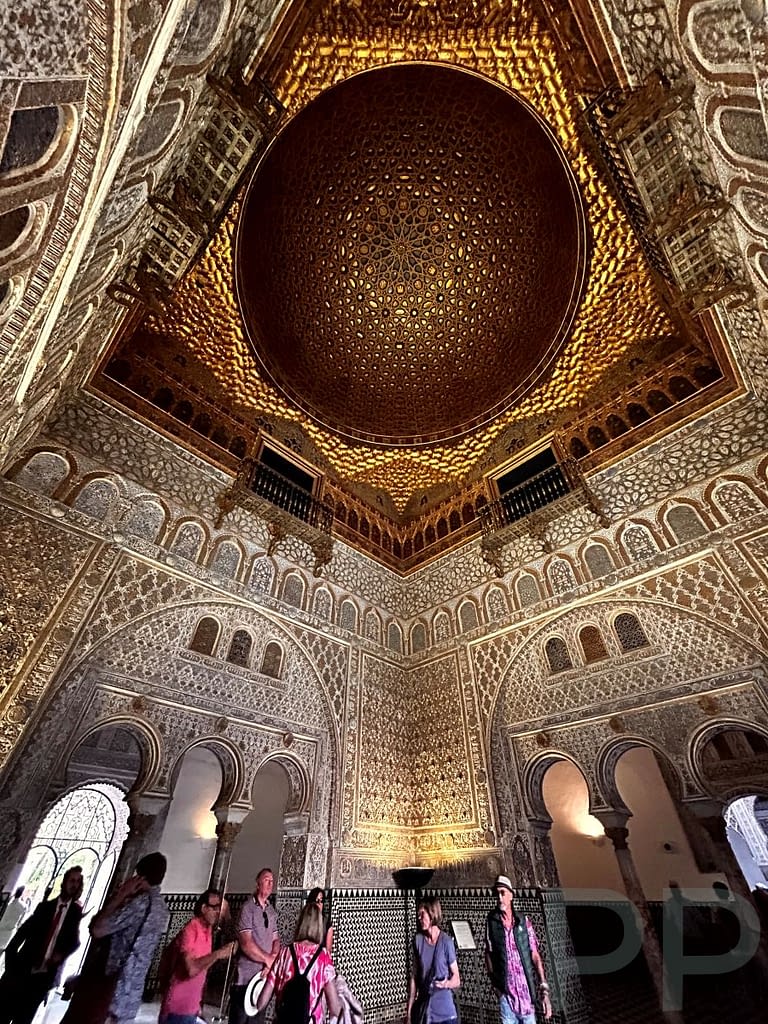
What you see today is a blend of styles, especially Mudéjar design, where Christian rulers incorporated Islamic artistry. It’s this mix—arches, tiles, gardens, and royal spaces—that makes the Alcázar feel so distinctive.
Visiting the Royal Alcázar
Just steps from the cathedral, the Royal Alcázar opens into a completely different world—one that feels quieter and more exquisite. You move through a series of rooms and courtyards with delicate tilework, carved arches, and richly detailed ceilings.
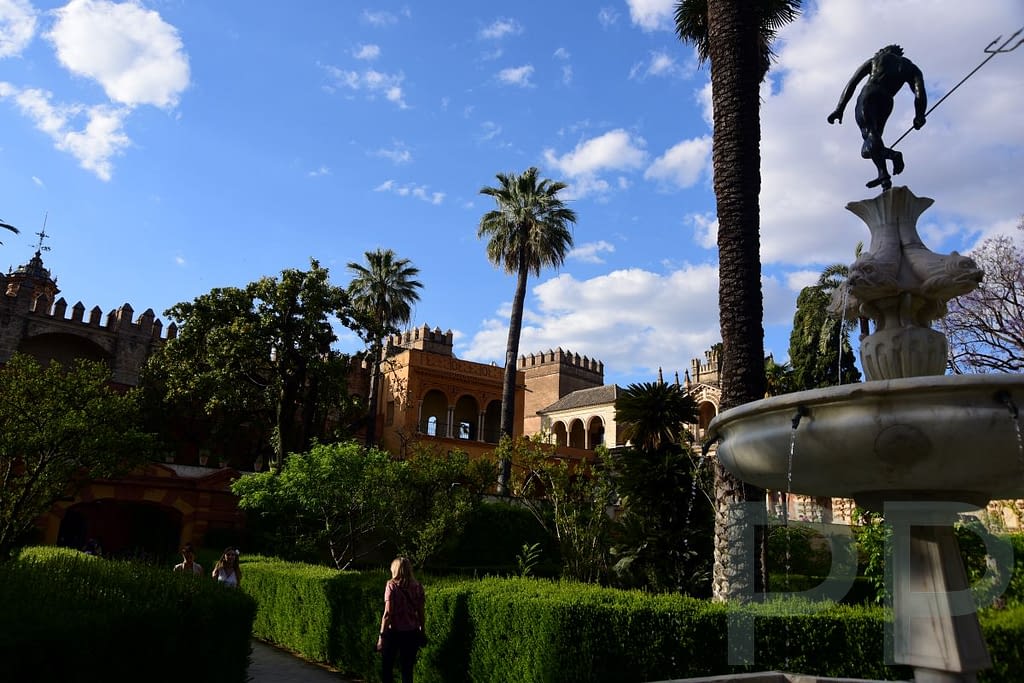
Outside, the palace unfolds into expansive gardens filled with fountains, shaded pathways, and pockets of calm that invite you to spend a few extra minutes.
Don’t miss the lower-level area with its reflective pool—it’s quieter and feels almost hidden.
Book Tickets Early
It’s worth booking your timed-entry tickets for the Royal Alcázar in advance, especially if you’re visiting during peak season or want a specific time slot. Entry is timed, and popular slots can sell out quickly.
Booking ahead not only guarantees entry but also helps you structure your itinerary more smoothly. You can reserve tickets directly through the official site here.
Plaza de España
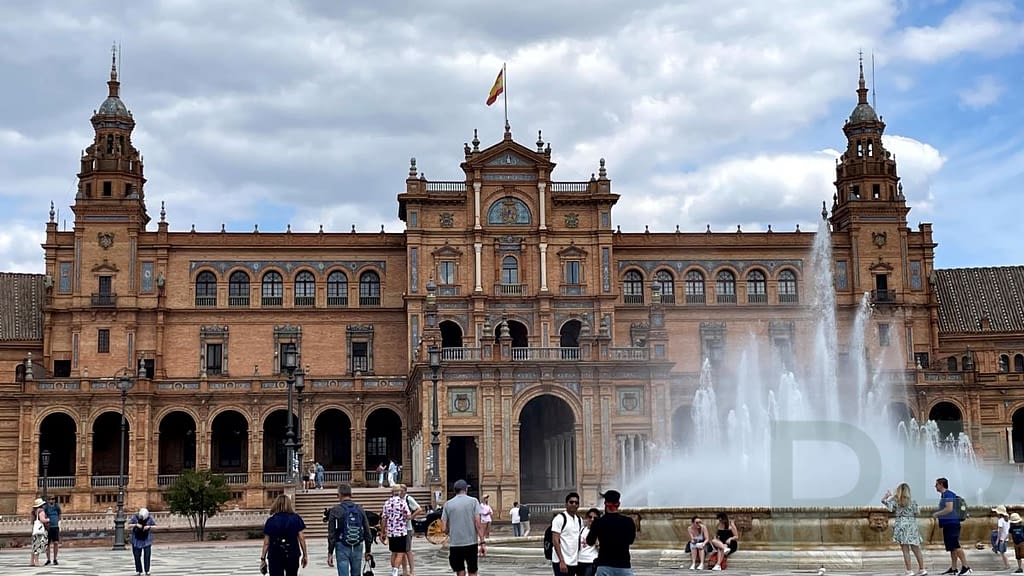
Plaza de España is one of the most visually striking places in Seville—and it feels completely different from the historic center—grand, open, and made for lingering.
Built for the 1929 Ibero-American Exposition, the plaza features a sweeping semicircular design with bridges crossing a small canal and a grand building that curves around the entire space.
One of its most unique features is the series of colorful ceramic tile alcoves, each representing one of Spain’s provinces. These detailed tile panels depict historical scenes and local symbols, and it’s fun to identify different regions along the plaza.
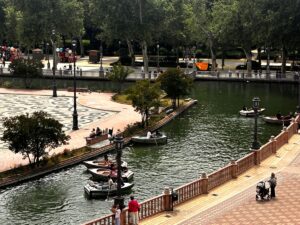
Running through the center is a canal, where visitors can rent small rowboats and paddle beneath the bridges. It adds a slightly romantic, almost playful feel to the space—and it’s fun to watch even if you don’t participate.
Surrounding the plaza is Parque de María Luisa, a large, leafy park filled with shaded walking paths, fountains and small pavilions, and quiet corners to sit and relax.
After the tight, winding streets of the historic center, the park invites you to slow down for some great people-watching and a break from the crowds.
River Walk & Torre del Oro
Walking along the Guadalquivir River offers a completely different perspective on Seville.
After the narrow streets of the historic center, the riverfront feels:
- Open and breezy
- Lined with palm trees and wide paths
- A place to slow down and take in the city at a different pace
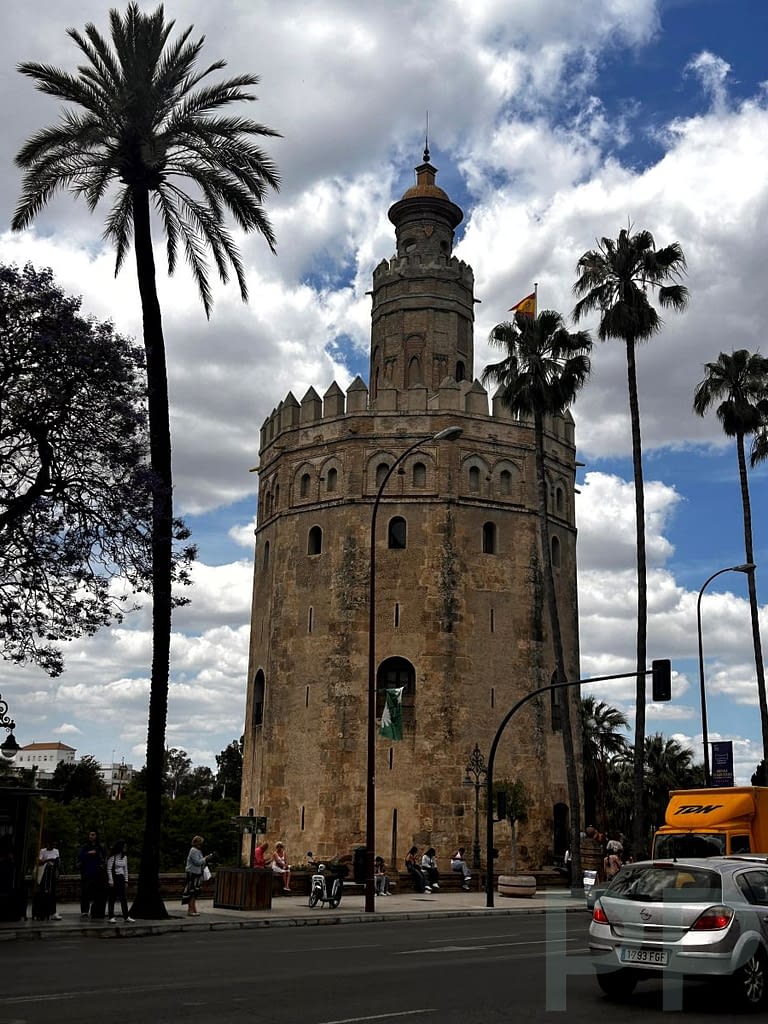
As you stroll, you’ll come across the Torre del Oro, one of Seville’s most recognizable landmarks.
A Bit of History
The Torre del Oro dates back to the 13th century (around 1220), when it was built by the Almohad dynasty as part of the city’s defensive walls.
Its original purposes were to guard the river entrance to the city, control access to the port, and help defend Seville from attacks. A heavy chain was once stretched across the river from the tower to the opposite bank to block enemy ships.
The name “Tower of Gold” is thought to come from: the golden glow it reflects in the sunlight or possibly the treasures once stored there.
From here, you can:
- Continue walking along the river
- Cross over to Triana
- Or simply pause and take in the view
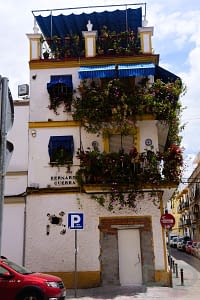
Triana Walk
Crossing into Triana feels like stepping into a different version of Seville. This is where Seville feels more local—less polished, more lived-in.
Long considered the “other side of the river,” Triana has its own identity—proud, independent, and deeply tied to flamenco and working-class traditions. Even today, locals sometimes describe crossing the bridge into the historic center as “going to Sevilla.”
Cross the Puente de Isabel II
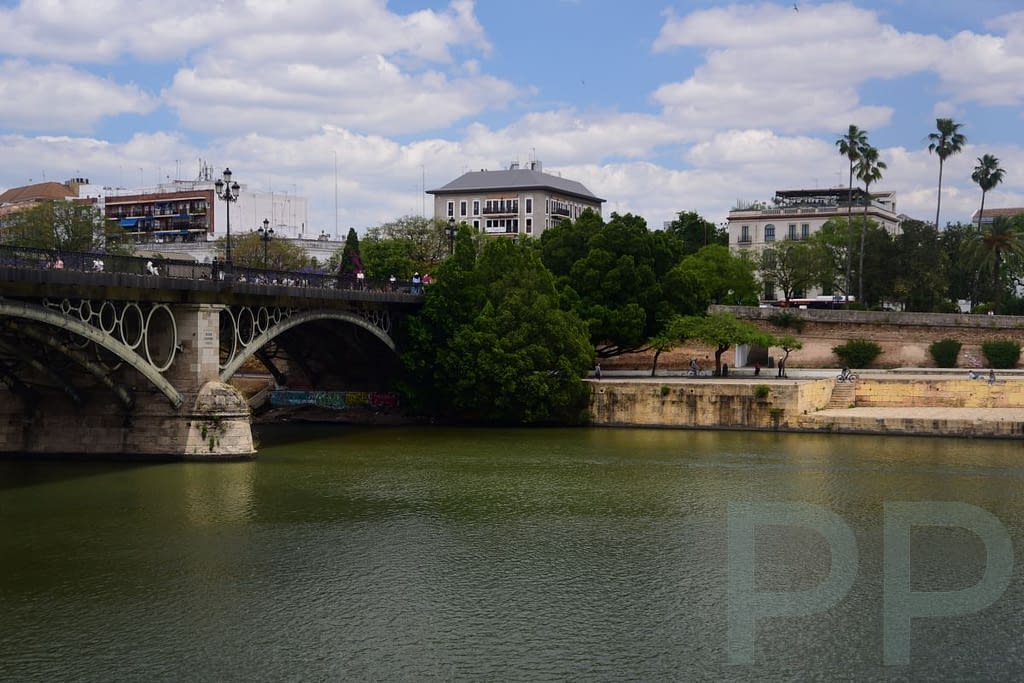
Start by crossing the Puente de Isabel II, also known as the Triana Bridge.
As you walk across, look for the distinctive iron arches and circular supports beneath the spans. Take in views of the river and skyline.
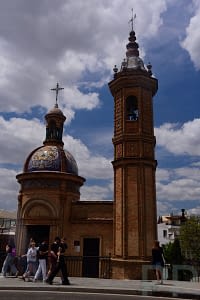
At the far end of the bridge, you’ll be welcomed by the small but striking Capilla del Carmen, marking your entrance into Triana. Built for the 1929 Ibero-American Exposition, the Capilla del Carmen boasts an ornate tower that reflects Seville’s early 20th-century architectural revival.
Castillo de San Jorge & Mercado de Triana
Head down toward the riverfront area just beyond the bridge. Here you’ll find the remains of the Castillo de San Jorge, once the headquarters of the Spanish Inquisition.
Today, the space has been transformed, and just beside it sits the lively Mercado de Triana, full of fresh produce stalls, small tapas bars, and locals catching up over coffee.
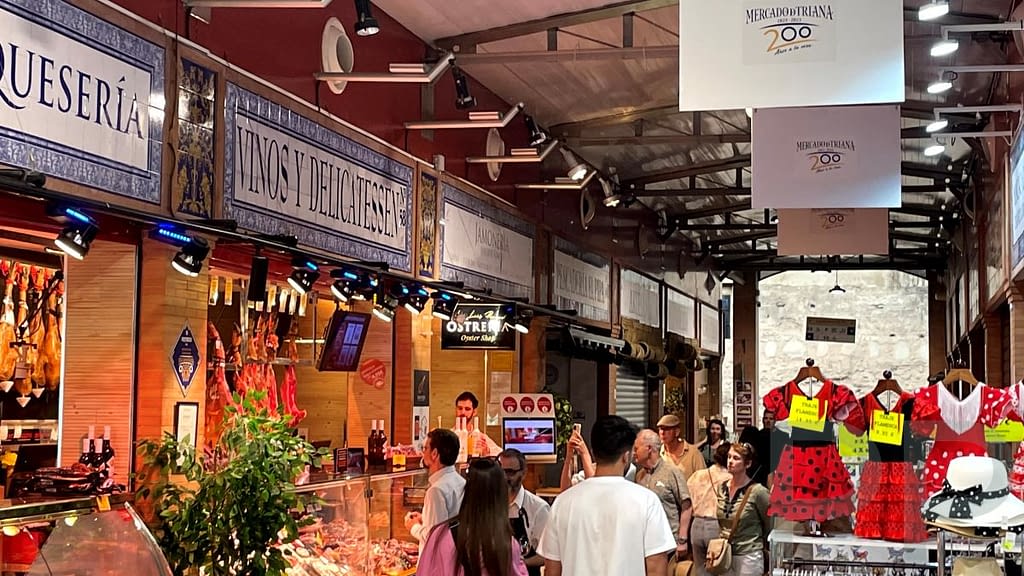
It’s a great place to get a feel for everyday life in the neighborhood.
Ceramics & Local Craft
Triana has long been known for its ceramic and tile-making tradition.
As you wander through streets like Calle Alfarería, you’ll see old workshop facades, tile-covered storefronts, and a few remaining ceramic shops (closed when we visited).
There’s even a small museum—the Centro Cerámica Triana—set in a former factory that brings the neighborhood’s ceramic tradition to life (check hours before visiting).
Iglesia de Santa Ana
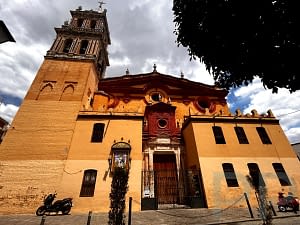
As you stroll deeper into Triana, look for the Iglesia de Santa Ana—often called the “Cathedral of Triana.” Its warm ochre façade and brick tower make it one of the neighborhood’s most recognizable landmarks.
Built in the late 13th century, beginning around 1276 during the reign of King Alfonso X of Castile, it is considered the oldest church in Seville constructed after the Christian reconquest, though what you see today reflects later restorations and additions over the centuries.
Calle San Jacinto & Calle Pureza
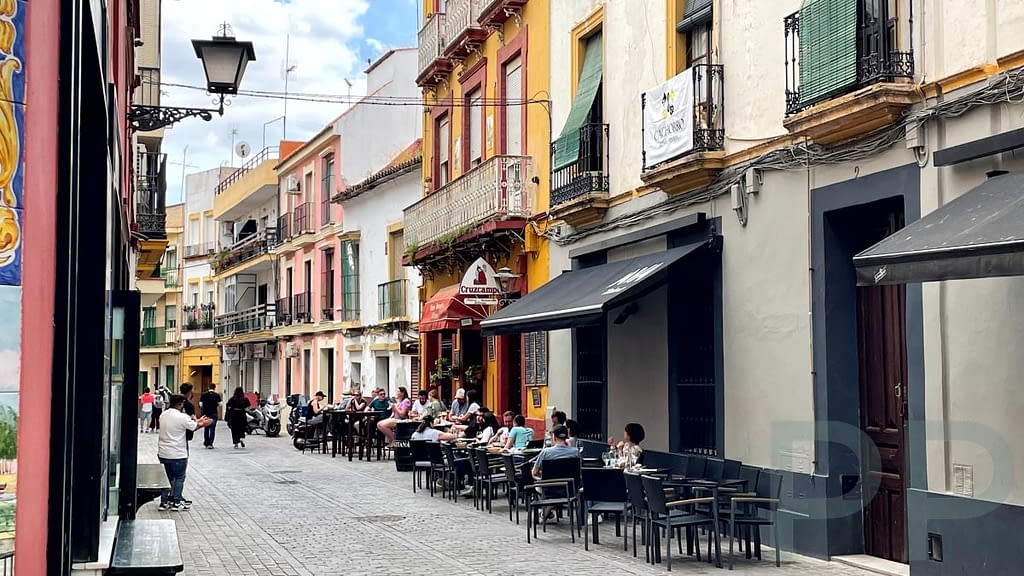
Make your way toward Calle San Jacinto, the main pedestrian street. Enjoy its lively and social atmosphere, especially in the evenings.
From there, peruse Calle Pureza, which cuts through the heart of Triana.
Here you’ll notice a mix of flamenco culture, religious devotion, and local life. Traditional bars are decorated with both bullfighting memorabilia and images of the Virgin Mary.
Capilla de los Marineros
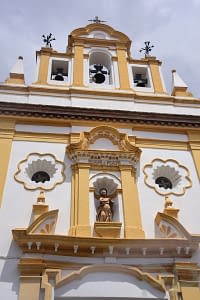
Along Calle Pureza, you’ll find the Capilla de los Marineros, home to one of Seville’s most beloved religious figures.
The Esperanza de Triana (Virgin of Hope) is deeply important here—especially during Holy Week, when devotion to different figures becomes a defining part of the city’s identity. You can step inside the Capilla de los Marineros to see the beloved virgin up close (hours vary).
End by the River
Eventually, make your way back toward the river.
From here, look across to the historic center, imagining the ships that once departed from Seville during the Age of Exploration.
- Take in the contrast between Triana and the city beyond
Why Triana is Worth It
Triana isn’t about checking off sights—it’s about experiencing a bit of everyday life in Seville. Its colorful personality is magnetic, making it one of the best places in Seville to tapas hop, slow down, or simply amble without a plan.
Rooftop Views & Sunset Spots
After exploring Triana, head back toward the city center and consider ending your evening with a rooftop view—an easy, relaxed way to take in Seville from above.
Spots like the rooftop at Hotel Doña María offer close-up views of the cathedral and Giralda, especially beautiful at sunset. Another popular option is the terrace at EME Catedral Mercer Hotel, which has a more modern feel and a lively atmosphere. For something near Las Setas, the rooftop at Hotel Casa de Indias gives you a different perspective over the city.
These are great places to slow down for a drink after a full day of exploring—whether you’re watching the light change over the rooftops or just enjoying a quieter moment above the busy streets.
Final Thoughts
Seville rewarded us with plenty to do and see without wearing us out. It has a few key attractions and beyond those, it invites wandering. It was a wonderful respite on our 3-week Spain and Portugal trip. We enjoyed its colorful neighborhoods, especially our home base of Barrio Santa Cruz. The city as a vibrant energy that is contagious. But it also has quiet corners to escape crowds.
Related Guides
Planning a trip to Spain? Don’t miss our full Spain & Portugal itinerary, where we connect Seville with other incredible destinations to help you build a seamless, memorable trip. And see below for more related guides.
Toledo, Spain Travel Guide: Cathedrals, Synagogues & Medieval Streets
Madrid: A 2-Day Itinerary For Spain’s Regal and Grand Capital
Barcelona: A Well-Paced 3-Day Itinerary
A Medieval Surprise in Western Spain: Visiting Cáceres
Ronda, Spain Travel Guide: A City Straddling a Gorge
Hiking the Caminito del Rey: Spain’s Most Thrilling Gorge Walk