At first glance, Ronda looks like a typical Andalusian town with whitewashed buildings and a lively main street. In fact, you could even drive straight through and never realize the city is split in two by a dramatic gorge. But step a little closer to the cliff’s edge, and Ronda reveals its secret: a breathtaking canyon spanned by one of Spain’s most iconic bridges.
Ronda is often included among Andalusia’s famous pueblos blancos (“white villages”), though it’s far larger and more developed than most. Its whitewashed houses cling to cliff edges, giving it the same timeless charm as the smaller hill towns — but on a grander, more dramatic scale.
El Tajo and the Puente Nuevo (New Bridge)
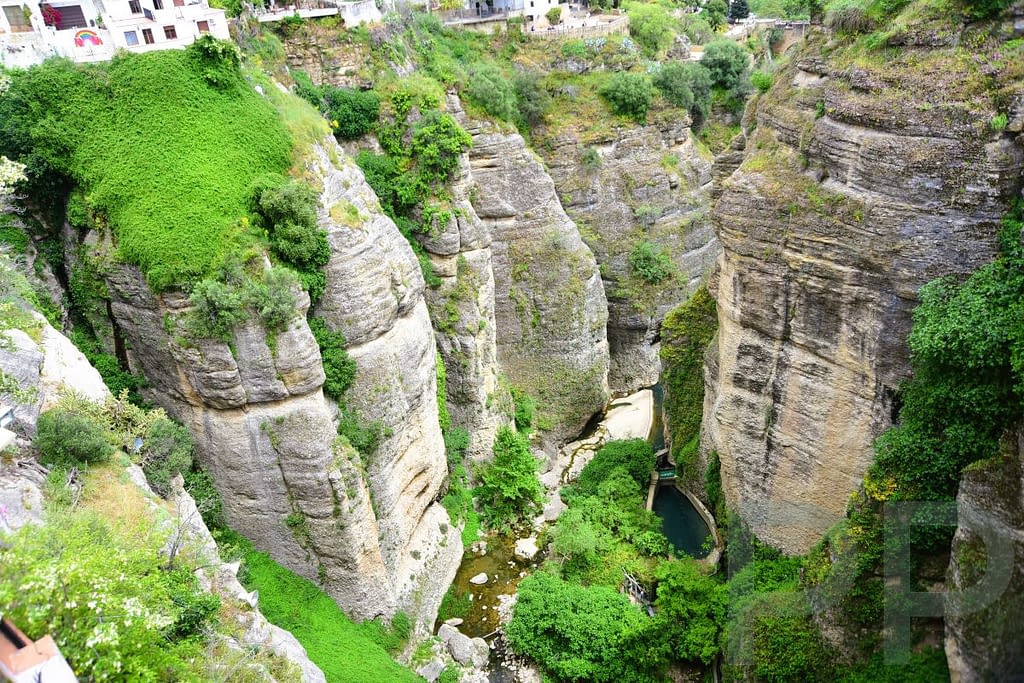
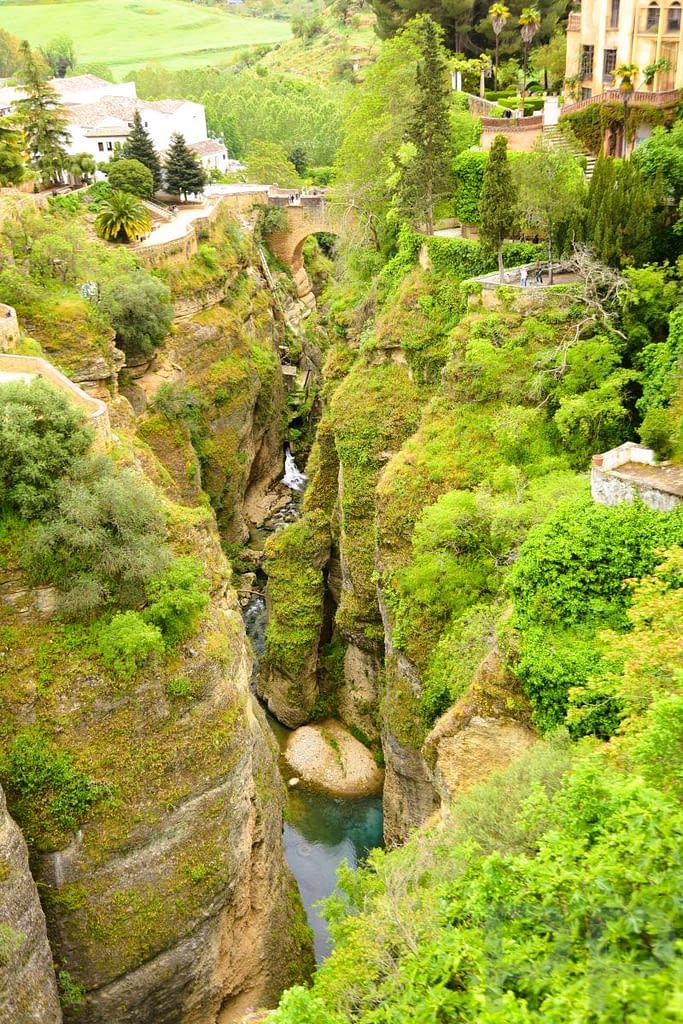
The El Tajo Gorge, carved by the Guadalevín River, is the defining feature of Ronda. Sheer cliffs plunge more than 100 meters into the canyon, dividing the old Moorish town from the newer quarter. Connecting the two is the Puente Nuevo (“New Bridge”), completed in 1793 after 34 years of construction. Rising 105 meters (344 feet) above the riverbed, the Ronda Spain Puente Nuevo bridge is an engineering marvel and the symbol of Ronda.
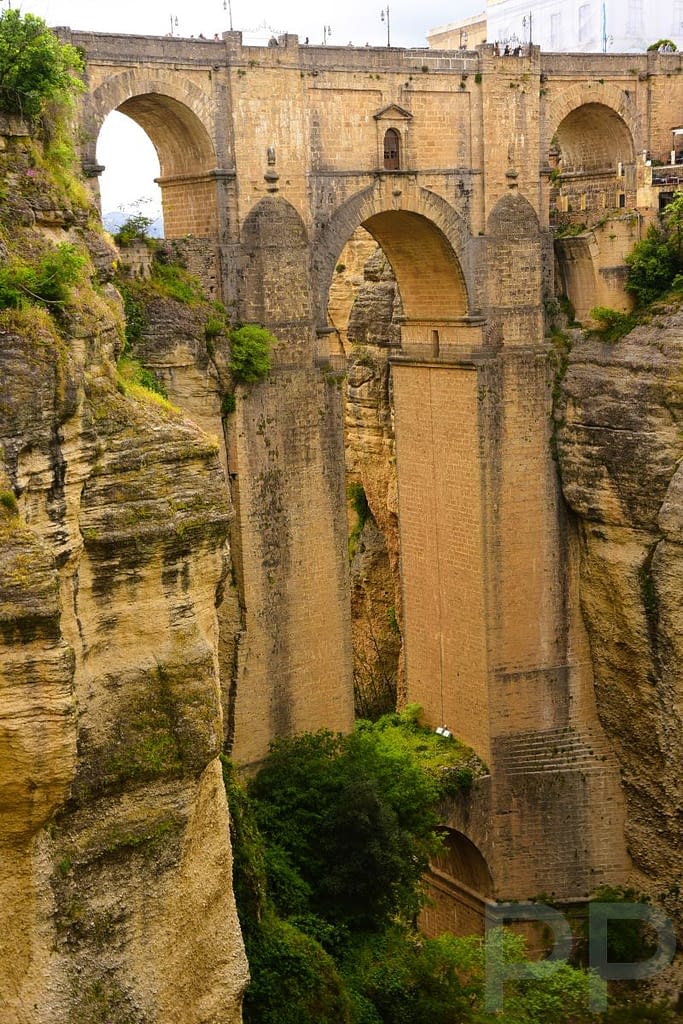
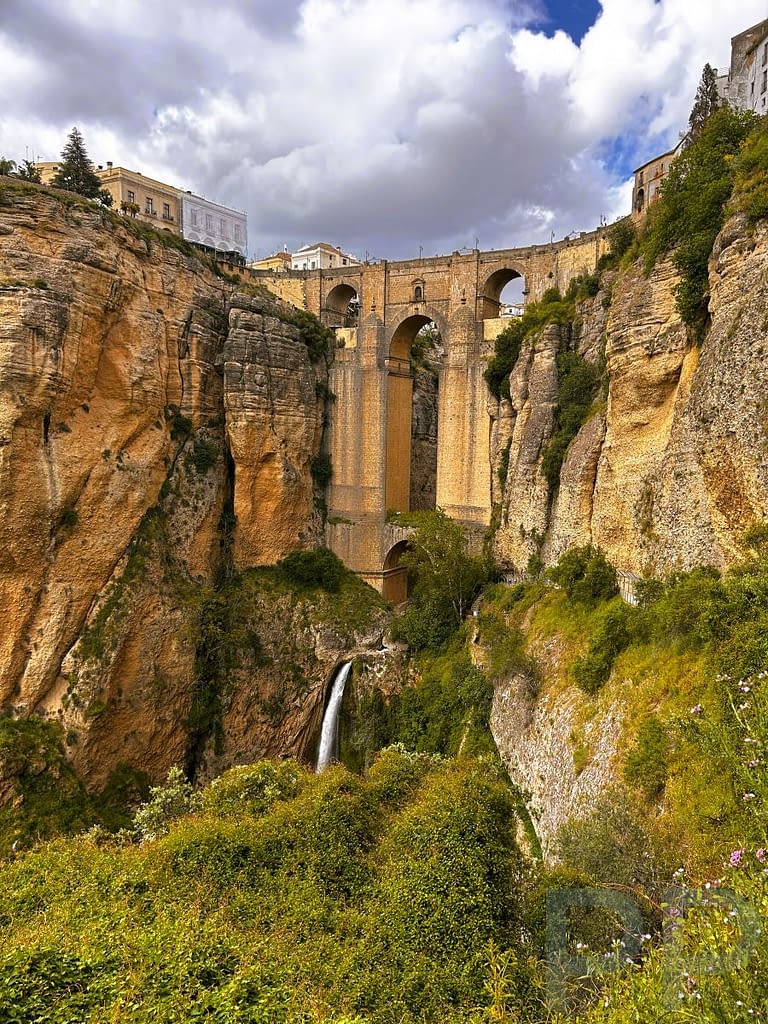
From above, the bridge is impressive, but the real magic comes from exploring it at different angles. Walking paths on both sides of the gorge descend toward the river and a small waterfall — access to the lower trail costs about €5. Be warned: the hike is a serious workout, especially climbing back up the steep slopes. Comfortable shoes and plenty of water are musts. The effort pays off, though, with spectacular views of the bridge soaring above the canyon.
Hiking into the Gorge
There are several paths down into El Tajo, but the trailheads aren’t always obvious. The most straightforward descent starts from Plaza de María Auxiliadora, a small square on the old-town side near the Parador de Ronda. Look for a stone-paved path that zigzags down the hillside. It leads to classic viewpoints of the Puente Nuevo, including the famous waterfall shot. Entry to the lowest section costs about €5.
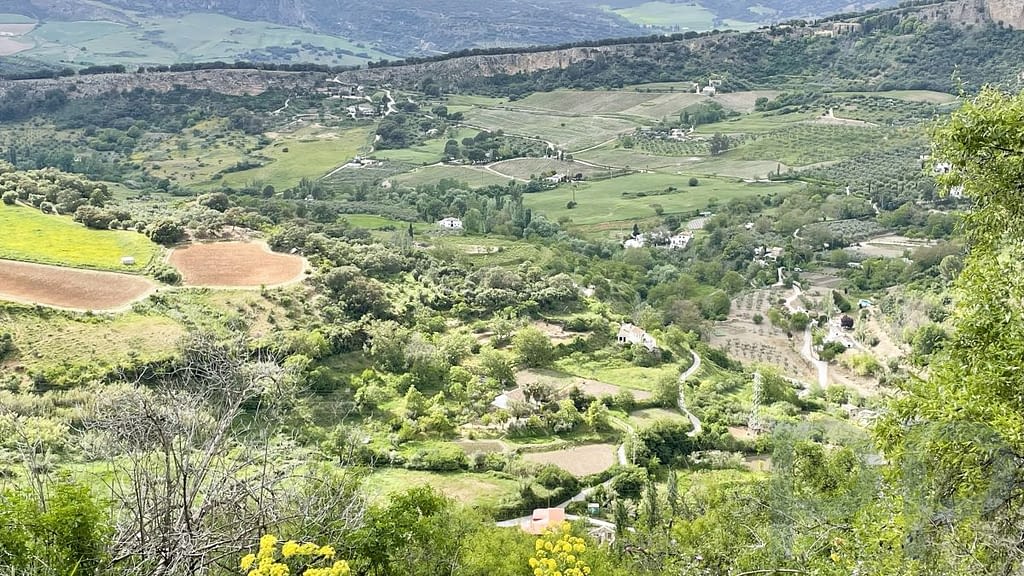
Another option is the Camino de los Molinos (Path of the Mills), which begins on the opposite side of town. This dirt track descends into the valley floor, giving wide-angle views back toward the bridge and the whitewashed houses clinging to the cliffs.
Be prepared: both hikes are steep and strenuous, especially coming back up. Wear good shoes, bring water, and avoid the hottest hours of the day.
Note: new walkway projects are ongoing in the gorge, and certain trails may be temporarily closed for construction. Check local signage or visitor info before hiking down.
A Legendary Bullring
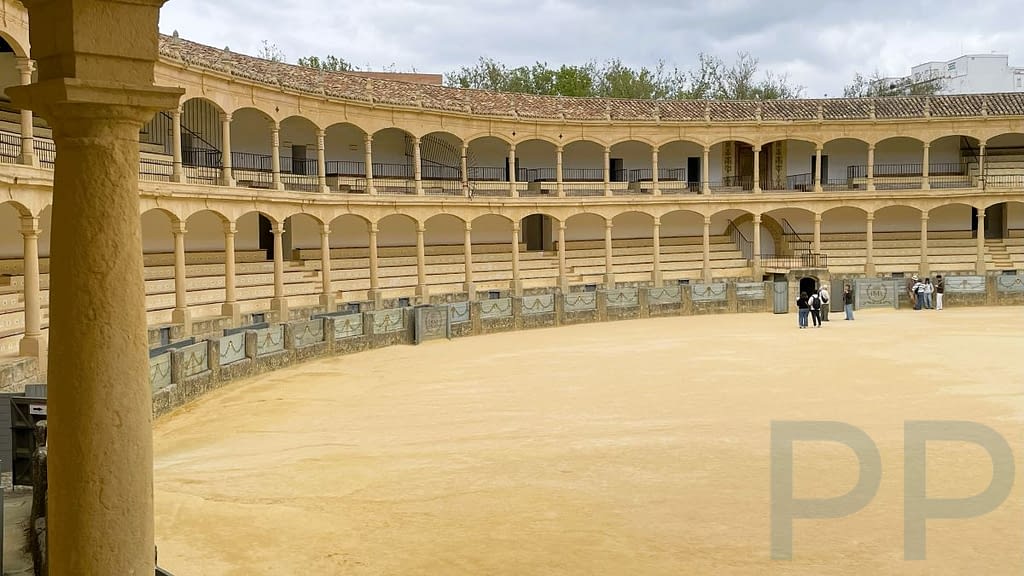
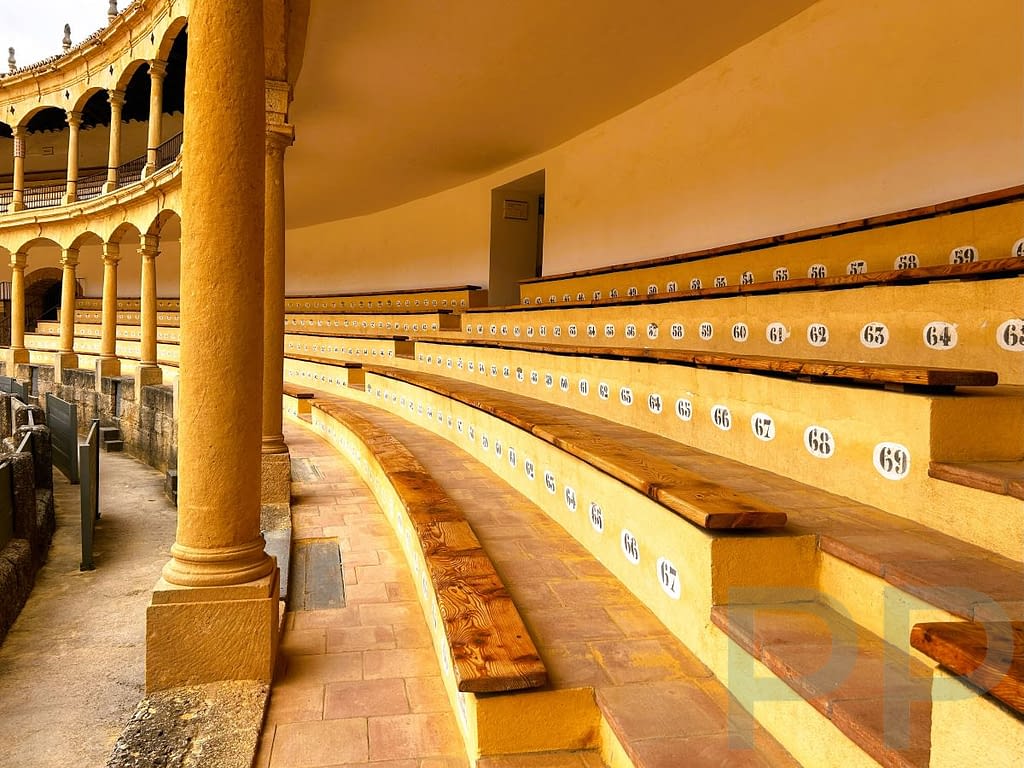
Ronda also holds a special place in the world of bullfighting. The Plaza de Toros, built in the late 18th century, is one of Spain’s oldest and most revered bullrings. Touring it gives you a sense of the history: you can step onto the sandy arena floor, peek into the stables, and visit the small museum. For more information and to purchase tickets for your Ronda Spain bullring tour, click here.
Touring Ronda’s Plaza de Toros gives a fascinating glimpse into the city’s history. The Plaza de Toros is open daily, with hours varying by season — generally 10:00 am to 6:00 PM in winter, extending to 8:00 PM in summer.
Admission includes a free self-guided audio tour, with handheld speakers that guide you through the different sections — from the sandy arena floor to the shaded seating arches, the stables, and the small museum. The audio tour is engaging and informative, and even if you’re not interested in bullfighting itself, the architecture and atmosphere make this one of Ronda’s must-see landmarks.
Though bullfights are rare here today, Ronda hosts the famous Corrida Goyesca once a year in early September during the Feria de Pedro Romero. Matadors wear elaborate 18th-century costumes inspired by Goya paintings, turning the event into both a cultural and visual spectacle.
Public Miradors (Viewpoints)
Ronda is filled with public miradors (viewpoints) that offer free, sweeping panoramas of the gorge and surrounding countryside. These vantage points are scattered around the city, so you’re never far from a jaw-dropping outlook.
- Mirador de Ronda and the cliffside Balcones del Coño deliver heart-stopping views and are some of the best viewpoints in Ronda, Spain.
- The Alameda del Tajo park, just behind the bullring, has shaded promenades leading to dramatic balconies overlooking the valley.
- Photographers flock to the Mirador de Aldehuela and Plaza María Auxiliadora for postcard-worthy perspectives of the Puente Nuevo.
Iglesia de Nuestra Señora de la Merced (Our Lady of Mercy Church)
Among Ronda’s striking landmarks is the Iglesia de Nuestra Señora de la Merced, instantly recognizable for its twin bell towers topped with green-and-white tiled spires. Built in the 16th century and later expanded, the church houses relics of Saint Teresa of Ávila and remains an active place of worship. Its bold yellow-and-white façade and ornate details stand out along the main street, making it one of the city’s most photogenic buildings.
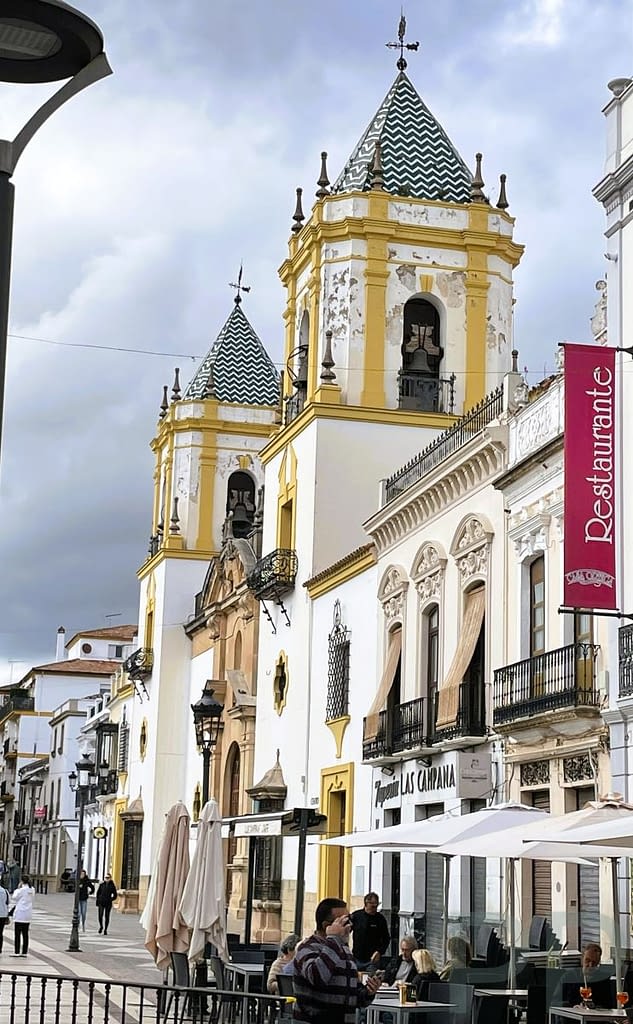
Inside, the Church of Our Lady of Mercy has three naves with a vaulted central aisle, a domed transept, and gilded Baroque details. It is most famous for housing a relic, notably the preserved hand of Saint Teresa of Ávila. The church is open Monday through Saturday, with a long break at midday when it closes for lunch.
The church sits on a lively stretch where locals and visitors mingle at sidewalk cafés. It’s a great spot to pause with a coffee and admire how centuries of history blend seamlessly with modern Andalusian life.
Compact, Walkable, and Full of Charm
Ronda is one of the most striking examples of compact walkable towns in Andalusia, with its sights clustered close together and easy to explore on foot. In a single day you can:
- Stroll across the Puente Nuevo and wander the public miradors.
- Tour the bullring and museum.
- Hike into the gorge for a real workout and dramatic views of the bridge and waterfall.
- Explore the historic core around Santa María la Mayor.
- End with tapas and a sunset drink overlooking the canyon.
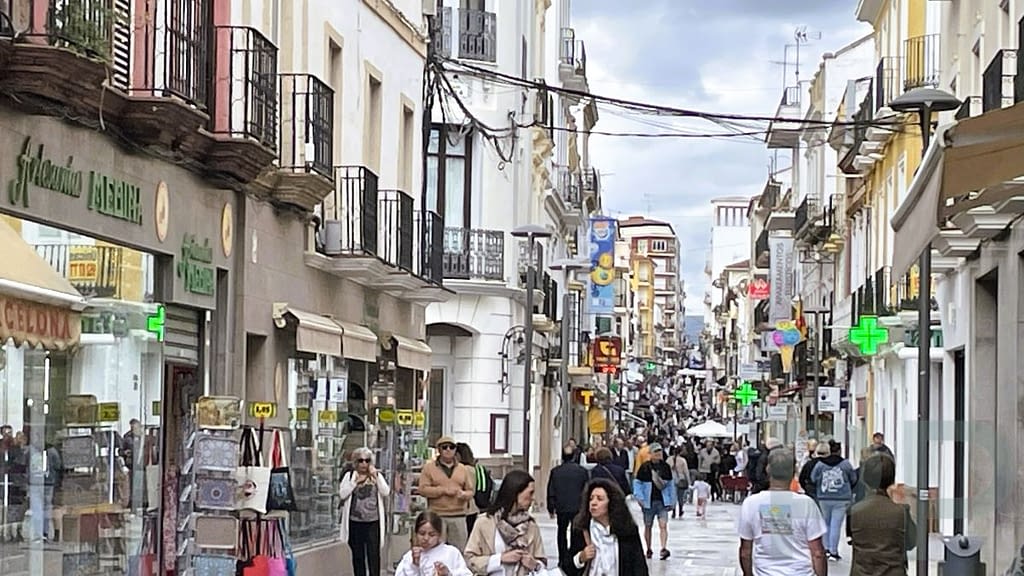
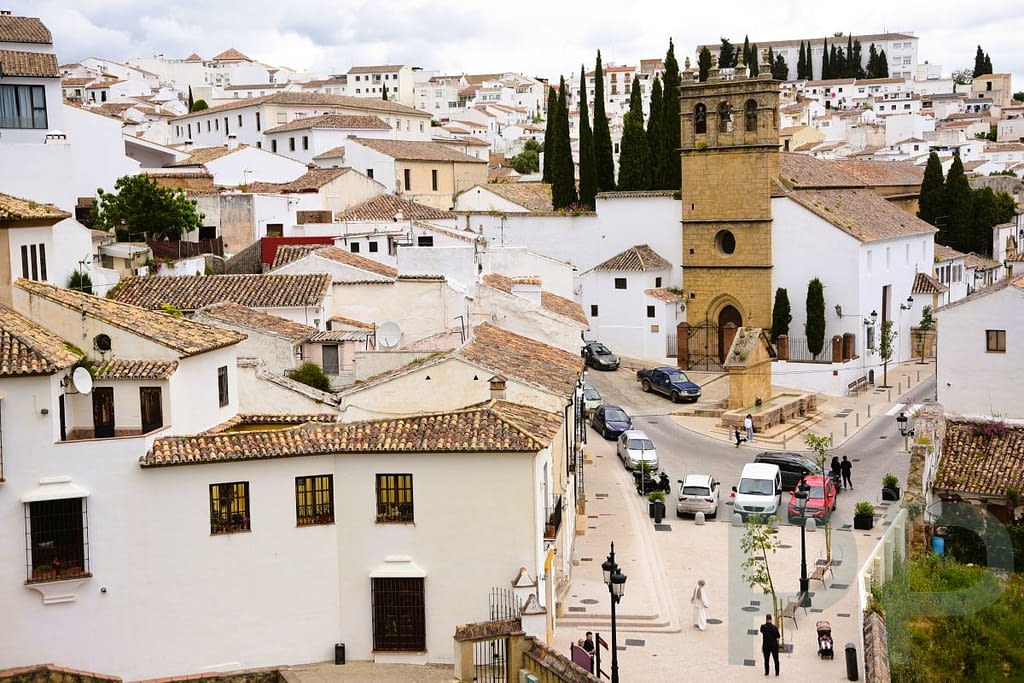
Along the main pedestrian street, you’ll find cafés, boutiques, and a mix of high-end shops and local stores, giving Ronda both polish and authenticity. Despite its popularity with European visitors, the city maintains a friendly, lived-in feel.
Where to Linger
Ronda’s magic is best savored slowly. Some favorite spots to pause include:
- Parador de Ronda – A former town hall turned hotel with a terrace that offers unforgettable bridge views.
- Restaurante Don Miguel – Ideal for a cold beer on the patio with Puente Nuevo as your backdrop.
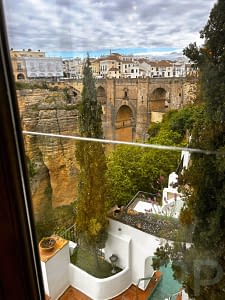
- Hotel Montelirio – We stayed at Hotel Montelirio, perched right on the edge of the gorge. Waking up to breakfast with Puente Nuevo filling the window was unforgettable — a view so good it made us linger over coffee longer than planned.
- Bar El Lechuguita – A lively tapas bar where you order with little paper slips. It’s incredibly popular, so arrive right at opening time to grab a seat.
And for something sweet? Stop at a local pastelería or gelato shop along the main drag before continuing your stroll.
Parking in Ronda
If you’re visiting Ronda on a day trip, plan ahead for parking. The old town’s streets are narrow and often restricted, so it’s best to use one of the public car parks near the center:
- Parking Martínez Astein – large underground garage about a 10-minute walk from the Puente Nuevo.
- Parking El Castillo – smaller but very close to the old town.
- Parking La Merced – near the bullring and Alameda del Tajo park.
All are paid lots, but they’re convenient, secure, and save the hassle of squeezing into the historic streets. From any of them, it’s an easy walk to Ronda’s main sights.
If you’re staying overnight, arrange parking with your hotel.
Practical Details
Ronda is an easy side trip from southern Spain. It’s about 100 km (62 miles) from Málaga — a 90-minute drive through scenic mountain roads — and around 120 km (75 miles) from Gibraltar, roughly two hours by car.
Final Thoughts
Ronda is one of Andalusia’s most striking destinations: a city split by a gorge yet bound together by history, culture, and charm. Compact enough to explore in a day, it rewards those who linger with hidden squares, unforgettable views, and moments of pure Andalusian life.
Whether you’re huffing your way back up from the gorge, touring the bullring, or simply sipping a drink as the sun sets over the striking bridge and surrounding countryside, Ronda leaves an impression you won’t forget.
Related Guides:
Hiking the Caminito del Rey: Spain’s Most Thrilling Gorge Walk