When planning our time in Barcelona, it became clear that a Montserrat day trip belonged on our itinerary. We’d seen photos of the monastery perched high in the mountains and marveled at how it appears chiseled out of the mountain. We were also interested in its history and the intriguing story of the discovery in a cave of the statue of the Virgin Mary by shepherd children in the 9th century.
We also love mountain scenery and cable cars with views – so we were hooked on the idea of this day trip from Barcelona.
After visiting, I’d say Montserrat is absolutely worth considering—but it helps to go in with the right expectations.
We enjoyed our day there. The scenery is dramatic, the monastery is fascinating, and the cable car ride was one of the highlights. At the same time, Montserrat felt more commercialized and crowded than we expected, and the hiking wasn’t quite as spectacular mile-for-mile as we’d imagined.
If I were ranking the stops on our Spain and Portugal itinerary, Montserrat would probably land around a 3.5 out of 5. I’m glad we went, and I’m especially glad we experienced the monastery and the cable car. It just wasn’t one of the standout destinations of the trip.
Why Montserrat Matters
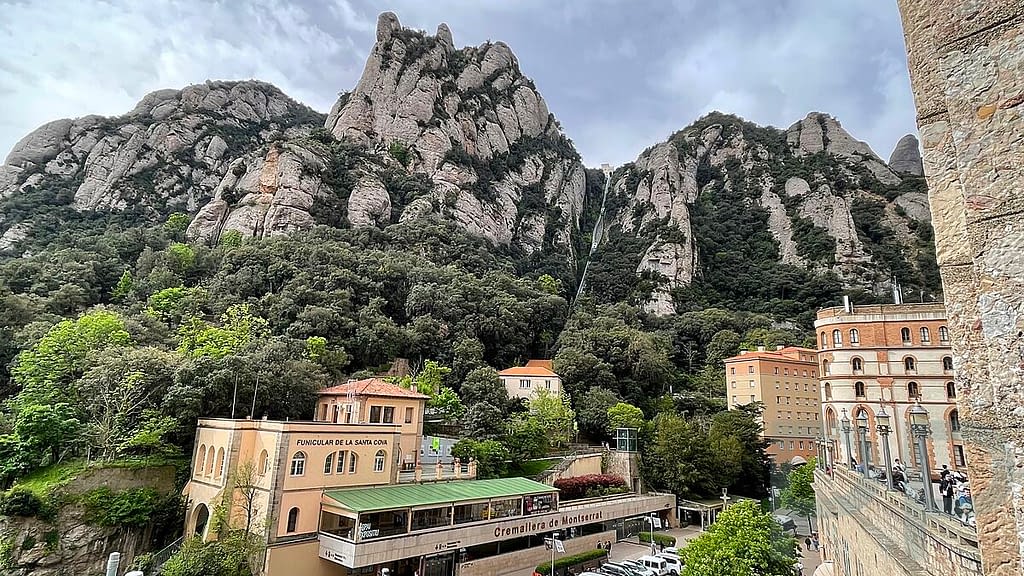
Before our trip, I had already read about the discovery of the Black Madonna, the Benedictine monastery, and Montserrat’s importance as a pilgrimage site. But standing there in person gave me a much greater appreciation for the history. It’s one thing to read about a monastery that has existed for centuries. It’s another to see it perched among those mountains and imagine what it took to build and sustain a religious community there.
According to local tradition, Montserrat’s religious significance began in the 9th century when shepherd children discovered a statue of the Virgin Mary in a cave after seeing mysterious lights and hearing heavenly music. Over time, a small shrine grew into one of the most important pilgrimage sites in Catalonia.
Standing there, I kept thinking about the sheer improbability of the place.
The Montserrat monastery seems perched on the ledge high in the mountains and surrounded by massive rock formations. Long before trains, cable cars, paved roads, and modern equipment, generations of Benedictine monks, craftsmen, laborers, and patrons built and sustained a religious community here.
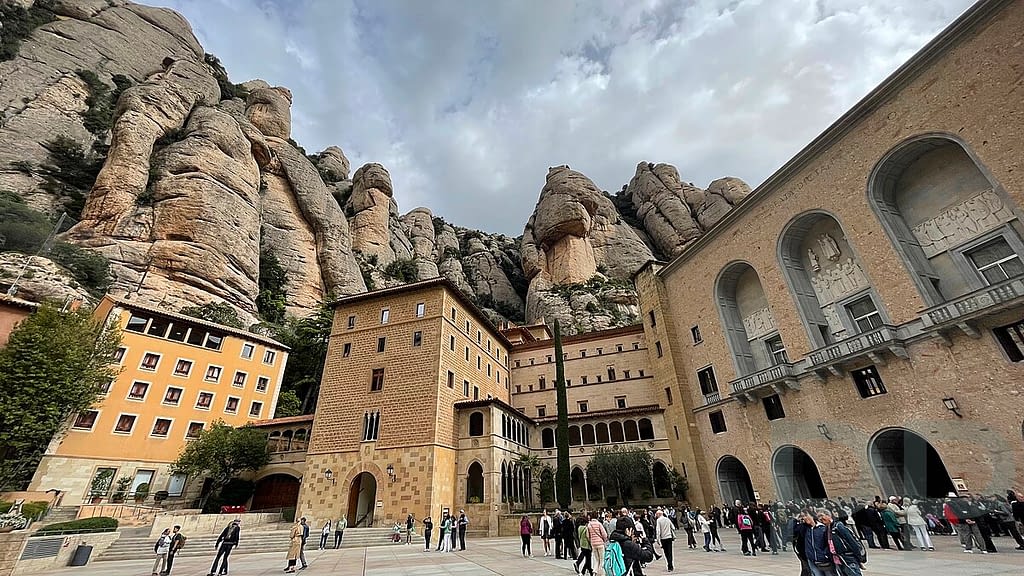
The Benedictines weren’t simply a group devoted to prayer. Their tradition emphasized both prayer and work, and the monastery gradually grew over centuries into the complex visitors see today.
What impressed me most wasn’t the architecture itself. It was imagining what it took to create and maintain a monastery in a place like this.
Is Montserrat Worth Visiting?
Yes, especially if:
- you enjoy history and culture
- you like religious sites
- you want an easy day trip from Barcelona
- you enjoy mountain scenery
- you like understanding the story behind a place, not just taking photos
If you’re looking for a peaceful mountain retreat, you may be disappointed.
If you’re looking for a place that combines history, faith, scenery, and outdoor activity, Montserrat offers a lot.
For us, a day trip to Montserrat from Barcelona fit nicely into our Epic 3-Week Spain and Portugal itinerary.
How We Got There
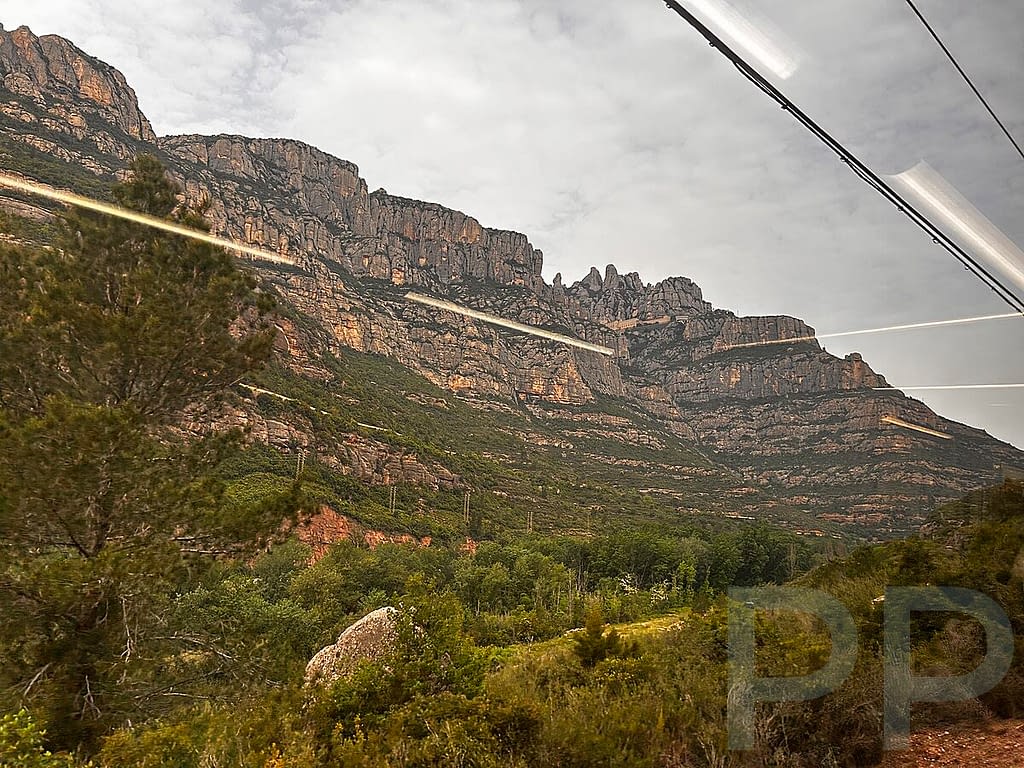
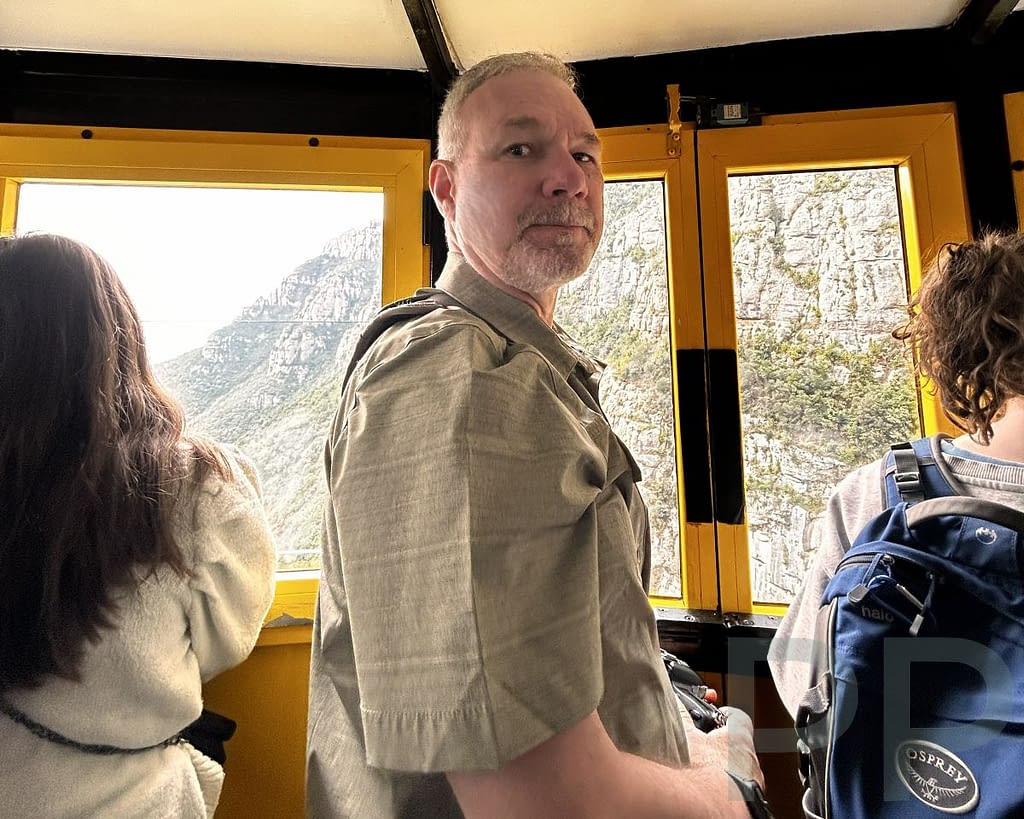
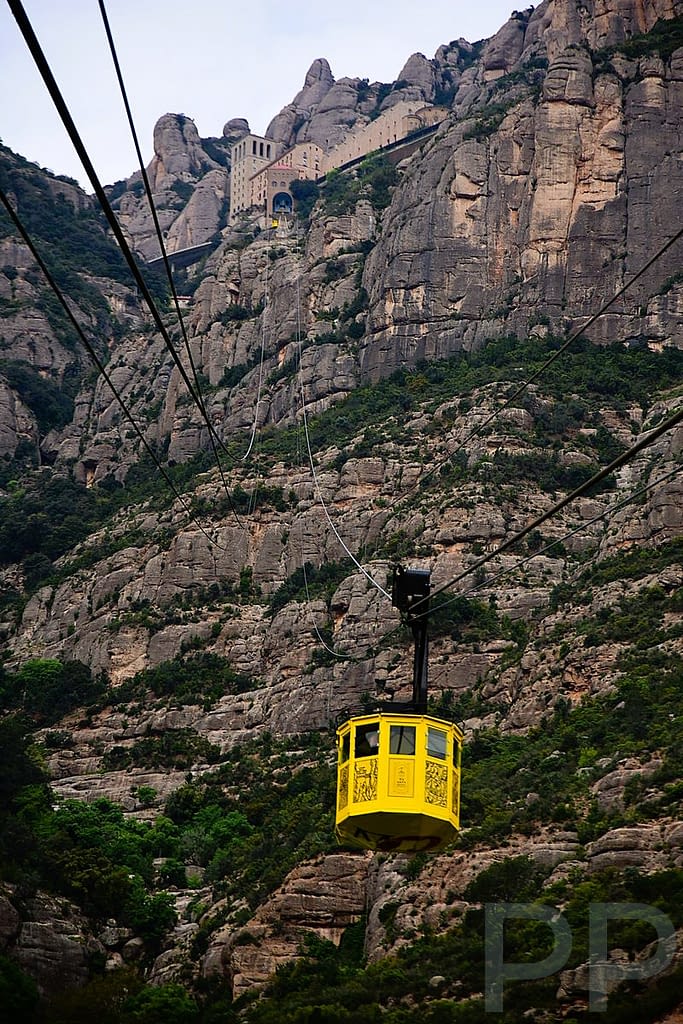
We visited independently from Barcelona and found it surprisingly easy.
We purchased the Trans Montserrat Pass, which took a little research to figure out but ended up being a great option.
The pass included:
- Metro transportation in Barcelona
- Round-trip FGC train from Plaça Espanya
- Round-trip Aeri de Montserrat cable car
- Sant Joan funicular
Note: The pass did not include the Boys’ Choir performance or access to the Black Madonna but admission to the basilica is free, although it closes for Boys’ Choir performances and at other times.
We left Barcelona early in the morning and returned around 4 PM, which still left plenty of time to enjoy the city afterward.
Understanding Montserrat Tickets
One thing that can be confusing when planning a visit to Montserrat is the variety of transportation and ticket options. The official Montserrat website does a good job of explaining the differences, and I recommend reviewing options before your trip.
It’s also important to understand that the basilica itself is free to enter. If you’d simply like to visit the church, you can do so without purchasing a special ticket.
However, if you want to see the famous Black Madonna (La Moreneta), you’ll need a separate timed-entry reservation. Because access is controlled, visitors enter through a designated line during their assigned time slot before proceeding past the statue.
Afterward, you’re free to return to the main basilica and spend as much time exploring the church as you’d like.
If seeing the Black Madonna is important to you, be sure to confirm that your ticket package includes access or reserve a time slot separately.
Why We Chose the Cable Car
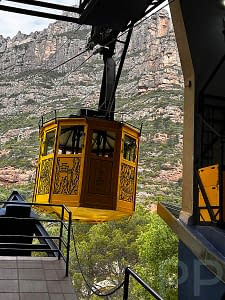
One of the biggest decisions is whether to take the cable car or the rack railway to Montserrat.
We chose the cable car because we thought it would provide better views and photography opportunities.
No regrets.
The approach to Montserrat ended up being one of our favorite parts of the day.
As the train rolled through the countryside, the rugged mountain landscape slowly came into view. Then we boarded the cable car and climbed above the valley toward the monastery.
Seeing the monastery emerge from the mountainside was genuinely impressive.
If we visited again, we’d choose the cable car again.
Visiting the Basilica and the Black Madonna
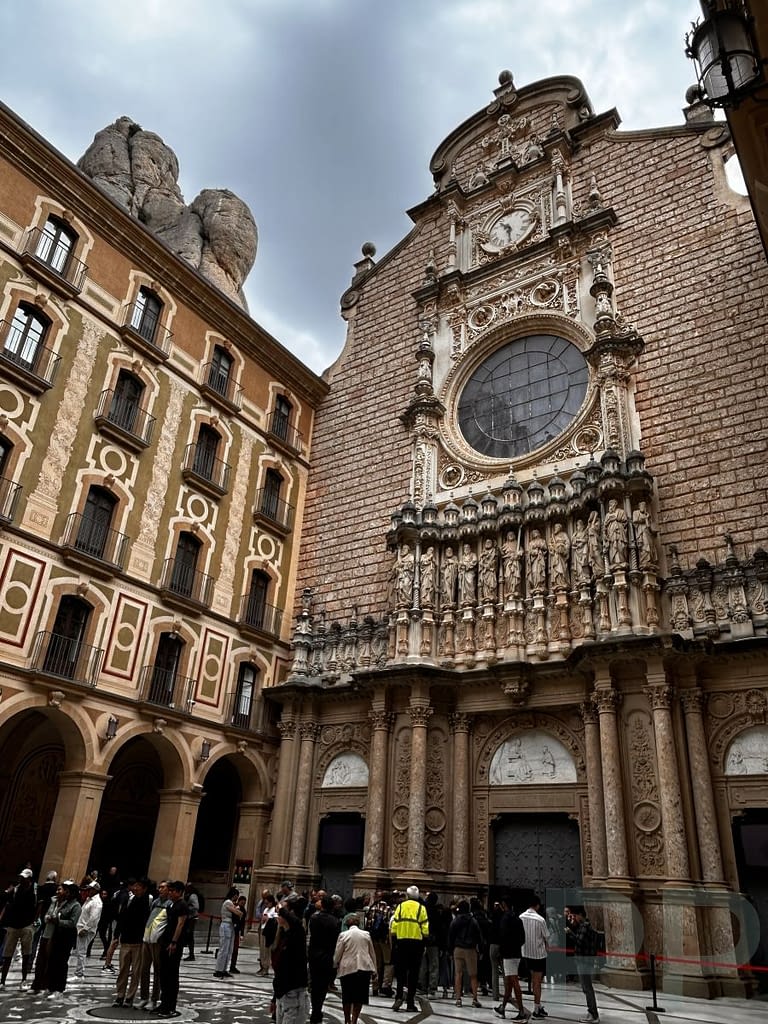
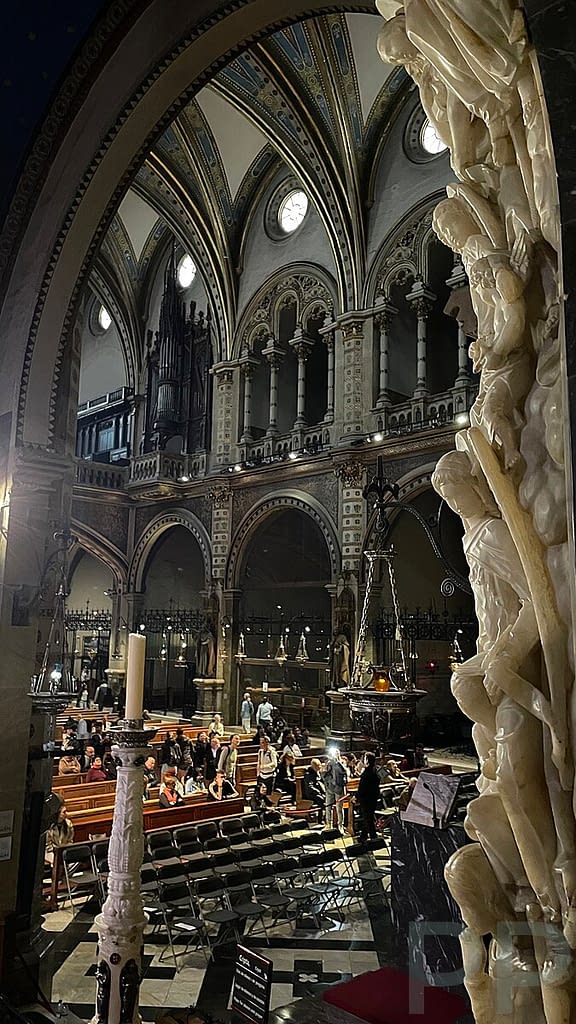
At the center of the complex is Santa Maria de Montserrat Abbey, a Benedictine monastery that remains active today.
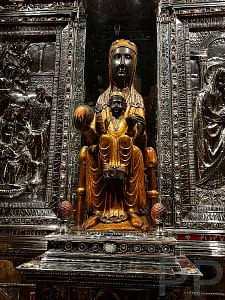
This isn’t just a historic building that tourists visit. Monks still live and worship here, continuing a religious tradition that stretches back nearly a thousand years.
To see the Black Madonna, visitors first move through a controlled line that gradually leads past the statue.
One of the most recognizable features of the statue is the orb she holds in her hand. Many pilgrims touch the orb while seeking the Virgin Mary’s blessing.
Known locally as La Moreneta, the Black Madonna is the patron saint of Catalonia and has drawn pilgrims here for centuries.
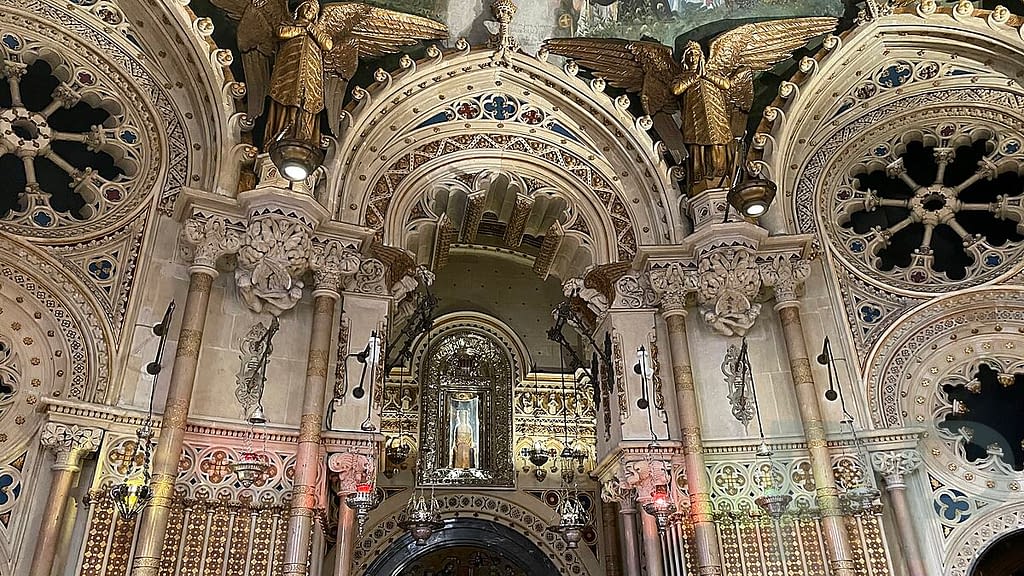
After passing the Black Madonna, don’t rush back to the basilica. Just beyond the statue is the ornate Sala del Cambril covered in artwork, mosaics, and stained glass windows. It’s one of the most beautiful spaces in the monastery and easy to overlook if you’re focused on moving with the crowd.
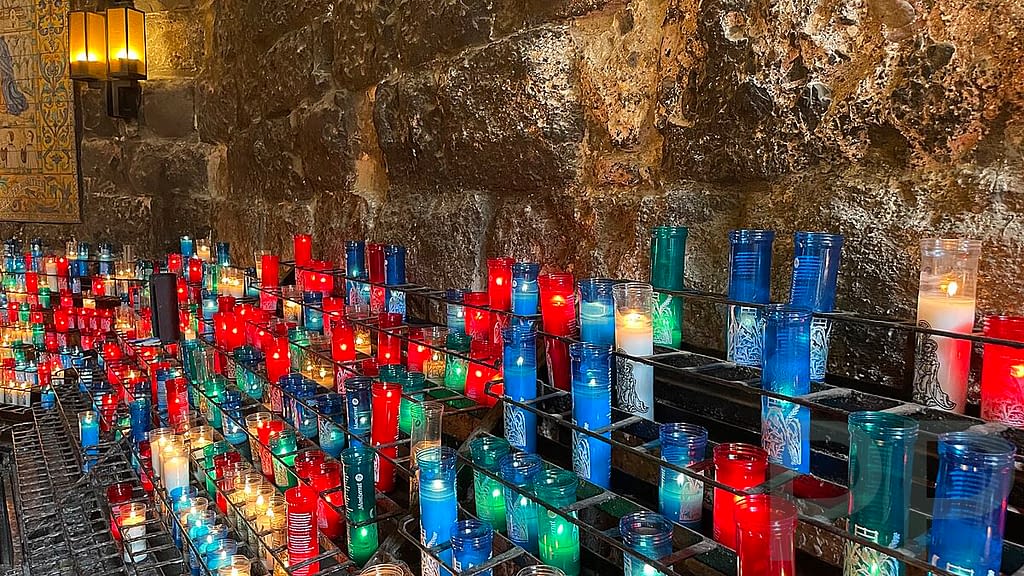
One surprise for me was the wall of votive candles along the route to the Black Madonna. Hundreds of candles in different colors glow against the stone walls, creating one of the most atmospheric parts of the visit. It’s a reminder that for many people, Montserrat isn’t simply a sightseeing destination—it’s a place of prayer and pilgrimage.
After viewing the statue, you’re free to return to the main basilica and spend as much time in the church as you’d like.
Escolania de Montserrat (Boys’ Choir)
Another popular Montserrat experience is hearing the Escolania de Montserrat, one of the oldest boys’ choirs in Europe. We didn’t attend a performance during our visit, but many visitors consider it one of the highlights of a trip to Montserrat.
One thing to keep in mind is that the basilica may close to general visitors before choir performances and other services. During our visit, we were gently ushered toward the exit as preparations were underway. If hearing the choir is important to you, check the current performance schedule before your trip and plan your visit accordingly.
Exploring the Monastery Grounds
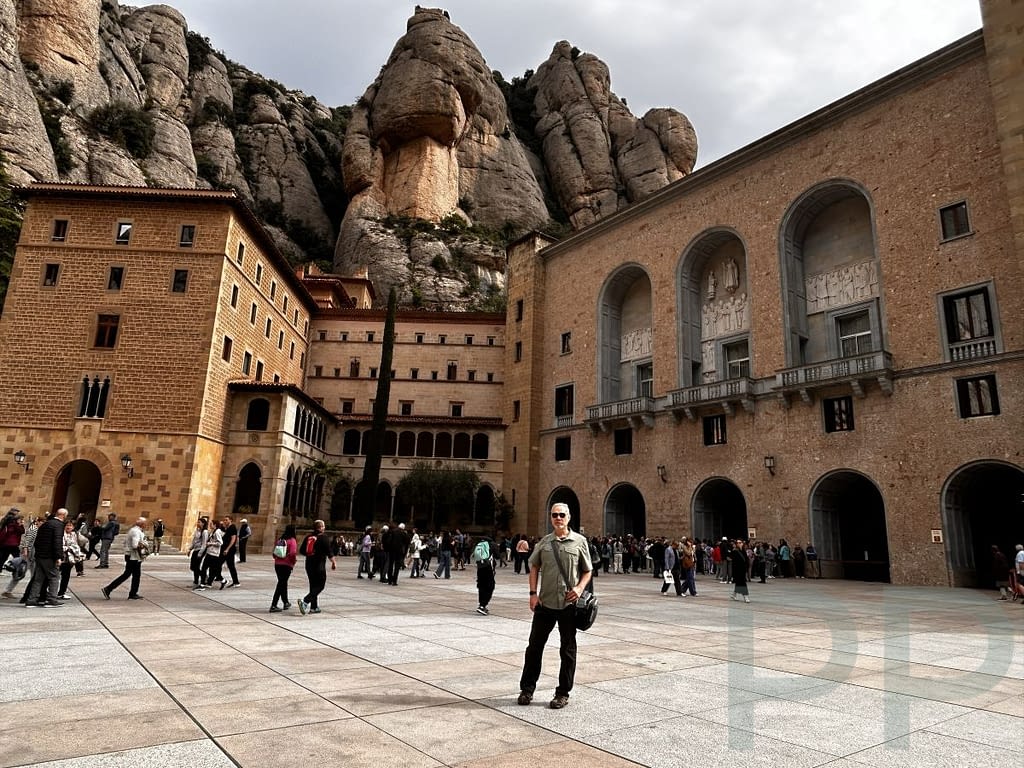
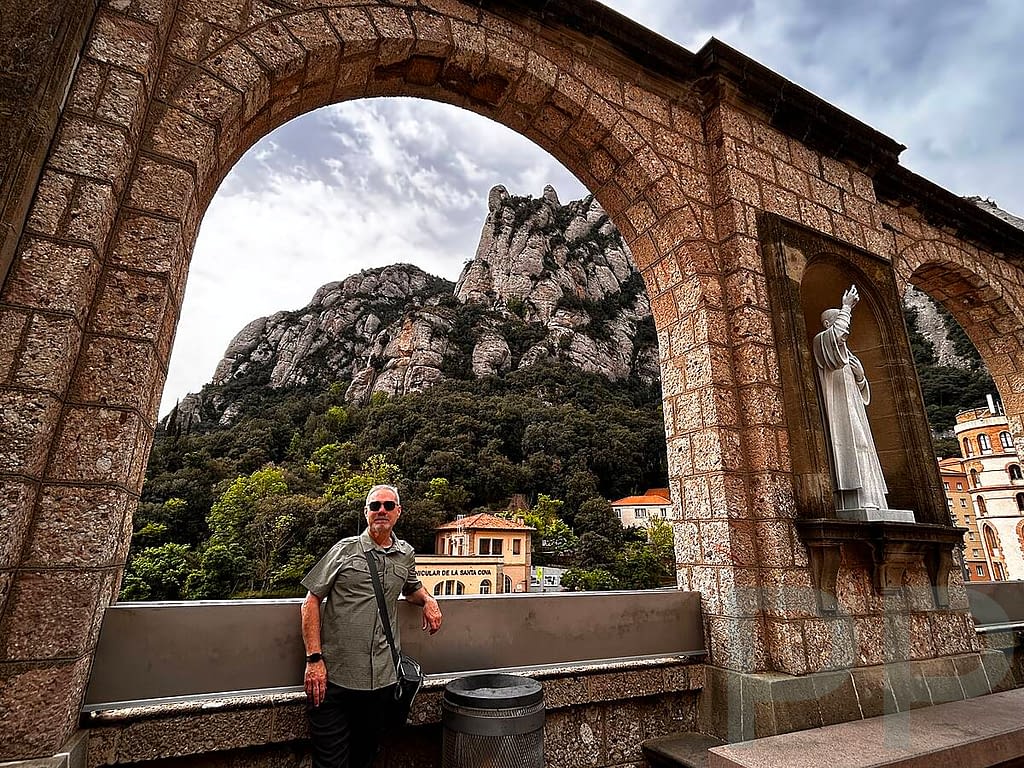
Once we finished our visit to the basilica, we spent some time wandering around the monastery grounds and taking in the views.
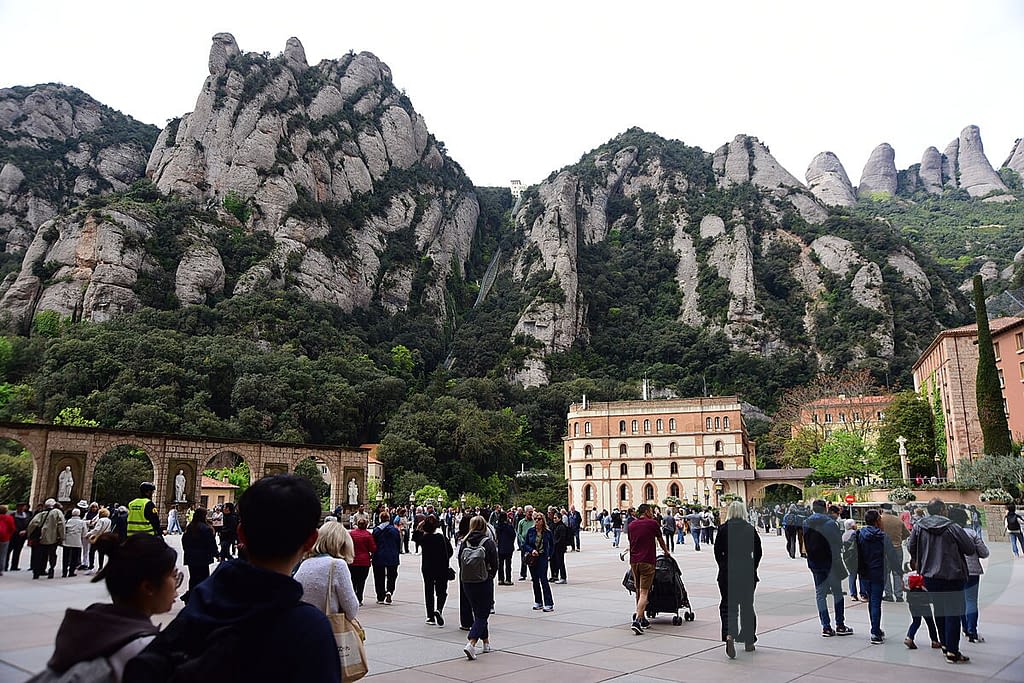
The large plaza in front of the church gives you room to appreciate the setting. There are viewpoints and terraces around the complex with views of the towering mountains above and the countryside below.
The complex is larger than I expected. In addition to the basilica, there are cafés, restaurants, a bookstore, gift shops, visitor facilities, and the Montserrat Museum.
Between the tour groups, buses, restaurants, and shops, Montserrat felt crowded and tourist-oriented, especially by mid-morning.
Taking the Funicular Higher and Hiking Down
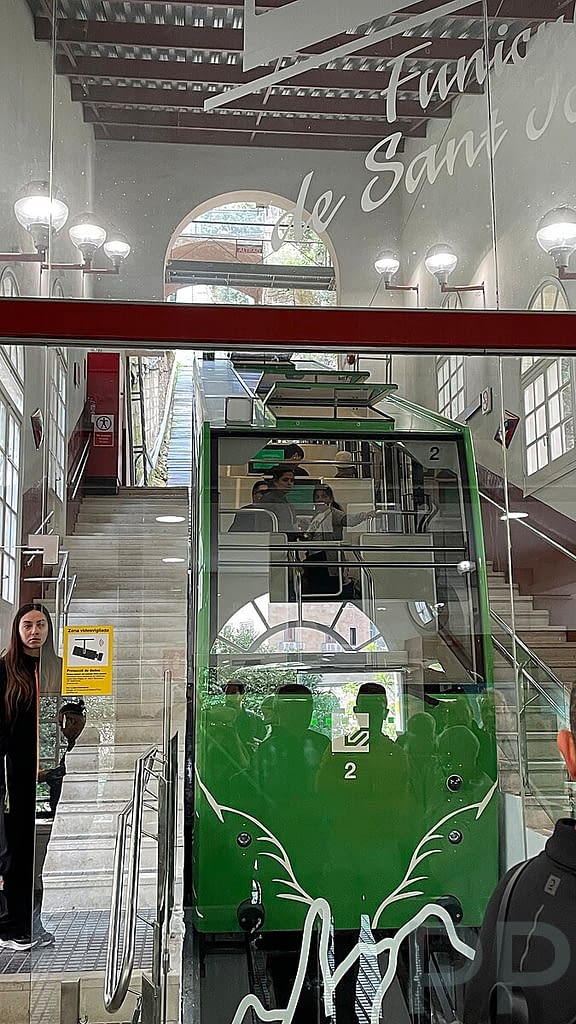
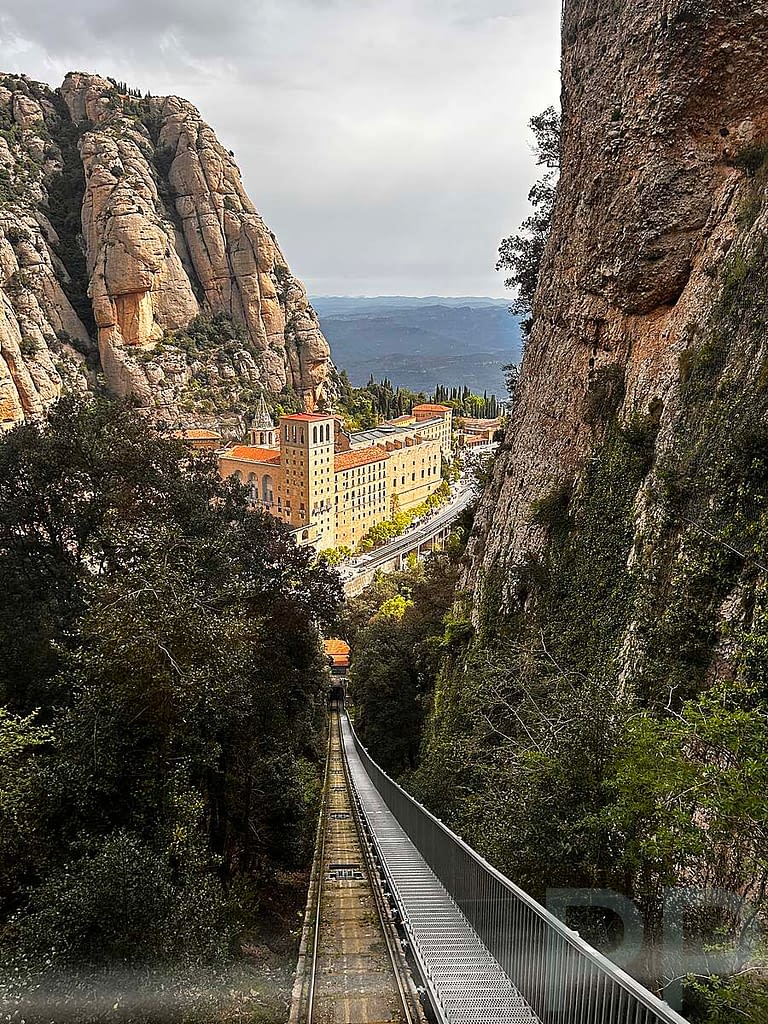
After exploring the monastery, we took the Sant Joan funicular higher into the mountains and then hiked back down, a fun experience.
The hike is enjoyable, and features incredible views of the mountains and surrounding countryside. We enjoyed getting away from the crowds and spending time outdoors, but overall the scenery wasn’t quite as dramatic as we expected with long stretches of walking downhill without much variation in the scenery. Maybe we were just tired! But looking back, the cable car rides, monastery grounds, and viewpoints were the most memorable parts of the day.
If you want an active couple of hours away from cities, go for it. If you’re short on time, skip it.
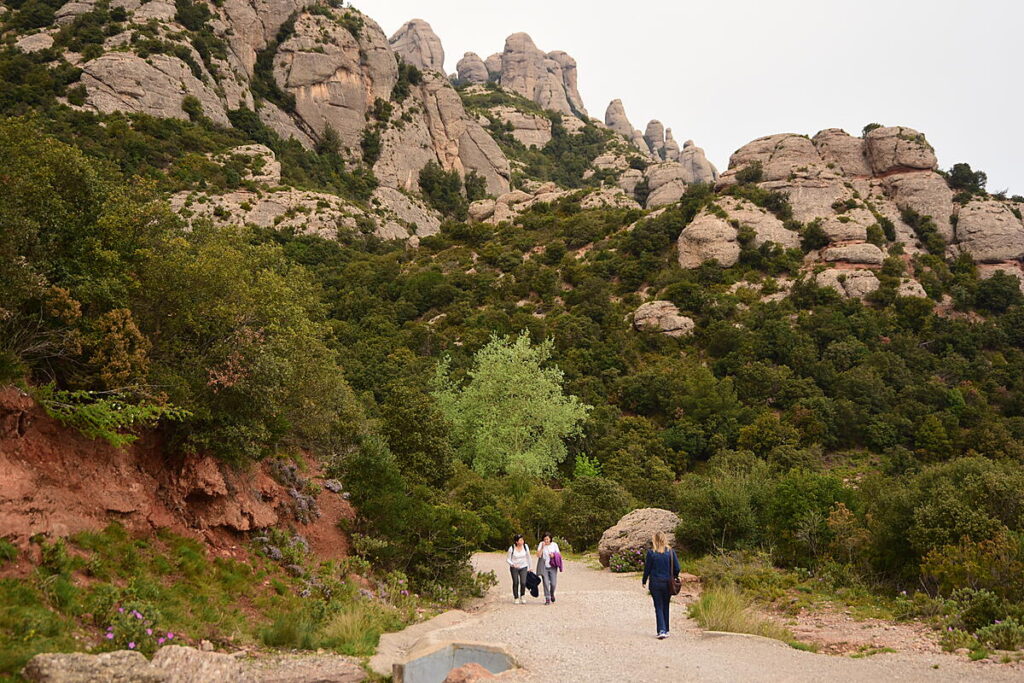
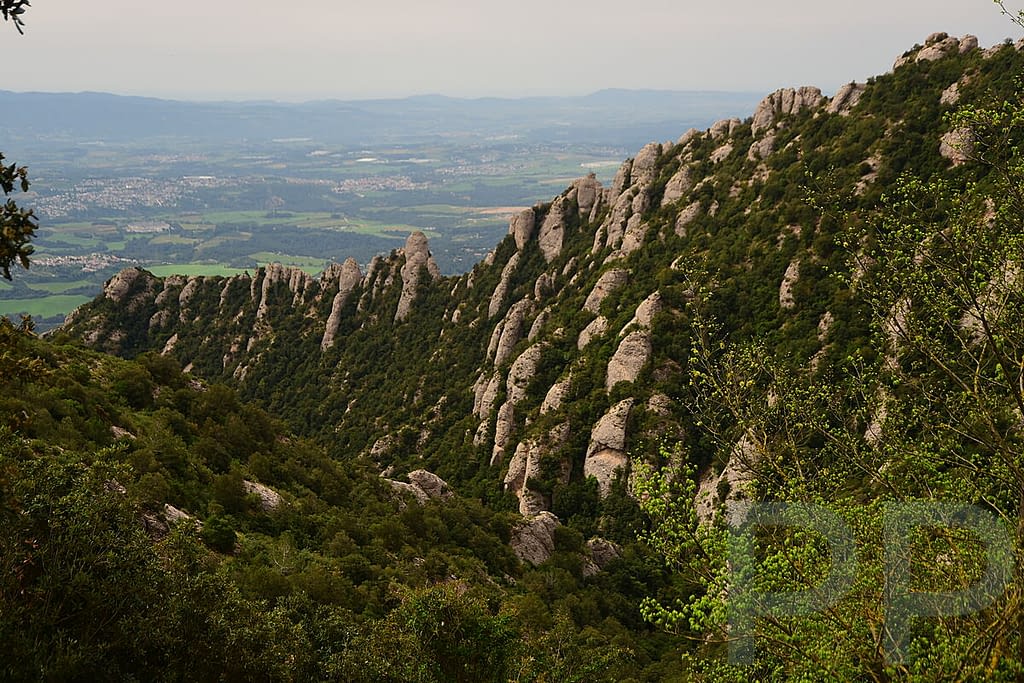
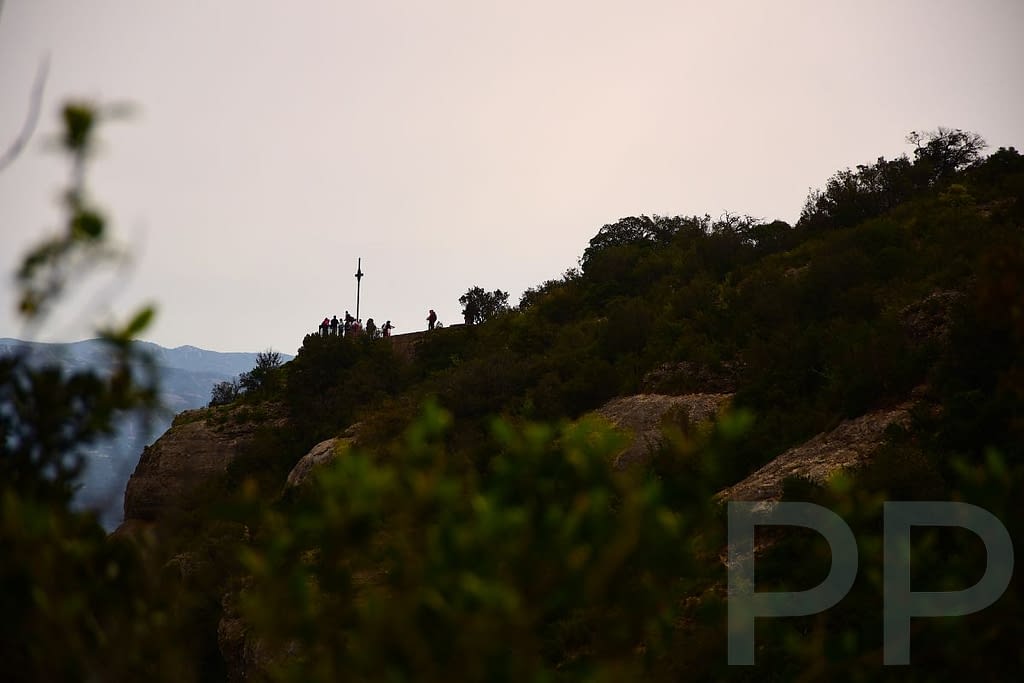
Many hikers continue beyond the Sant Joan funicular area to Sant Jeroni, the highest point in Montserrat and home to one of the mountain’s most famous viewpoints. We chose instead to hike back down to the monastery, which gave us a taste of Montserrat’s trails without turning the day into a more strenuous trek.
Coffee and Tapas Before Heading Back to Barcelona
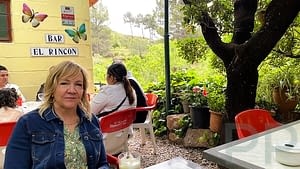
After coming back down the mountain, we had some time before our train departed and stopped at Bar El Rincón near the Aeri station.
We grabbed coffee and tapas and enjoyed a quiet break before heading back to Barcelona.
Bar El Rincón is in a garden setting, with some tables overlooking the Llobregat River. It’s not fancy, but after a busy day of sightseeing and hiking, it was a perfect place to relax and decompress before the train ride back to the city.
For sure, it’s a better option than the overpriced and very busy dining options at the monastery.
FAQ: Visiting Montserrat
Is Montserrat worth visiting from Barcelona?
Yes. We enjoyed the monastery, mountain scenery, and cable car, though we found it more crowded and touristy than expected.
How much time do you need at Montserrat?
We left Barcelona in the morning and returned around 4 PM, which felt about right.
Should I take the cable car or the rack railway?
We chose the cable car and would choose it again for the views.
Do you need a ticket to enter the basilica?
No. The basilica is free, but the Black Madonna requires a separate timed-entry reservation.
Final Thoughts
Montserrat wasn’t at the top of the highlights from our Spain and Portugal itinerary, but it was one of the most unique.
The scenery is impressive. The cable car is fun. The history is fascinating. And the fact that the monastery is still active today gives the place a depth that goes beyond simply being a beautiful viewpoint.
For me, the most memorable part wasn’t the hike or even the church itself.
It was standing in the plaza, looking up at the mountains, and wondering how generations of people managed to build and sustain a monastery in a place like this.
Related Guides
Montserrat was one of several memorable stops during our time in Barcelona. If you’re planning a longer stay, be sure to check out our Barcelona itinerary and other Spain travel guides below.