Madrid feels regal and grand because it was designed to project power. When King Philip II moved Spain’s capital here in 1561, Madrid was not yet a major city — it was chosen precisely because it could be shaped into one. Over the next several centuries, monarchs built palaces, formal squares, monasteries, and broad avenues intended to reflect imperial authority and national identity.
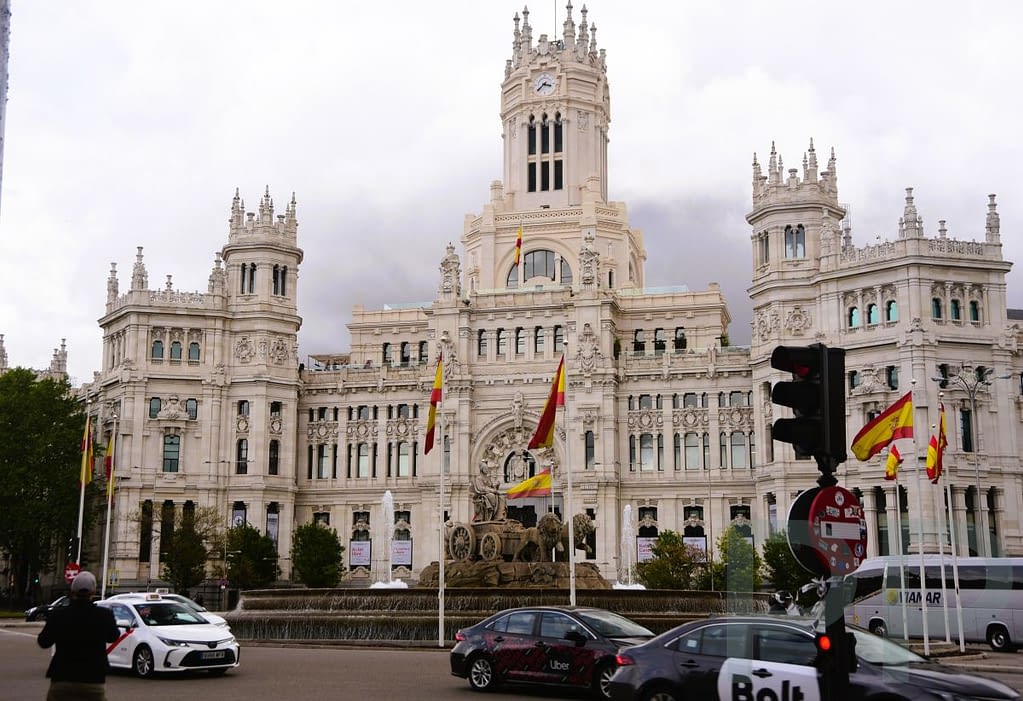
Today, that legacy remains visible everywhere. Grand plazas anchor the historic core. The Royal Palace dominates the skyline. Wide boulevards such as Gran Vía speak to early 20th-century ambition. Yet alongside this architectural weight is something distinctly Spanish — people strolling, lingering, gathering late into the evening. Madrid balances ceremony with everyday life in a way that feels both stately and alive.
Affiliate Disclosure: This post may contain affiliate links, meaning we may earn a small commission at no extra cost to you if you book through a link. We only recommend companies and experiences we’ve used and trust, and we include links thoughtfully — never excessively. Your support helps us keep Panoramic Pathways running and continue creating detailed travel guides.
Before You Go: Planning Ahead
Tickets Worth Booking in Advance
- Royal Palace of Madrid – Because the Royal Palace of Madrid frequently sells out days—or even weeks—in advance, especially in peak season, securing tickets early is essential if you want your preferred time slot and to avoid long waits.
- Prado Museum – Timed entry strongly recommended, especially mid-day.
- Reina Sofía – Essential if you want guaranteed access to Guernica without waiting.
- Thyssen-Bornemisza Museum (optional) – Usually easier, but art lovers should still consider advance tickets in peak season.
To see what’s available — from small-group walking tours to flamenco evenings — you can explore Madrid tours here.
How to Use This 2-Day Madrid Itinerary
Madrid is compact, but it’s layered. Rather than crisscrossing the city, this itinerary groups sights logically to minimize backtracking and fatigue.
Day 1 focuses on historic Madrid — the Habsburg-era core around Puerta del Sol, Plaza Mayor, and the Royal Palace — then moves north along Gran Vía, where early 20th-century architecture reflects a different chapter of the city’s evolution. The evening is intentionally open for tapas, drinks, and unhurried wandering.
Day 2 centers on Madrid’s “Golden Triangle of Art” — the Prado, Reina Sofía, and (optionally) the Thyssen-Bornemisza — balanced with green space in Retiro Park and a few optional neighborhood extensions.
Day 1: The Historic Core & Gran Vía
Theme: Royal Madrid and early 20th-century ambition
Logistics: Compact morning loop; linear westward afternoon
Morning: Puerta del Sol → Plaza Mayor → Royal Palace
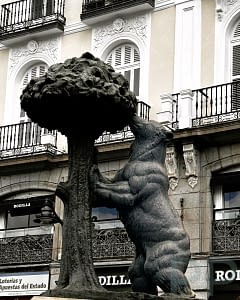
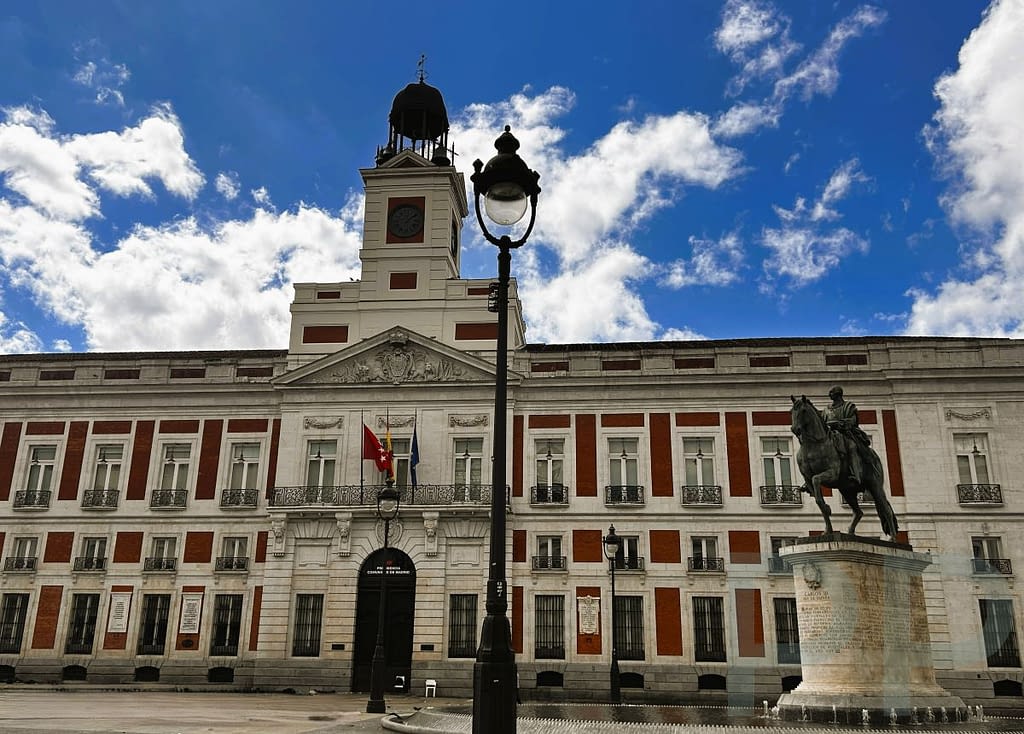
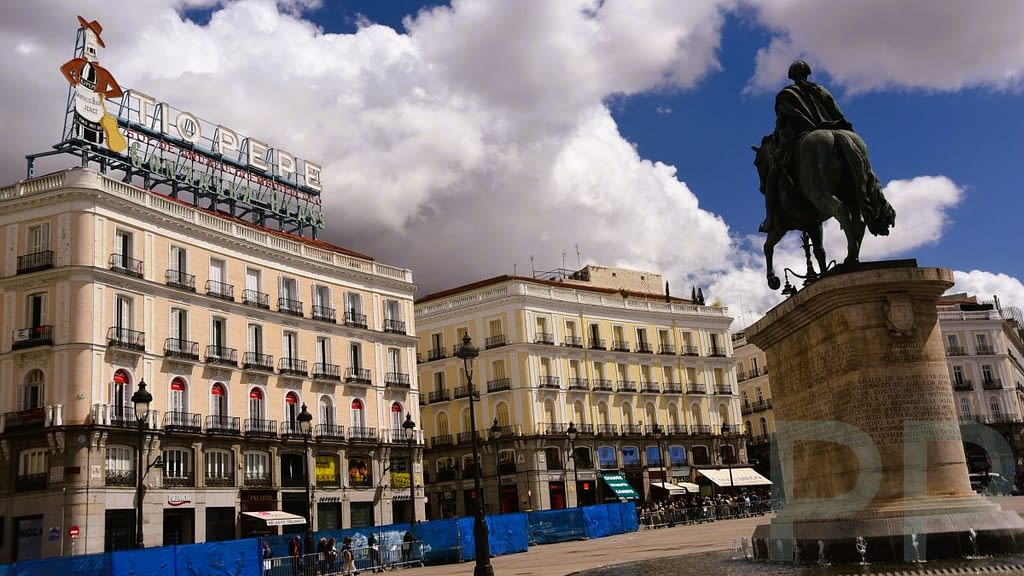
Begin at Puerta del Sol, Madrid’s symbolic center. Pause here. This is not a square to rush through. Stand near the equestrian statue of Charles III and take in the scale, the movement, the mix of locals and visitors. Look for the bronze bear and strawberry tree — Madrid’s enduring emblem — and the plaque marking Kilometer Zero, from which Spain’s national roads radiate.
Mid-Morning: Plaza Mayor + Mercado de San Miguel
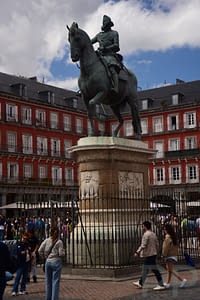
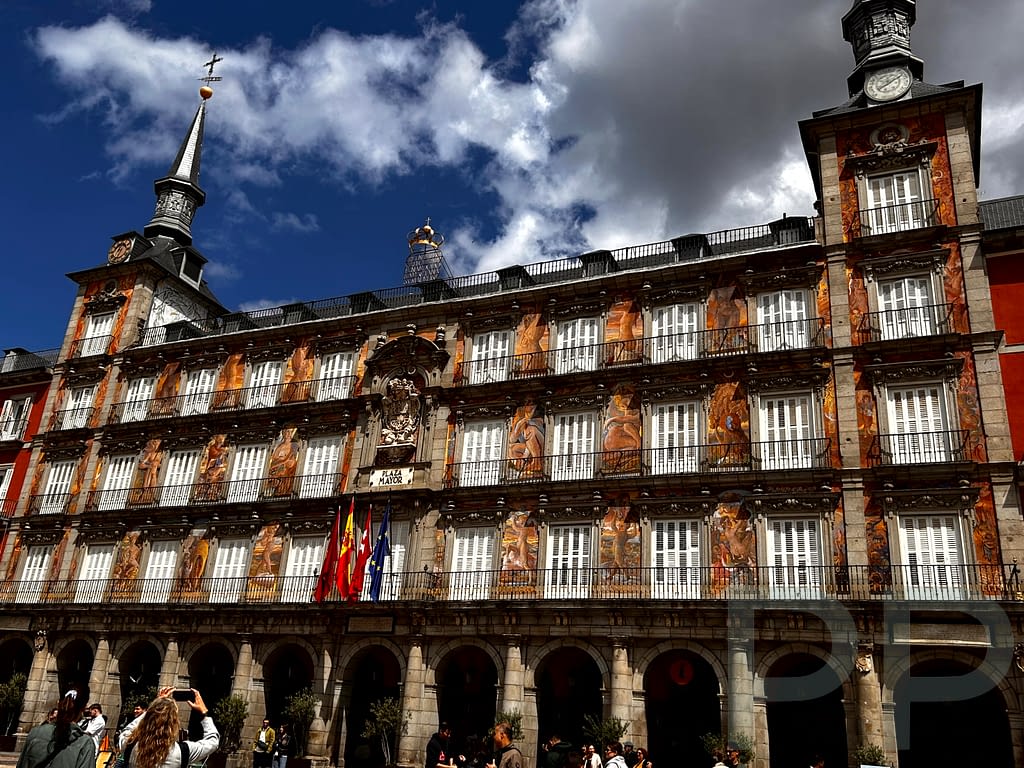
From Sol, walk west toward Plaza Mayor. As you enter the vast, enclosed square, note the symmetry of the four-story façades and the equestrian statue of Philip III at its center. During the height of the Spanish Inquisition, the square hosted autos-da-fé — public ceremonies where sentences were announced and carried out — underscoring Madrid’s role as the seat of royal authority.
Optional Stop: Just off Plaza Mayor sits Mercado de San Miguel, a beautifully restored iron-and-glass market dating to 1916. Today it operates more like an upscale food hall than a traditional neighborhood market. You’ll find stalls selling oysters, jamón, olives, croquetas, seafood tapas, vermut, wine, and small desserts — all under one roof.
The market can be extremely crowded — when we visited, we could barely move — but it’s still worth a short stop for the atmosphere alone. Even if you don’t eat here, it offers a quick cultural snapshot of modern Madrid’s food scene.
If you’re hungry and don’t want to commit to a full tapas crawl yet, it’s an easy place to sample a few small bites before continuing toward the Royal Palace.
Royal Palace
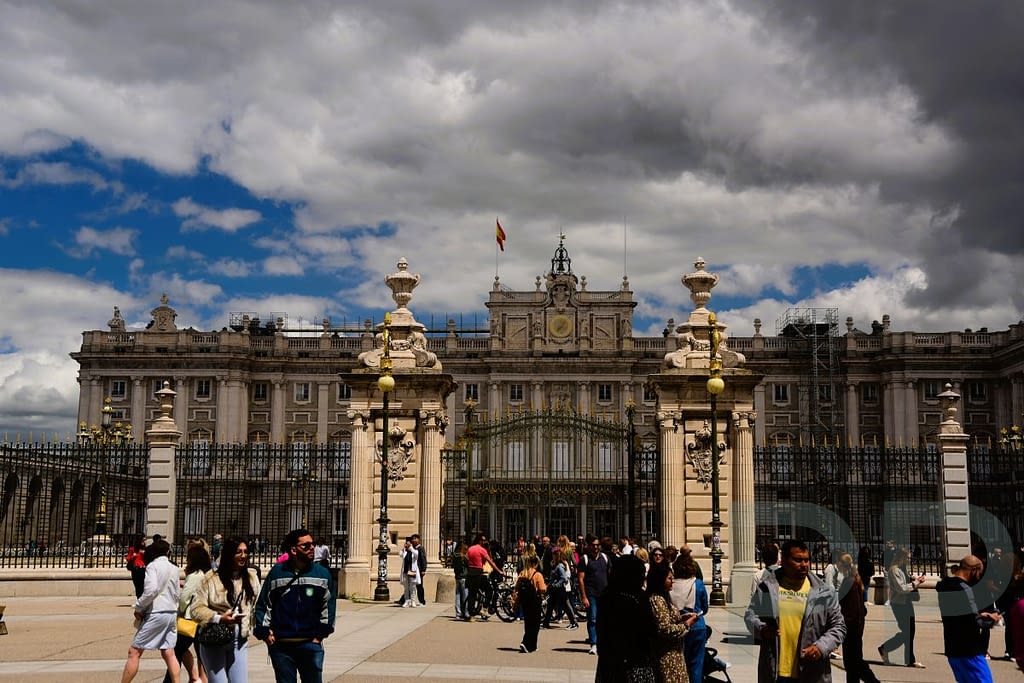
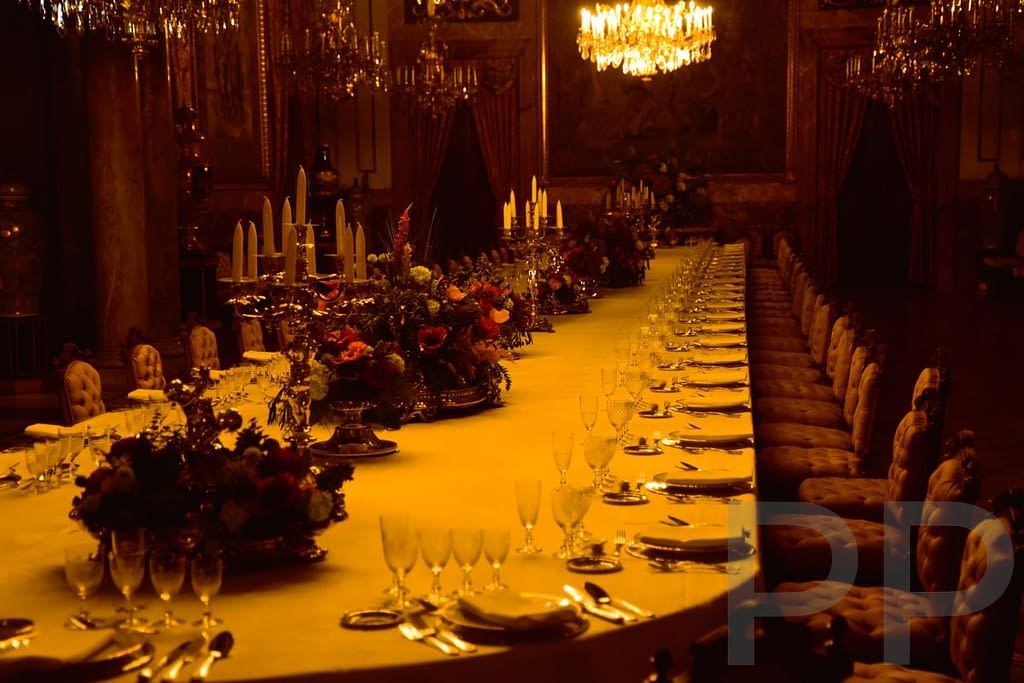
Continue toward the Royal Palace of Madrid, passing through streets that gradually widen and reveal the cathedral dome ahead. Tour the palace while you are here. With more than 3,000 rooms, it is one of Europe’s largest royal palaces — though today it is used only for state ceremonies.
It can be difficult to secure entry at peak times, even with advance planning. If official tickets are sold out, guided platforms sometimes offer additional access. We ended up using GetYourGuide for a guided tour, which was an informative, but more expensive, way to experience the palace.
The interiors — the Throne Room, the Royal Armoury, the frescoed ceilings — justify the effort.
Almudena Cathedral
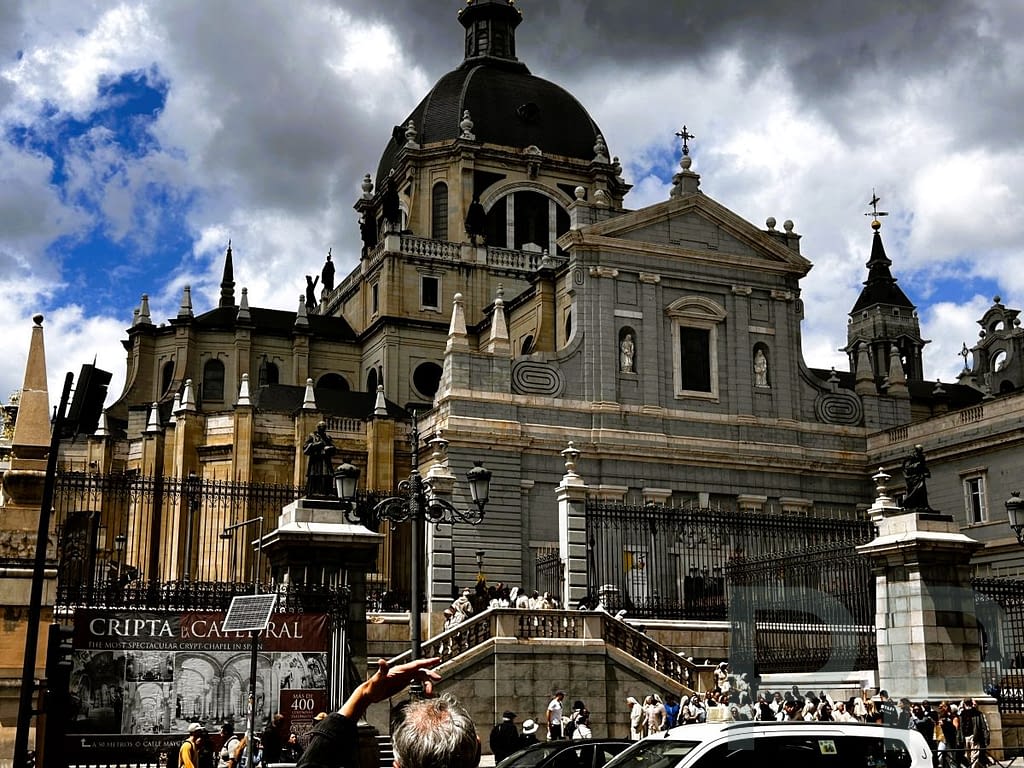
Across from the palace sits Almudena Cathedral, Madrid’s comparatively modern cathedral, consecrated in 1993. Step inside briefly—basic entry is typically free—and consider the dome for views back toward the royal complex.
Lunch Near the Palace
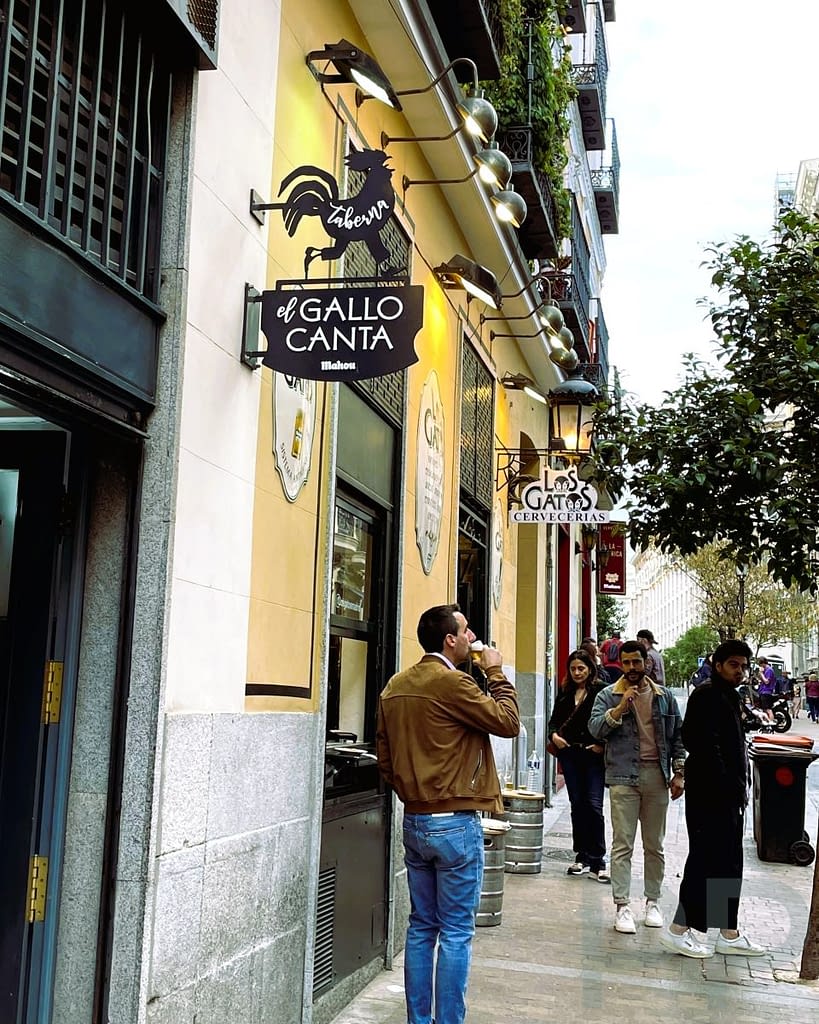
Head into La Latina, one of Madrid’s most atmospheric tapas districts. We chose La Menina – Taberna Castiza. “Castiza” refers to traditional Madrid style — unpretentious, rooted, classic. We sampled a variety of tapas and shared jamón ibérico de bellota, the prized acorn-fed Iberian ham that is sliced paper-thin and served simply so its depth of flavor stands alone.
Optional: Convent Sweets
Near Plaza Mayor, you can visit the Convent of Corpus Christi (Las Carboneras), where cloistered nuns sell handmade cookies via a revolving wooden turntable. You ring a bell, state your order, place money on the rotating shelf, and the sweets appear without the sisters ever being seen. Hours are unpredictable, but if available, it’s a fun little detour.
Afternoon: Gran Vía Walk
By afternoon, head toward Gran Vía, Madrid’s early 20th-century showpiece. As you walk west, you’re effectively moving through three architectural decades — the 1910s luxury storefronts, the 1920s skyscraper ambitions, and the 1930s Art Deco “American” stretch near Plaza de España.
Built between 1910 and the 1930s, it unfolds in architectural chapters: ornate Beaux-Arts façades at the eastern end, Chicago-style verticality in the 1920s stretch, and Art Deco and monumental forms closer to Plaza de España.
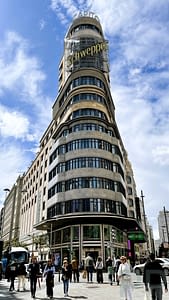
Look up often. The Metropolis Building’s gilded dome marks the boulevard’s beginning. When completed in 1929, the Telefónica building was Spain’s first true skyscraper and symbolized Madrid’s modern ambitions. The Schweppes building curves dramatically above Callao. This is Madrid’s Broadway — theaters, cinemas, shops, and steady movement.
Rooftop Stop: Riu Plaza España
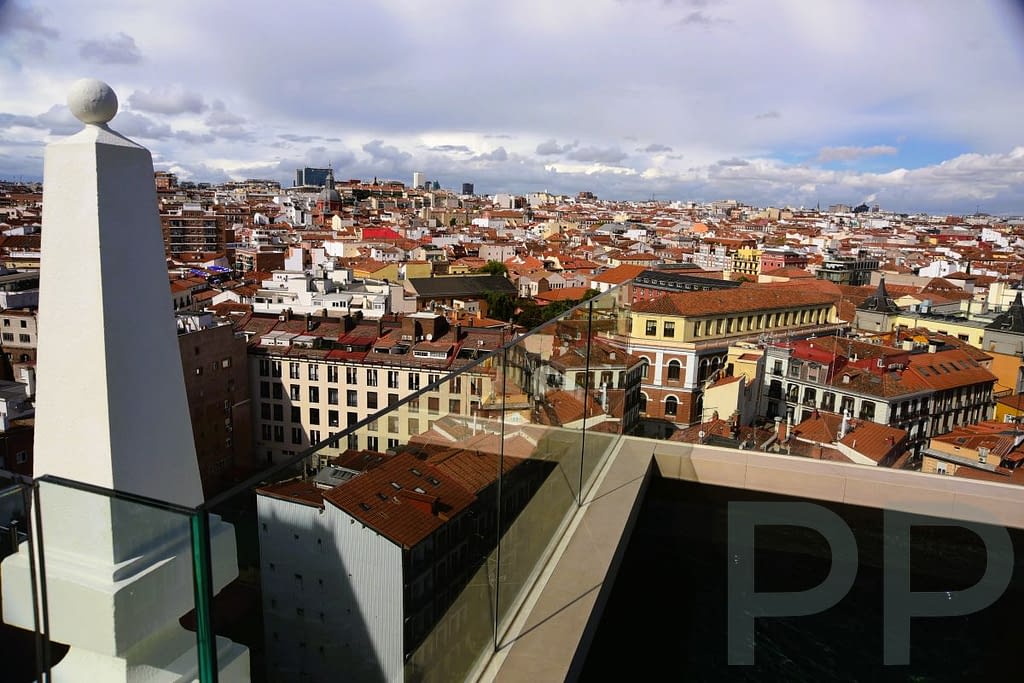
Near Plaza de España, take the elevator up to the rooftop bar at Riu Plaza España. From here, you can see the plaza below, the Royal Palace in the distance, and the length of Gran Vía stretching east. There is a small pool at one end and a glass skywalk for panoramic views.
Other rooftops — including the one at Dear Hotel — are nearby, but the views from Riu Plaza España are among the most dramatic.
Evening: Tapas & Madrid After Dark
By late afternoon on Gran Vía — especially if you’ve paused on a rooftop — you’ll feel the city shift gears.
Evenings in Madrid unfold gradually. Rather than sitting down for one long meal, many locals move from bar to bar — one stop for vermut, another for croquetas, another for jamón, another for a final drink.
Head into La Latina, or toward the streets between Sol and Plaza Mayor. This is where Madrid’s tapas culture comes alive.
Order a drink first — perhaps una caña (a small draft beer) or vermut over ice with citrus and an olive. Then add a plate or two. Share. Don’t always expect a table – standing at a tiny table or the counter is part of the fun. Move on when you’re ready.
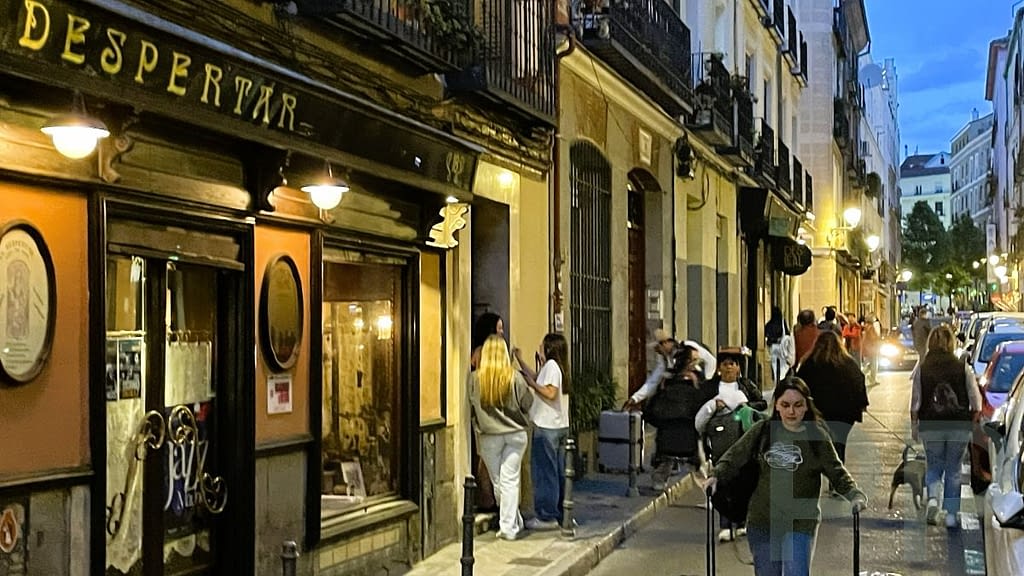
If you’re near Puerta del Sol later in the evening, this is also where you’ll find Madrid’s iconic churros con chocolate spots — a classic late-night treat (see Food & Drinks section below).
Why This Day Works
- Historic core grouped in one loop
- Palace toured while already nearby
- Gran Vía placed in best afternoon light
- Rooftop transitions naturally into evening tapas
Day 2: The Art Triangle & Retiro Park
Theme: Masterpieces and green space
Logistics: Museums clustered; park built in for recovery
Morning: Prado Museum
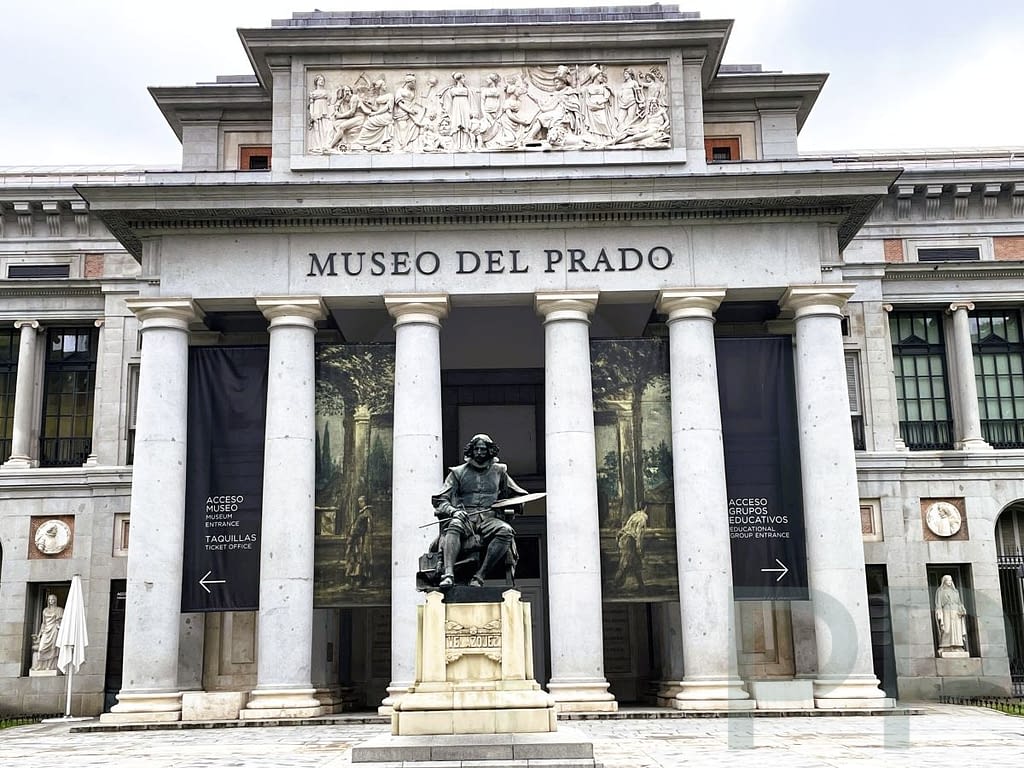
The Prado Museum is one of Europe’s great art collections. The collection spans the 12th through early 20th centuries, with particular strength in Spanish masters such as Velázquez and Goya.
Prioritize Velázquez’s Las Meninas, Goya’s The Third of May 1808, Bosch’s Garden of Earthly Delights, and works by Titian and Rubens. The Prado is dense. Two focused hours is often more rewarding than attempting full coverage.
An official audio guide is available and is worth considering if you want structured context without joining a tour.
Midday: Reina Sofía + Optional Thyssen-Bornemisza
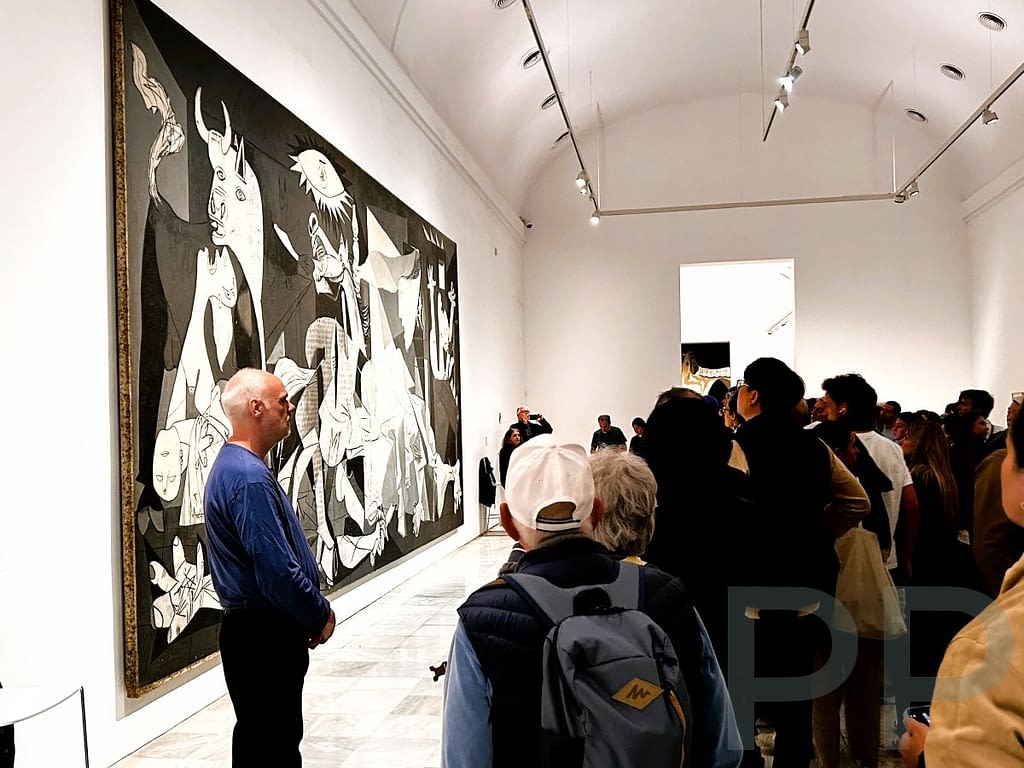
At the Reina Sofía, go directly to Picasso’s Guernica. It is powerful, large, and demands attention. Nearby rooms provide context for the Spanish Civil War.
Art lovers should also consider the Thyssen-Bornemisza Museum, which fills the stylistic gap between the Prado’s Old Masters and Reina Sofía’s modernism — offering Impressionism, Expressionism, and 20th-century works in a manageable setting.
Afternoon: Retiro Park
After leaving the museums, walk east along Paseo del Prado and enter Retiro Park through the Puerta de Felipe IV (near the Prado side) or the Puerta de Alcalá entrance at the northwest corner.
After hours spent inside museums, Retiro offers immediate visual relief — sky, trees, and open space within minutes of stepping through the gates.
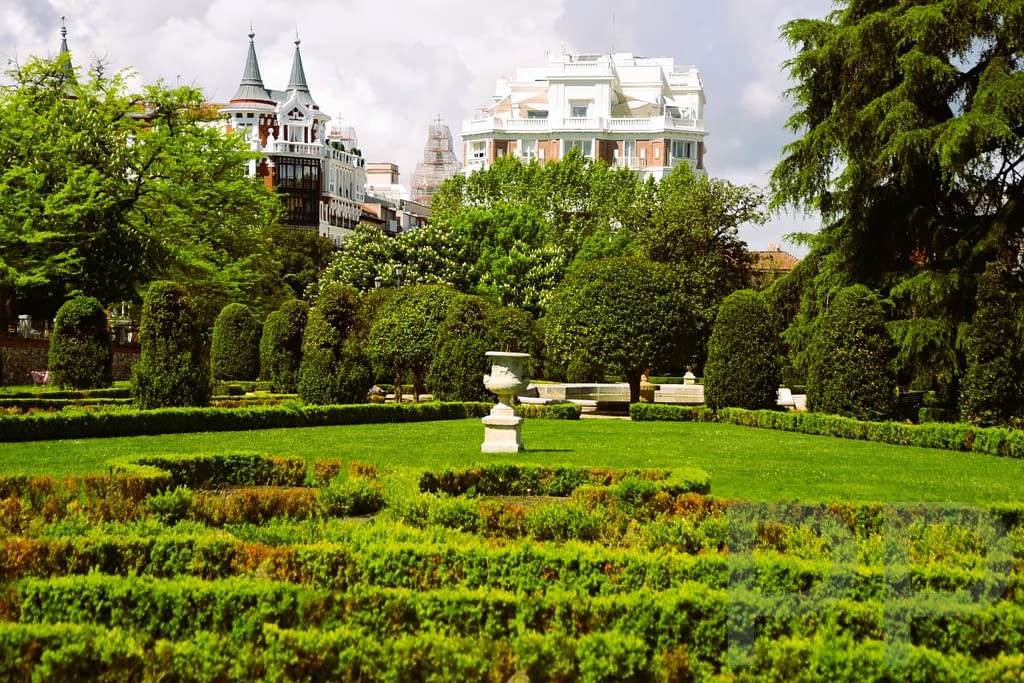
Walking further in, the city noise softens. Continue straight toward Estanque Grande, the large boating lake at the heart of the park. The trees open suddenly to reveal the Monumento a Alfonso XII, a sweeping colonnade overlooking the water — one of Retiro’s best photo spots. Rowboats drift across the lake, and the wide stone steps offer an easy place to pause.
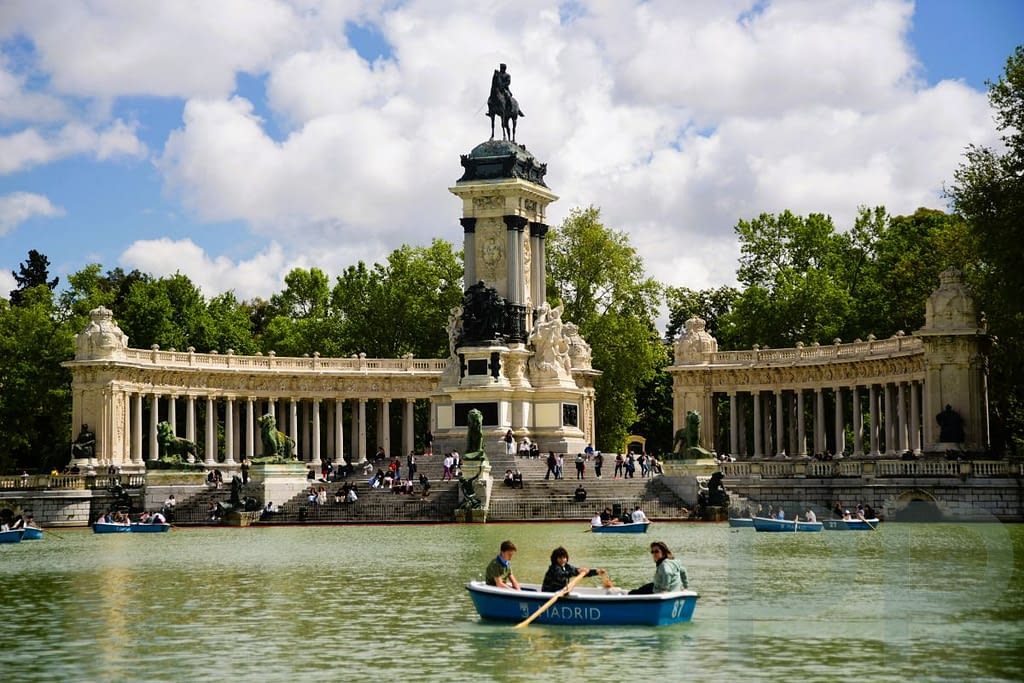
If you’d like a relaxed break, grab a table at Heladería El Ancla, an outdoor café near the water with shaded seating. It’s a simple, local-feeling place for coffee, beer, wine, ice cream, and great people watching.
From the lake, walk 8–10 minutes southeast to the Palacio de Cristal (Crystal Palace), a glass pavilion built in 1887 beside a small pond. Reflections here are especially beautiful in late afternoon light.
You don’t need to cover the entire park. The lake-to–Crystal Palace loop feels complete without exhausting you, and it balances the intensity of the morning’s art.
Evening: Optional Show (Flamenco or Zarzuela)
If you want to add a cultural performance on your second night, Madrid offers two classic options.
Flamenco performances are widely available in intimate tablaos throughout the city. While flamenco is most deeply rooted in Andalusia — especially Seville — Madrid has long served as a major stage for performers from across Spain. If Seville is not part of your itinerary, attending a flamenco performance here makes sense.
But if you are heading south later, you may prefer to save flamenco for Seville and experience it closer to its historic origins — as we did.
Madrid also offers zarzuela, a uniquely Spanish form of musical theater blending opera, spoken dialogue, and traditional themes. It’s less internationally known than flamenco but very much part of Spain’s cultural heritage.
Either option adds a different dimension to your Madrid visit — especially after a day centered on art and history.
Alternatively, keep the evening open — a final dinner, a relaxed drink, or a simple walk through illuminated plazas.
Why This Day Works
- Major museums clustered together
- Highlights prioritized to prevent fatigue
- Retiro provides balance after dense art viewing
- Evening entertainment or flexibility
Eating & Drinking in Madrid
Madrid’s food culture is social, flexible, and deeply woven into daily life. Meals are rarely rushed. Evenings stretch long. And eating often feels like movement — from one bar to another — rather than a single seated event.
Here’s what helps to understand before you sit down (or stand up).
Tapas Culture: How It Works
Tapas are not a specific dish — they’re a way of eating.
They are small plates meant to be shared. You might order two or three at a time. Or just one, depending on hunger and curiosity.
In many traditional bars:
- You stand at the counter.
- You order drinks first.
- Food arrives in rounds.
- You move on when you’re ready.
Some places automatically bring a small tapa with your drink. Others charge for everything. It varies.
The rhythm is what matters.
One bar for vermut.
Another for croquetas.
Another for jamón.
And yet another for a final caña.
By 9:00 pm the city hums. By 10:00 pm it’s fully alive.
Common Dishes to Try in Madrid
While paella is often associated with Valencia, you’ll see it throughout Spain — including Madrid — especially in seafood-forward restaurants. But Madrid has its own classics worth prioritizing:
- Jamón Ibérico de Bellota – Acorn-fed Iberian ham, sliced paper-thin. Rich, nutty, intensely flavorful. Can be expensive, but worthwhile. Now I understand the hype.
- Croquetas – Creamy on the inside, crisp outside. Often filled with ham, chicken, or mushroom.
- Tortilla Española – Thick Spanish omelet with potato and onion.
- Callos a la Madrileña – A traditional Madrid stew (tripe-based; not for everyone, but deeply local).
- Patatas Bravas – Fried potatoes with bold tomato-based sauce and aioli.
- Seafood Paella or Arroz Dishes – Widely available and often excellent.
Eating here is less about one signature dish and more about sampling.
A Quick Word About Pintxos
Though pintxos originated in northern Spain — especially the Basque Country — you’ll find excellent versions in Madrid.
Pintxos are small bites, typically arranged on slices of bread and displayed directly on the bar. They’re often secured with a toothpick (the “pincho”), making them easy to grab and eat standing up.
Ordering usually works one of two ways:
- You tell the bartender what you’ve taken.
- Or the staff counts the toothpicks at the end.
They’re approachable, visual, and ideal if you’re easing into tapas culture — especially in lively, standing-room bars.
Churros con Chocolate: A Madrid Institution
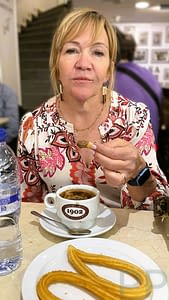
Churros con chocolate are eaten throughout the day — for breakfast, as an afternoon treat, or late at night after tapas. In Madrid, they’re less a dessert and more a ritual.
Most people know churros — long, ridged strips of fried dough. The chocolate is not a thin drink — it’s thick, almost pudding-like.
Traditionally:
- You order by the portion (often 4–6 churros).
- The chocolate is served separately.
- You dip, not pour.
- If you prefer, order your churros with coffee.
Madrid’s most famous spot is Chocolatería San Ginés, near Puerta del Sol. It’s iconic — and often packed, especially at night.
If the line is long, nearby alternatives like Churrería Chocolatería 1902 offer the same classic experience in a slightly calmer setting.
Geographically, this is easy to pair with a Day 1 evening near Sol.
Popular Drinks in Madrid
Drinks are part of the rhythm.
- Una caña – A small, perfectly poured draft beer. Crisp, simple, ubiquitous.
- Vermut – Often served on ice with citrus and olive. Traditionally a midday or early evening drink.
- Tinto de verano – Red wine with lemon soda. Light and refreshing.
- Campari con soda – A favorite afternoon aperitif across Europe. Bitter, bright, and clean.
You’ll rarely see oversized cocktails. Drinks are modest, purposeful, and social.
A Note on Dining Times
- Lunch: typically 2:00–4:00 pm
- Dinner: 8:30–10:30 pm
If you prefer earlier meals, Madrid accommodates visitors easily. But staying out a little later — even once — helps you feel the city’s true cadence.
Where to Stay
Sol / Plaza Mayor – The most central option. Ideal for first-time visitors who want to walk everywhere and be steps from Madrid’s historic core. Expect constant activity.
Gran Vía – Best for energy and access to theaters, shopping, and major metro lines. Slightly busier, but excellent for first-time stays.
La Latina – Great for travelers who want to be immersed in tapas culture. Lively in the evenings, quieter during the day.
Retiro / Barrio de Salamanca – More residential and refined. Close to museums and the park. A good choice if you prefer calmer evenings.
To compare hotels by neighborhood, price range, and guest rating, you can search Madrid accommodations here.
Getting Around Madrid
Madrid is easy to navigate on foot and via metro.
We arrived at Atocha Station — efficient, modern, and simple to manage — and worth a quick pause for its glass-and-iron hall and the indoor tropical garden. It’s Spain’s primary high-speed rail hub, linking Madrid to Barcelona, Seville, Valencia, and beyond via the AVE network — which makes arrival by train both efficient and surprisingly elegant.
Metro lines are intuitive, taxis are plentiful, and most major sights are clustered enough to make walking realistic.
Best Time of Year to Visit Madrid
Madrid has a continental climate, which means real seasonal variation — hot summers, cooler winters, and excellent shoulder seasons.
Spring (April–June) — Ideal Balance
Spring is one of the best times to visit. Temperatures are comfortable for walking, parks are green, and outdoor dining feels natural. Crowds begin increasing in May and June, especially at major sights like the Royal Palace and Prado, but conditions are generally manageable with advance tickets.
Fall (September–October) — Another Sweet Spot
Fall offers similar advantages: warm days, cooler evenings, and slightly fewer tourists than peak summer. This is an excellent time for museum-heavy itineraries and long city walks.
Summer (July–August) — Hot and Busy
Madrid gets hot — often very hot — in summer. Afternoon temperatures regularly climb into the 90s°F (30s°C+), and shade can be limited in the historic core. Major museums remain busy, and lines form quickly. If visiting in summer, plan outdoor walking for early morning or evening, and build in midday breaks.
Winter (November–March) — Mild but Quieter
Winters are generally mild compared to much of Europe, with sunny days and cool evenings. It’s a good time for museum-focused visits, and crowds are noticeably lighter outside of holiday periods. Outdoor café culture is more subdued, but the city remains active.
Why This Itinerary Works
- Minimal backtracking
- Major highlights prioritized
- Built-in pacing to prevent fatigue
- Balanced blend of history, art, and everyday life
Frequently Asked Questions about Visiting Madrid
Yes — two focused days is enough to see the Royal Palace, Plaza Mayor, Gran Vía, the Prado, Reina Sofía, and Retiro Park without rushing. A third day allows for deeper museum time or neighborhood exploration.
Yes. The Royal Palace often sells out days or weeks ahead, especially in spring, summer, and fall. Booking early ensures your preferred time slot and avoids long entry lines.
Very. The historic core, Royal Palace, Gran Vía, and the Art Triangle are clustered closely. The metro is excellent for longer hops, but much of this itinerary can be done on foot.
Sol, Plaza Mayor, and Gran Vía are ideal for first-time visitors because they allow you to walk to most major sights.
Spring (April–June) and fall (September–October) offer the best balance of comfortable temperatures and manageable crowds.
Final Thoughts
Madrid rewards travelers who give it time. Not an open-ended week — but two well-planned, focused days.
You experience Spain’s political and royal heart in the Habsburg core. You walk through early 20th-century ambition along Gran Vía. You stand in front of some of Europe’s greatest paintings. And you pause in Retiro Park as locals row boats and linger under the trees.
Seen this way, Madrid becomes more than a stop between Barcelona and Andalusia. It becomes an anchor.
If you’re following our broader Spain & Portugal itinerary, this stop creates essential context before heading south to Granada, Ronda, Seville — or west into Portugal.
Give Madrid two thoughtful days. Walk it. Eat well. Look up.
Related Guides
Epic 3-Week Spain and Portugal Itinerary (with Maps & Tips)
Barcelona: A Well-Paced 3-Day Itinerary
A Medieval Surprise in Western Spain: Visiting Cáceres
Ronda, Spain Travel Guide: A City Straddling a Gorge
Hiking the Caminito del Rey: Spain’s Most Thrilling Gorge Walk
Lisbon in Three Days: A Well-Paced Itinerary with Belém or Sintra