Lisbon is often underestimated when it comes to timing. While many itineraries try to squeeze the city into a single day, its hills, viewpoints, and historic neighborhoods quickly add up — and leave little room to simply wander, pause at a miradouro, or take in the atmosphere. This Lisbon 3 day itinerary breaks the city into two well-paced days, with flexible options to add Belém or a full day trip to Sintra.
Affiliate Disclosure: We may earn a small commission if you book through links in this guide — at no extra cost to you. We only share recommendations based on our own experiences, and your support helps us continue creating detailed travel guides like this one.
Before You Go: A Little Prep Goes a Long Way in Lisbon
Disclosure: This post may contain affiliate links. If you book through them, we may earn a small commission—at no extra cost to you. We only recommend places and services we’ve used ourselves or genuinely believe add value to a trip.
Lisbon is very walkable, but timing and logistics matter more than you might expect. A small amount of advance planning can save significant time once you’re on the ground.
Tickets Worth Booking Ahead
- Jerónimos Monastery (Belém) — lines can be long, especially mid-day
- Pena Palace (Sintra) — timed tickets are essential; aim for the earliest slot
- Castelo de São Jorge — optional, but advance tickets help during busy seasons
For popular Lisbon sights and easy day trips, booking tickets in advance can save time and frustration. Book direct, or use a service like Get Your Guide, which we highly recommend, to book a tour – this is especially handy when attractions are sold out.
Packing for Europe (Carry-On Only)
We strongly recommend traveling with carry-on luggage only. It saves time, avoids lost bags, and makes getting around cities, trains, and stairs much easier. If you’re not sure how to make it work, see our full Europe Packing List for Carry-On Only Travel for exactly what to pack and how to do it.
Getting Around the City
Lisbon is often called the City of Seven Hills — which is exactly why splitting days by neighborhood works so well. You’ll save time (and energy) by planning around elevation, not just distance.
Walking works well in flatter areas like Baixa and along the riverfront, but expect steep climbs in neighborhoods such as Alfama and Bairro Alto.
- Trams and streetcars are both practical and iconic, though popular routes can be crowded.
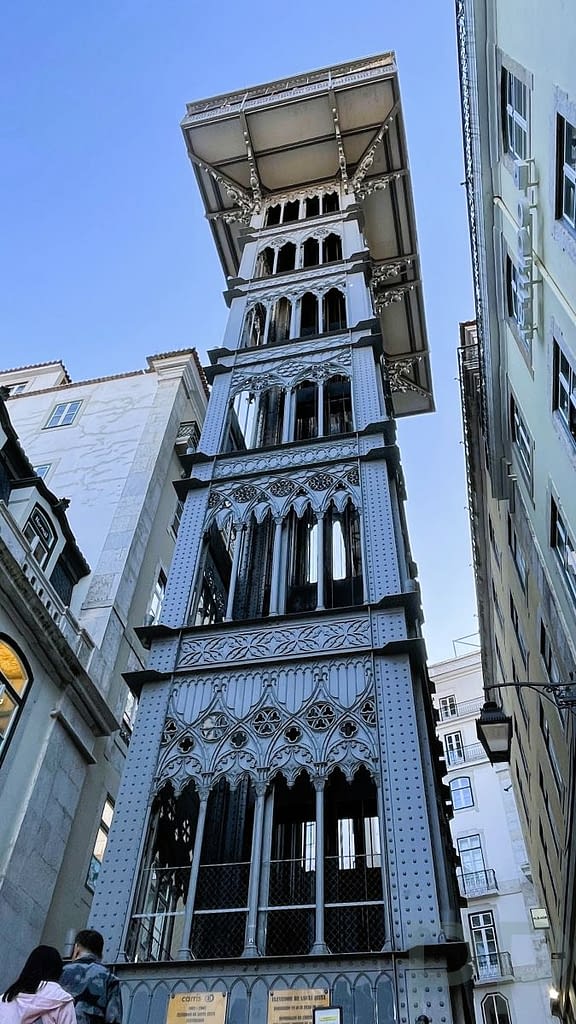
- Funiculars and elevators have long helped bridge Lisbon’s steep elevation changes. The Santa Justa Elevator remains a useful option in the city center. Note that historic funiculars such as Glória and Bica are currently closed for inspection and upgrades following a September 2025 accident.
- Metro and buses are efficient for longer distances, including airport transfers and areas outside the historic center.
- Uber is widely available and useful for longer trips, early mornings, or skipping especially steep climbs. It works best as a supplement to walking and public transit rather than a primary way to get around.
- Bolt is another widely used ride-hailing app in Lisbon and across Europe. It works similarly to Uber and is often just as reliable — and sometimes slightly cheaper depending on demand.
Maps & Planning Tools
Lisbon’s hills and neighborhood layout make it helpful to see how areas relate to each other. Grouping sights by neighborhood — as this itinerary does — keeps days manageable and walking distances realistic.
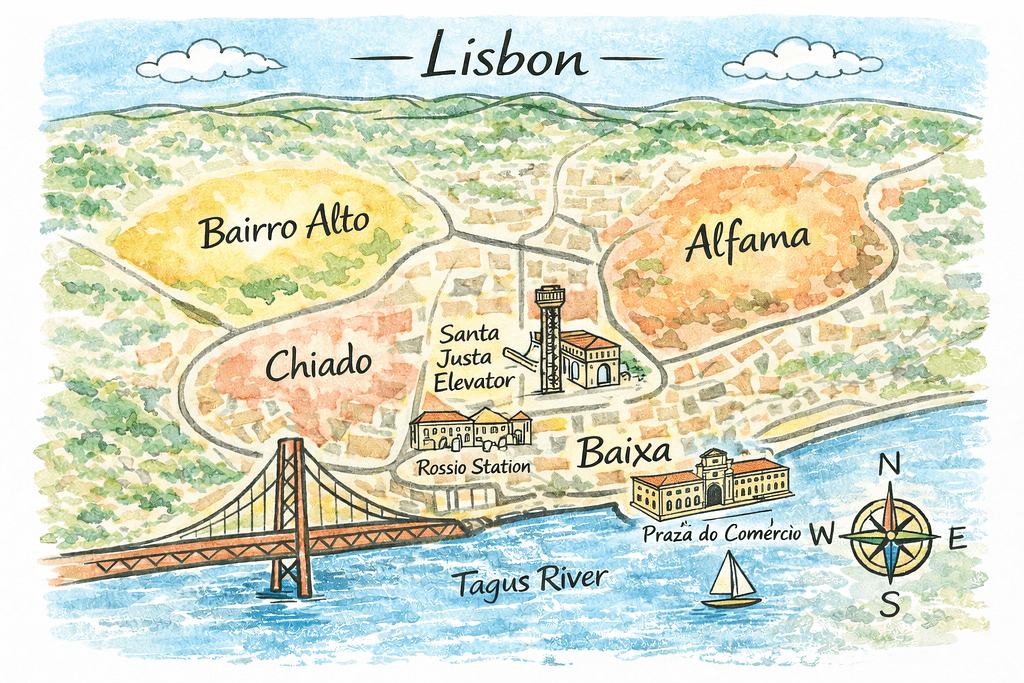
Map note: The sketch map above is not to scale. It’s meant to show how Lisbon’s central neighborhoods fit together and why splitting the city across two days works so well.
Below is a Google mymap with the sights and select restaurants. Download the KML file to use in Google Maps, Google My Maps, or other mobile mapping apps. Click the star icon to save it to your own Google account for quick reference during your trip.
Lisbon’s Tile Walls & Stone Sidewalks
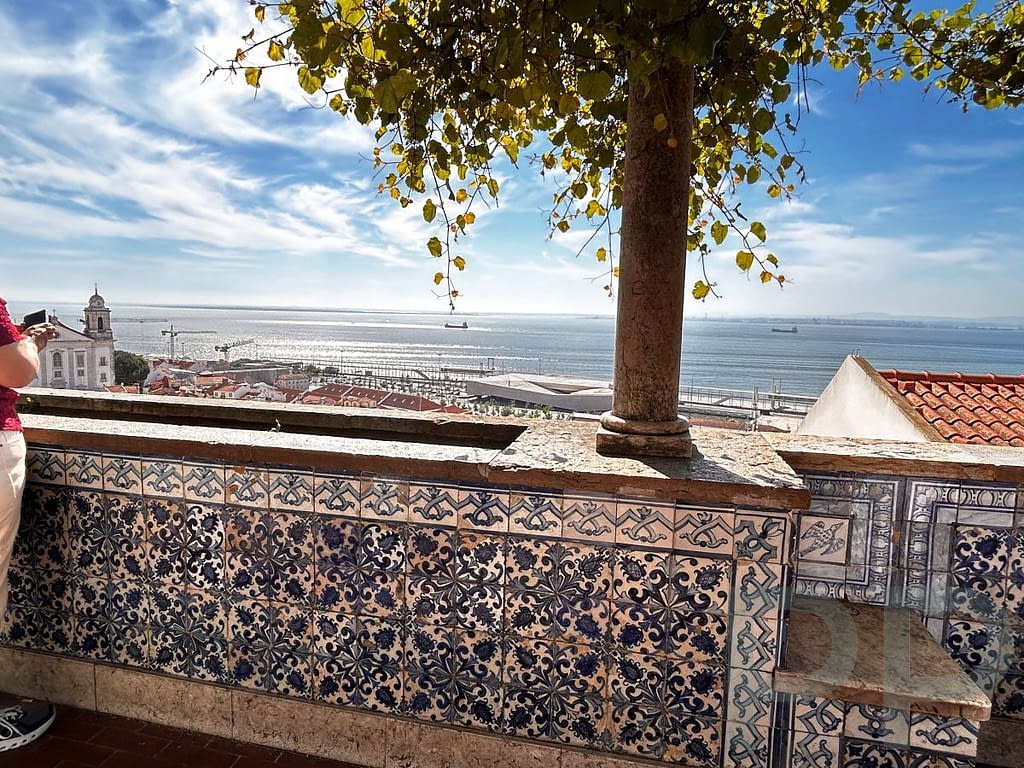
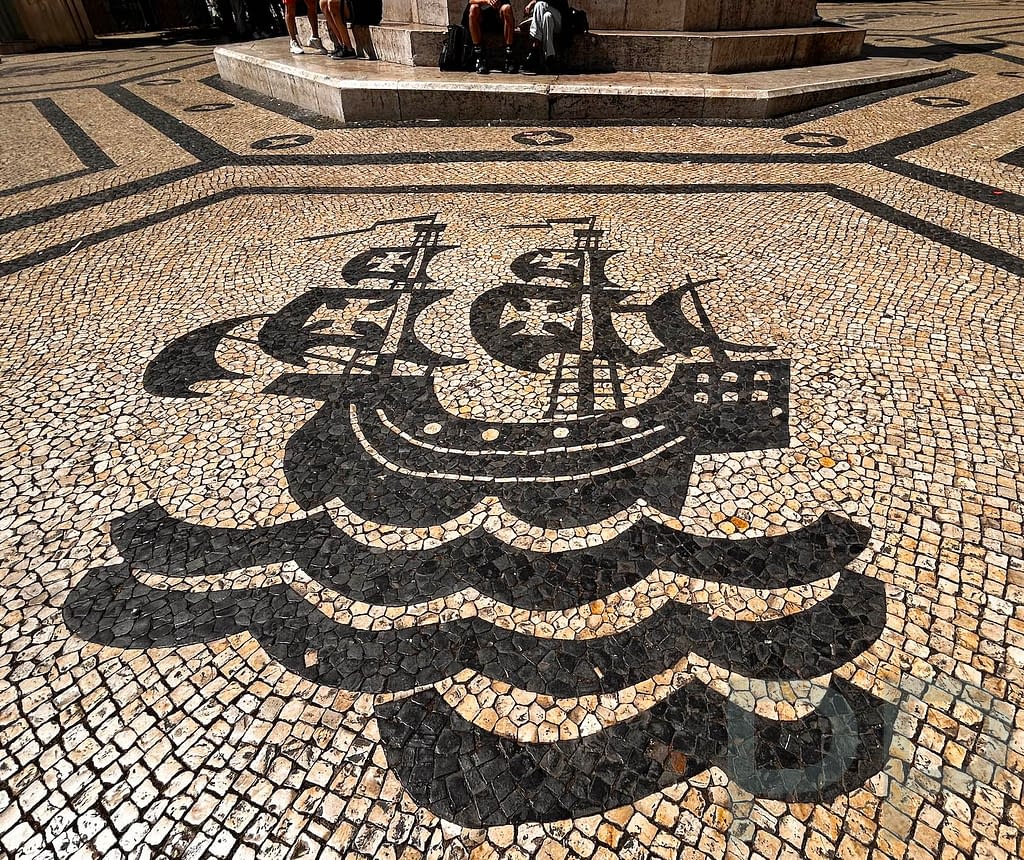
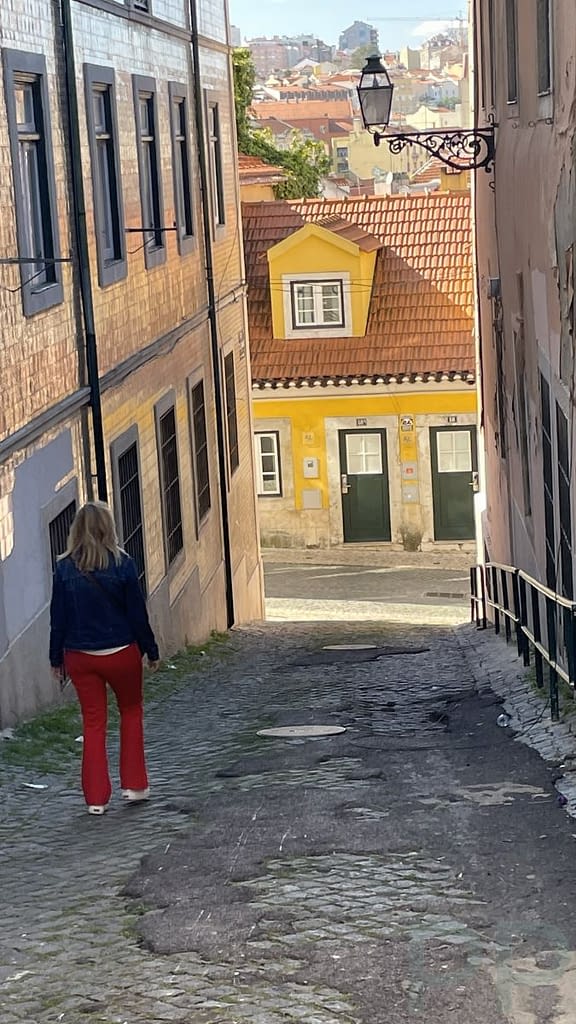
One of Lisbon’s most distinctive details is underfoot and all around you. Blue-and-white azulejo tile walls decorate everything from grand façades to humble homes, while the city’s calçada portuguesa sidewalks—hand-laid limestone mosaics—form swirling patterns that change block by block. Slow down occasionally and look closely: these details are part of what gives Lisbon its texture, history, and unmistakable sense of place.
Note: The tiled sidewalks are slick when wet, especially on hills—good footwear makes a big difference.
A Quick Note on Lisbon’s History (Why the City Looks the Way It Does)
Much of modern Lisbon was shaped by the devastating 1755 earthquake, followed by fires and a tsunami that destroyed large parts of the city. In the aftermath, Lisbon was rebuilt with a new vision — especially in Baixa, where wide streets and a grid layout replaced the dense medieval maze that once stood there.
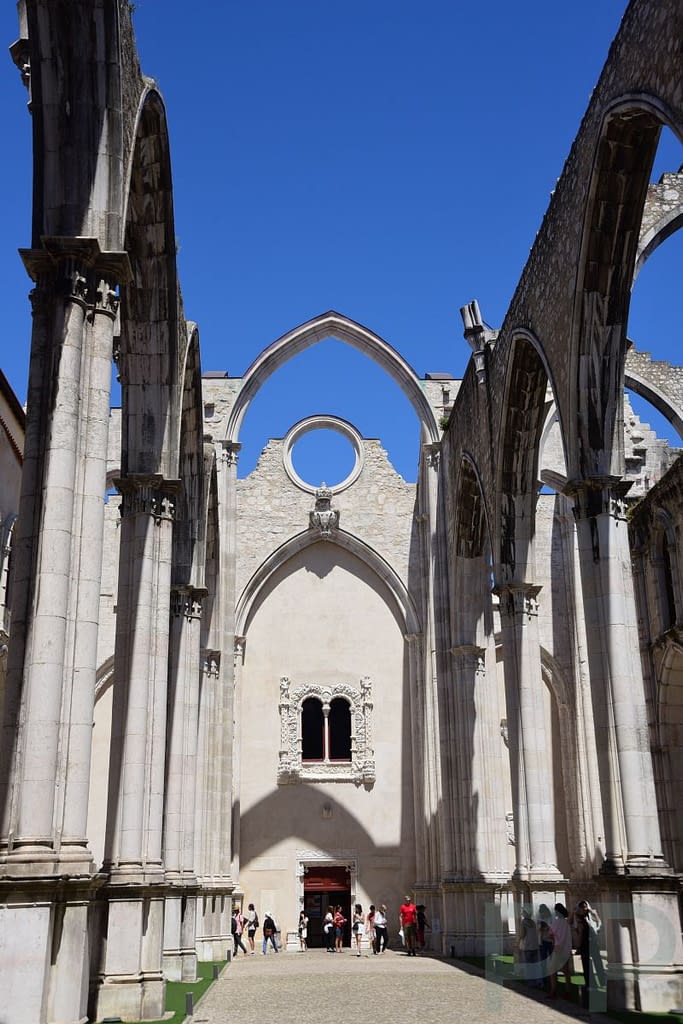
Sites like Carmo Convent, left partially in ruins, serve as reminders of that moment, while neighborhoods such as Alfama survived largely intact. The contrast between these areas is one of the reasons Lisbon feels so layered today.
Our 3-Day Itinerary at a Glance
Day 1 covers Baixa/Chiado/Bairro Alto; Day 2 focuses on Alfama/Castelo/miradouros; Day 3 is Belém or Sintra.
Day 1 — Baixa, Chiado & Bairro Alto
Lisbon’s grand core, historic ruins, viewpoints, and iconic transportation
Morning: Baixa → Chiado
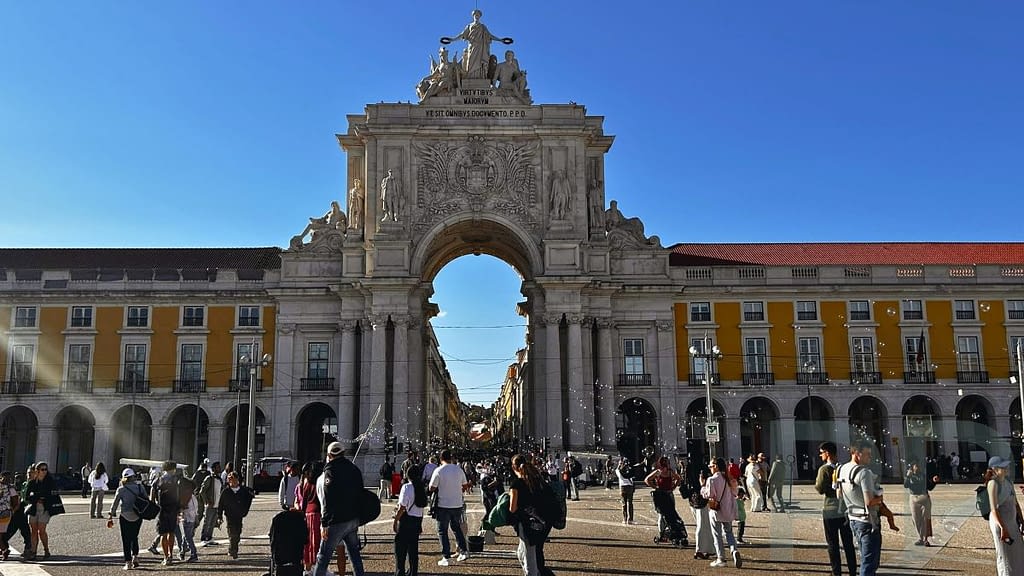
Begin at Praça do Comércio, Lisbon’s expansive riverfront square rebuilt after the 1755 earthquake. Take time to explore the arcades, people-watch, and photograph the Rua Augusta Arch and statue before moving on into Baixa, the city’s historic downtown.
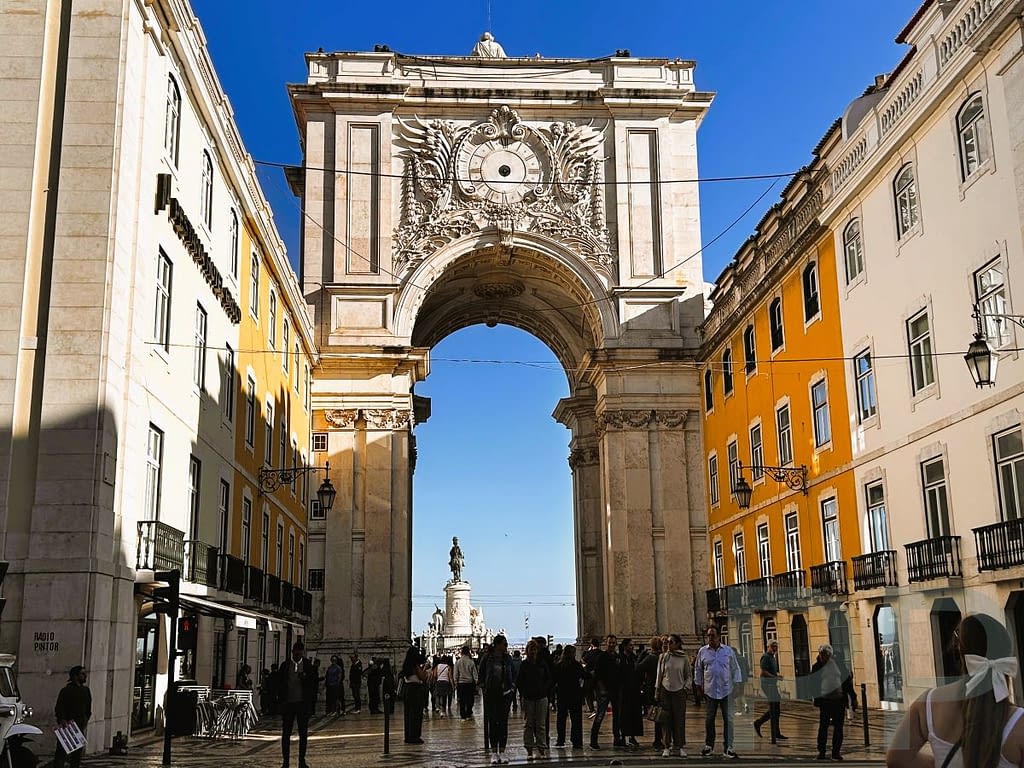
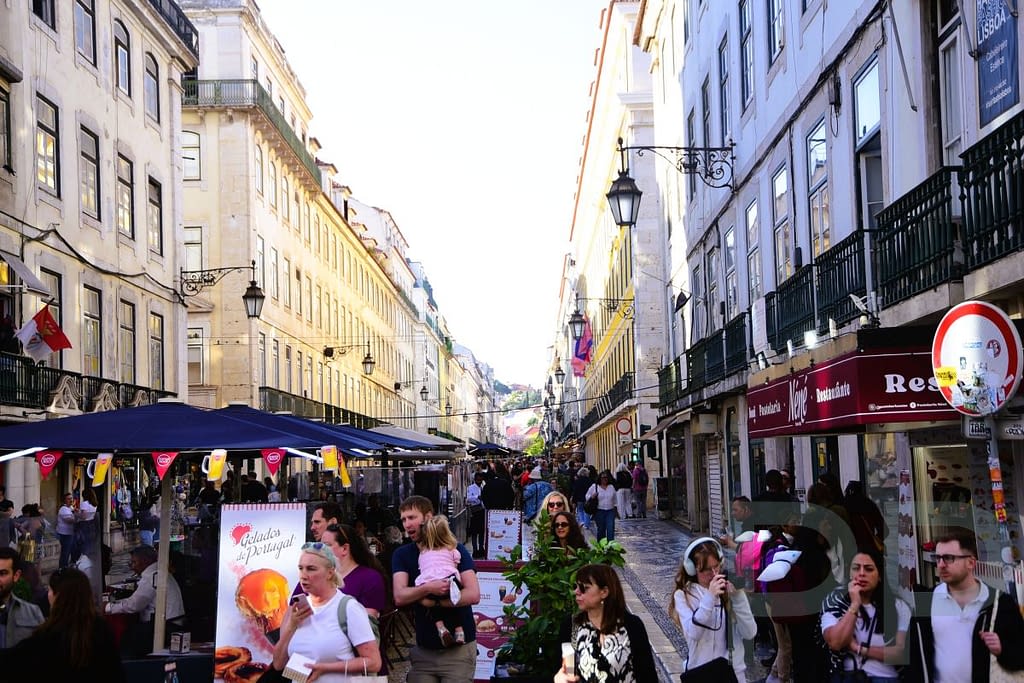
Baixa is lively and walkable, with broad streets, classic architecture, and a more open, orderly feel than Lisbon’s hillier neighborhoods.
As you move through Baixa, you’ll likely hear the area around Rossio Square referred to simply as “Rossio.” Centered on Rossio Square and its busy train and metro station, this area sits squarely within Baixa and often serves as a reference point for hotels, transit connections, and meeting spots.
Continue toward Chiado, known for cafés, bookstores, and calmer streets. Along the way, stop at Carmo Convent, one of Lisbon’s most striking historic sites. Its roofless Gothic arches offer a powerful glimpse into the city’s past and make for a high-impact stop without requiring much time.
Coffee or light bites (Chiado)
- Café Nicola — iconic and historic; best for a drink or light tapas rather than a full meal
Late Morning: Views & Elevation Changes
If lines are reasonable, ride the Santa Justa Elevator for views over Baixa. From the top, you’re already near Chiado—continue uphill toward Bairro Alto/Príncipe Real for the miradouro.
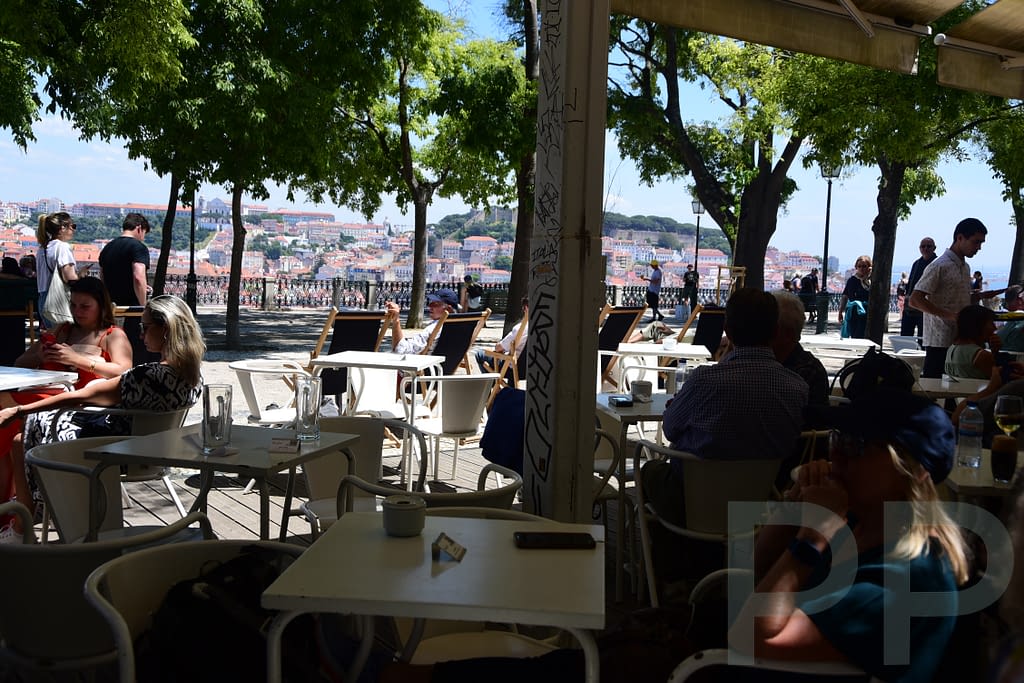
From there, make your way toward Bairro Alto on foot or by transit, then pause at the Miradouro de São Pedro de Alcântara for one of Lisbon’s classic panoramic views.
Lunch: Chiado / Bairro Alto
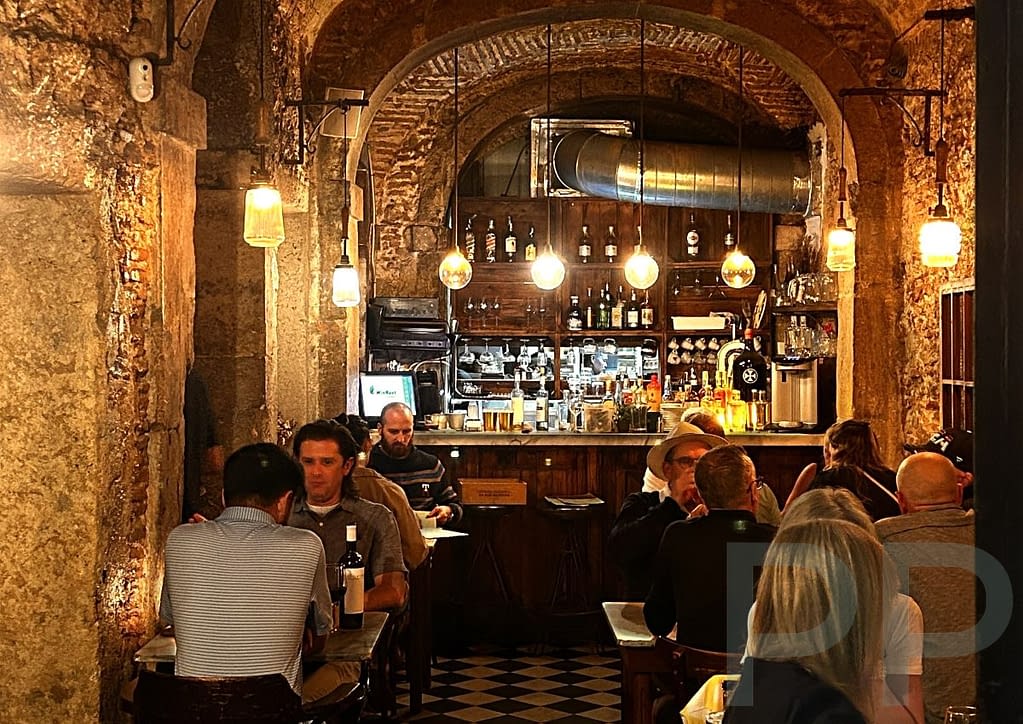
- Restaurante El Vicente — cozy, wine-cellar atmosphere; works well for a relaxed sit-down meal
Afternoon: Bairro Alto
Spend the afternoon wandering rather than chasing sights. Bairro Alto is best enjoyed slowly, with time for viewpoints, small shops, and simply settling into the rhythm of the city.
Evening: Dinner Nearby
- Cervejaria da Trindade — iconic former monastery; worth it for the setting more than the food
- Quermesse Restaurante — a stronger option if you want a more food-focused dinner
Day 2 — Alfama, Castelo, Miradouros & Fado
Lisbon’s oldest neighborhood, layered viewpoints, and traditional music
Morning: Alfama
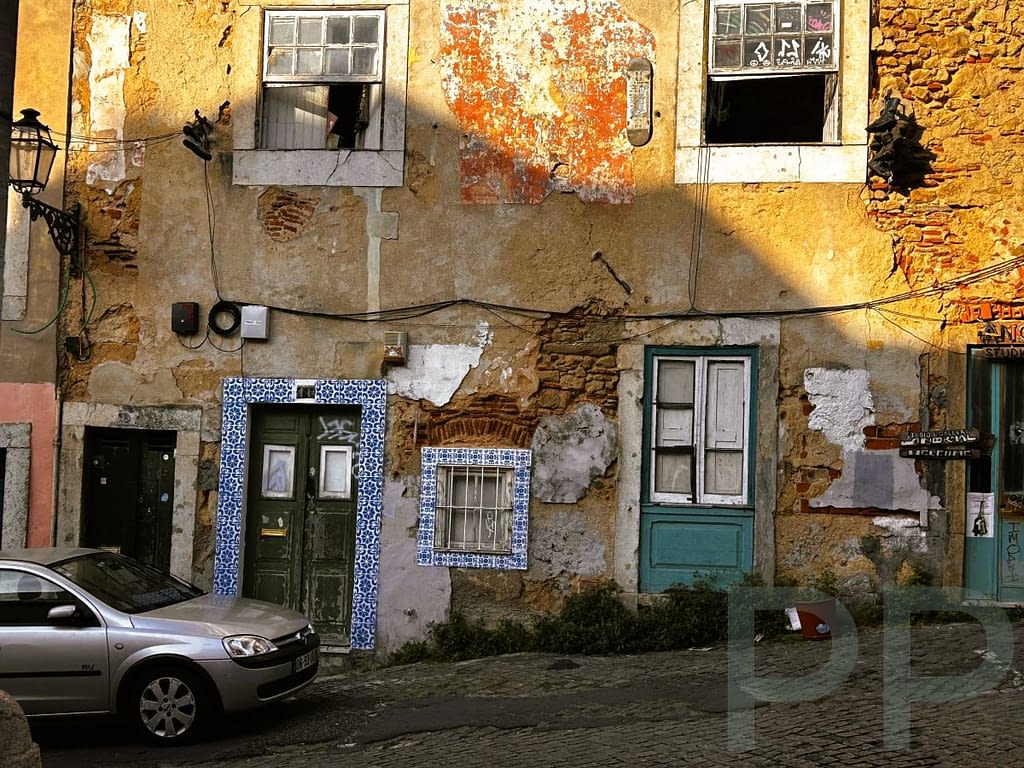
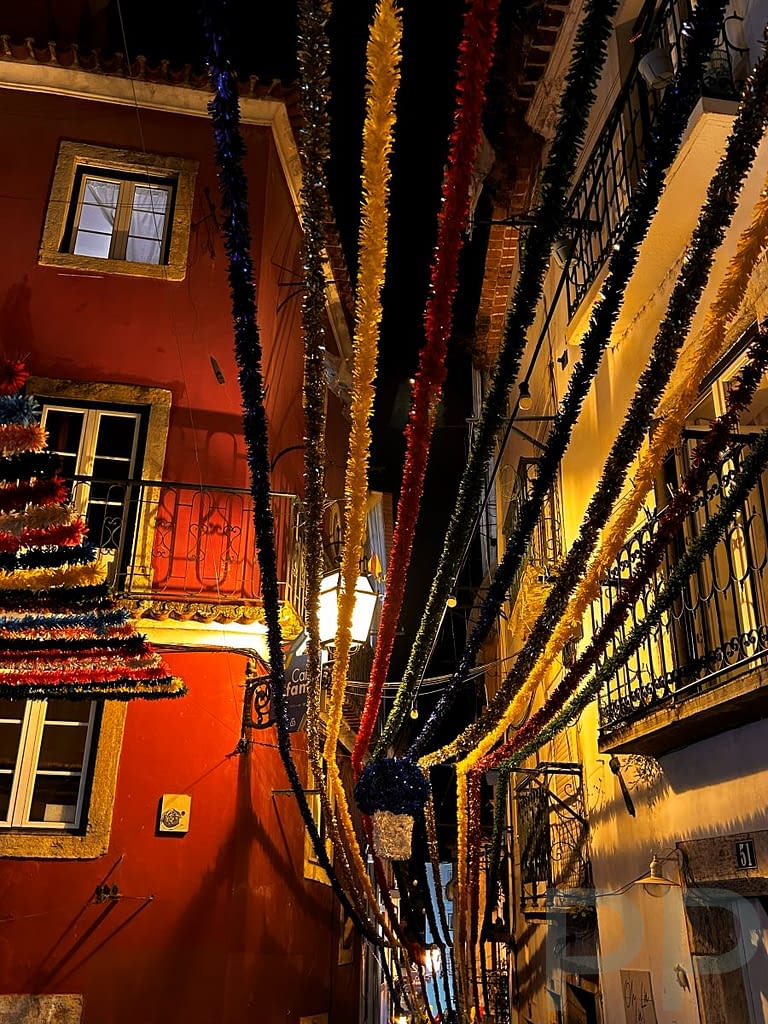
Dedicate your second day to Alfama, Lisbon’s oldest neighborhood — a maze of narrow lanes, lived-in buildings, and small details that reward slow wandering.
Wander its narrow streets at an unhurried pace and stop at Sé Cathedral along the way. You may want to ride part of Tram 28, which passes through Alfama and several historic neighborhoods — just know that lines for the full route can be long, especially mid-day. Riding a shorter segment or hopping on earlier or later often works better.
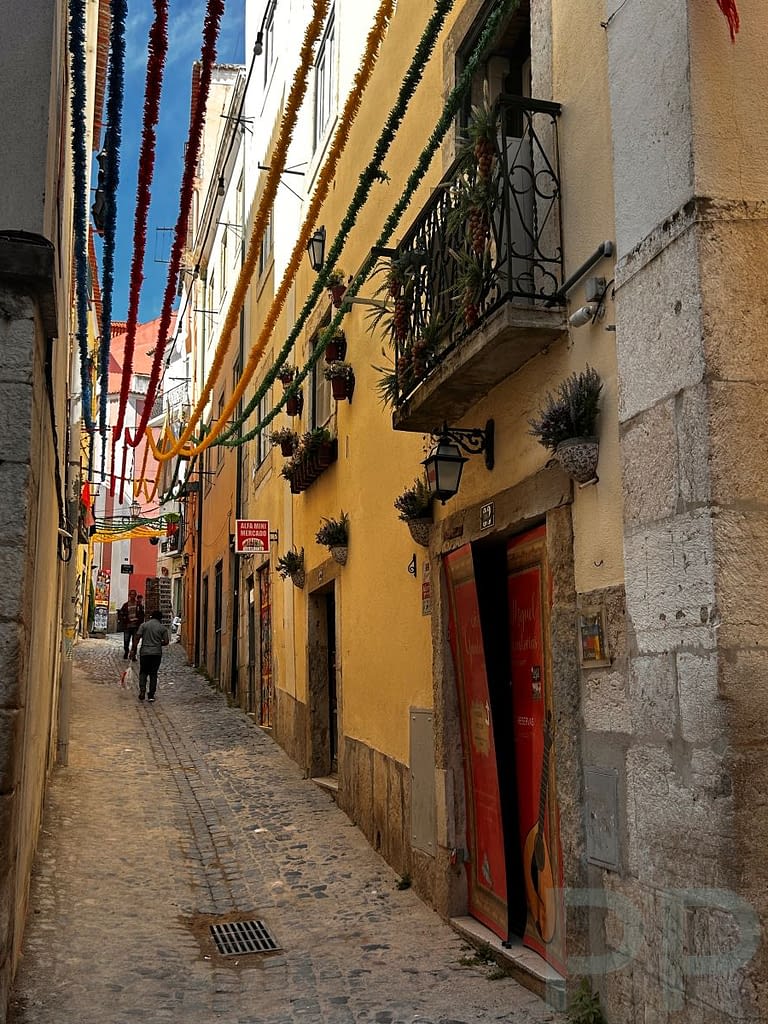
Pastry stop: Pastelaria Santo António — simple, local-feeling pastries and espresso.
Late Morning: Castelo & Viewpoints
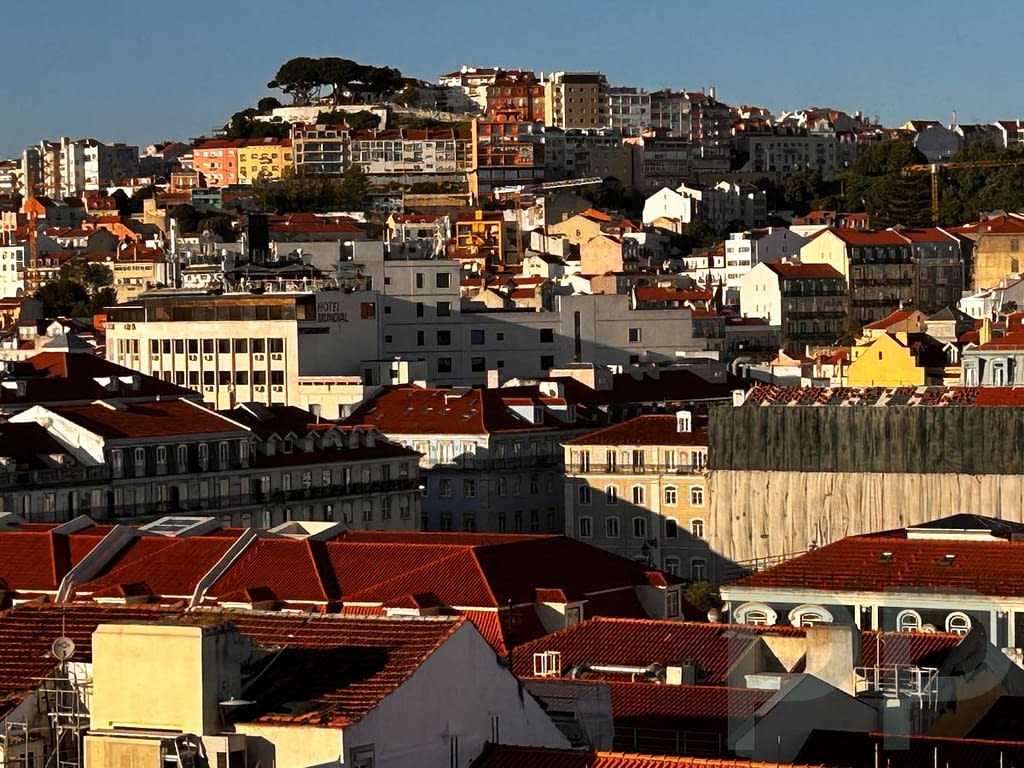
Make your way up to Castelo de São Jorge for sweeping views over Lisbon and the Tagus River.
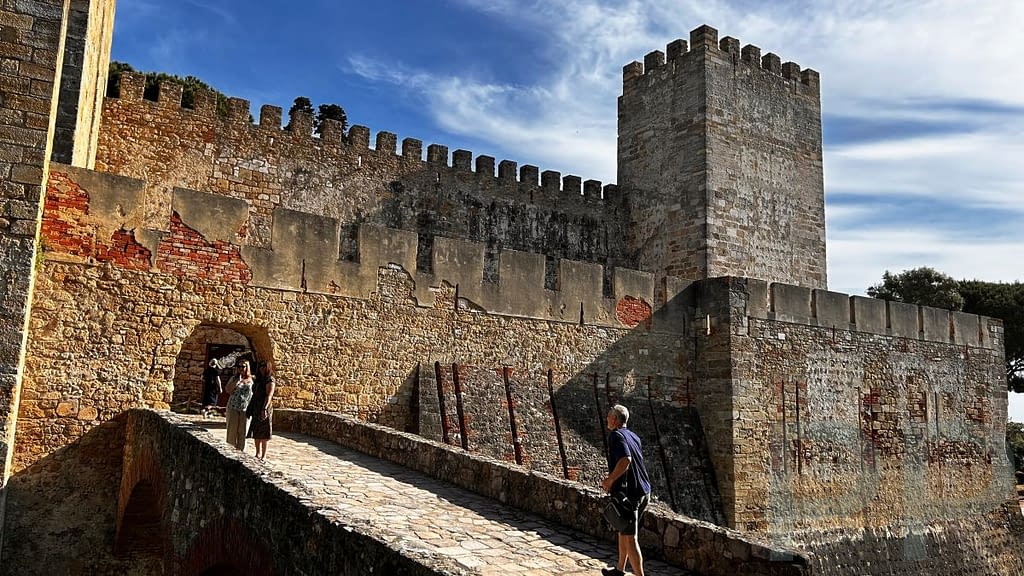
Nearby viewpoints include:
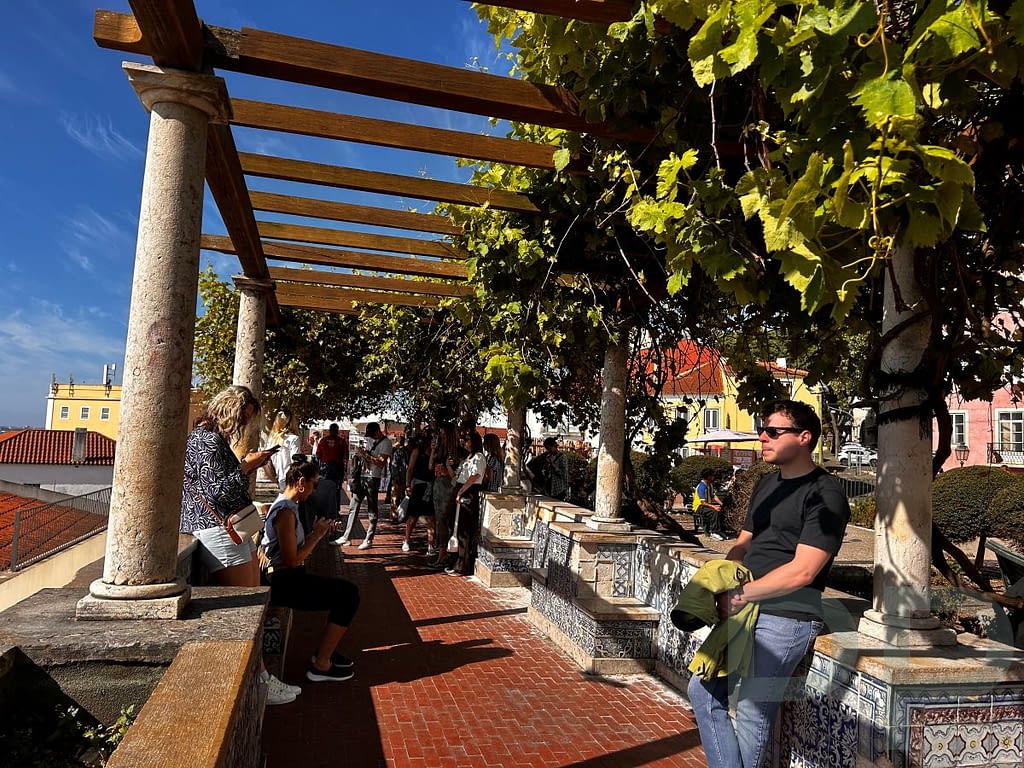
- Miradouro de Santa Luzia
- Miradouro das Portas do Sol
These are ideal places to pause and take in the setting rather than rushing onward.
Optional Afternoon Stop (for Music Lovers)
- Museu do Fado — a worthwhile optional visit that adds context to the music you’ll hear later in the evening
Evening: Dinner & Fado
Plan to stay in Alfama for the evening to avoid unnecessary transit.
Dinner
- Santo António de Alfama — traditional Portuguese dishes in a relaxed setting, well suited to pairing with a Fado night
After dinner, attend a small, intimate Fado performance nearby for a more authentic experience.
Note: One of the easiest ways to find a casual Fado performance is to wander Alfama earlier in the day and check the handwritten notices posted on restaurant doors, which often list evening show times.
Day 3 — Choose One: Belém or Sintra
Day 3 offers a choice: Belém for an easy, in-city cultural day, or Sintra for a palace-filled excursion that takes the entire day.
Option A: Belém (Culture & Waterfront)
Belém is a great choice if you want a full day without leaving Lisbon.
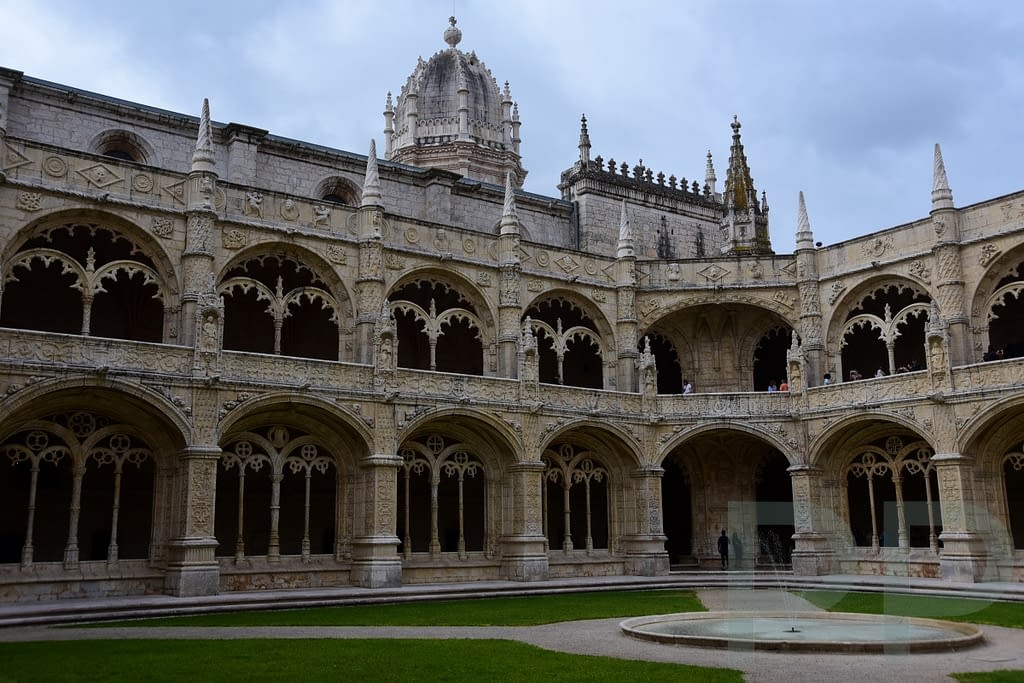
Highlights include Jerónimos Monastery, Belém Tower (often best appreciated from the outside), the Monument to the Discoveries, and — of course — Pastéis de Belém for the iconic and well-worth it pastel de nata.
Lunch / Midday
- Restaurante Doca de Santo, Alcântara / West of Belém near the Alcântara Mar train stop with outdoor tables at the marina.
Continue with the Maritime Museum, the Carriage Museum, and a waterfront walk if energy allows.
Option B: Sintra (Full Day Trip)
If castles, palaces, and dramatic scenery are a priority, dedicate the day to Sintra.
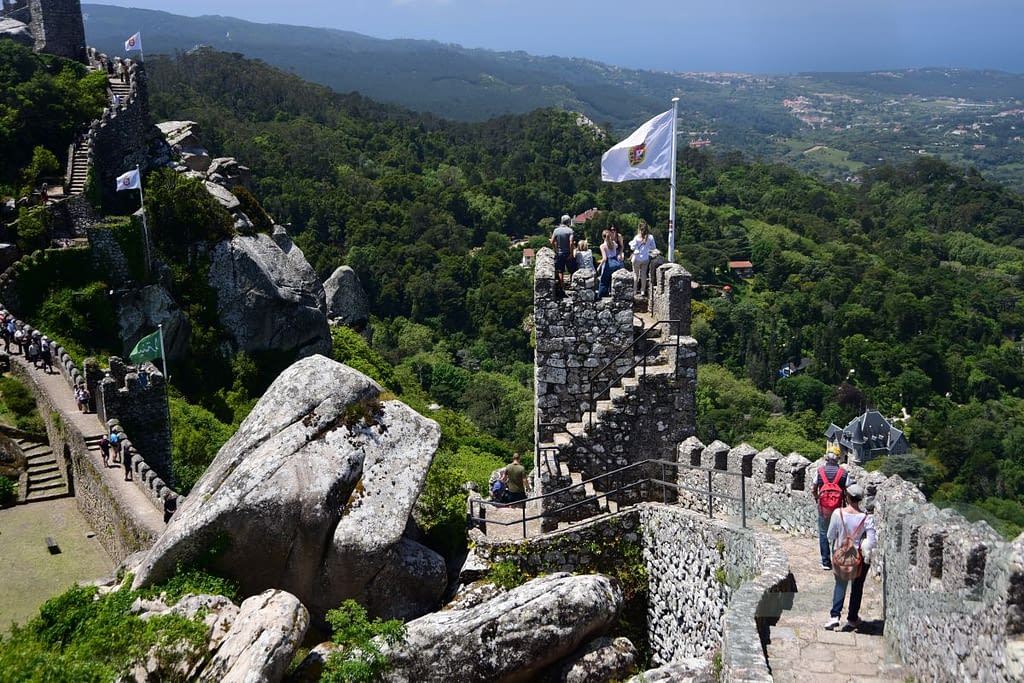
Highlights include Pena Palace and park, the Moorish Castle, and either Quinta da Regaleira or Monserrate Palace. Return to Lisbon for a simple dinner near your hotel.
If you’re visiting Sintra, guided tours or timed-entry tickets can make a big difference — especially during busy periods (affiliate link below).
Where to Stay in Lisbon
Lisbon’s neighborhoods feel distinct — and because the city is famously hilly, where you stay can have a real impact on how easy your days feel. For first-time visitors, it helps to choose a base that matches your priorities (walkability, atmosphere, nightlife, or views) and then plan each day by neighborhood.
Baixa / Chiado is the most convenient “home base” for many travelers. It’s central, well-connected by metro and trains, and makes it easy to reach multiple parts of the city without a lot of backtracking.
Alfama is the most atmospheric option — narrow lanes, old Lisbon character, and a great place to be in the evening for Fado — but it’s also one of the hilliest areas. We stayed in nearby Mouraria and navigated a steep driveway, followed by a steep alley, and then a long escalator just to reach Baixa and Rossio. It’s rewarding and memorable, but best suited to travelers who are comfortable with elevation changes or plan to use transit and ride-shares strategically.
(Mouraria borders Alfama and is sometimes lumped in with it on maps/listings; it generally feels more local and less touristed.)
Bairro Alto / Príncipe Real sits higher on the hill and is known for viewpoints, restaurants, and nightlife. It can be a fun place to stay if you like evenings out, but expect climbs (and potentially more noise at night in parts of Bairro Alto).
A note on Airbnbs & apartments: Apartments are very common in Lisbon and can be surprisingly well-priced, especially for couples or families who want more space than a hotel room. We stayed in an Airbnb and found it a comfortable, practical base — particularly for spreading out, doing a little breakfast at home, and pacing two full sightseeing days.
Looking to book your Lisbon stay? There are great lodging options across many neighborhoods. Search below (affiliate link).
Where We Ate in Lisbon — Quick Reference
Baixa / Chiado
- Restaurante El Vicente — wine-cellar ambience
- Café Nicola — iconic café for drinks or tapas
Bairro Alto / Príncipe Real
- Cervejaria da Trindade — historic setting
- Quermesse Restaurante — polished dinner option
- Esplanada do Príncipe — coffee, sandwiches, lemonade under the trees
Alfama
- Pastelaria Santo António — pastries and espresso
- Santo António de Alfama — traditional dinner, good before Fado
- Frei Papinhas — classic Portuguese seafood
🥟 Quick Bites You’ll See Everywhere: Pastéis de Bacalhau
As you explore Lisbon, you’ll notice pastéis de bacalhau (codfish cakes) everywhere — behind glass counters, in small takeaway shops, and especially near major sightseeing spots.
One of the most recognizable chains is Casa Portuguesa do Pastel de Bacalhau, with locations all over the city, including right at the top of the Glória Funicular. They specialize in freshly fried codfish cakes, often served warm with Serra da Estrela cheese inside.
It’s not a budget snack, and it’s not meant to replace a proper meal — but it is a distinctly Portuguese experience and worth trying once.
Frequently Asked Questions about Visiting Lisbon
Two full days covers the core neighborhoods (Baixa/Chiado/Bairro Alto + Alfama/Castelo). Add a third day if you want Belém or a day trip to Sintra without rushing.
Choose Belém if you want history + waterfront without leaving the city. Choose Sintra if palaces and dramatic scenery are a priority — it’s a full-day commitment.
For busy seasons, yes — especially Pena Palace (timed entry) and Jerónimos Monastery. Castelo tickets can also save time when lines build.
Yes, but it’s a hill city. Plan your days by neighborhood (like this itinerary), and don’t hesitate to use elevators/ride-shares to skip the steepest climbs.
They’re iconic and practical, but crowded on peak routes (especially Tram 28). If you want the experience, ride a shorter segment or go early/late.
For a first trip, Baixa/Chiado is convenient for transit and walkability. Alfama is atmospheric but hillier. Bairro Alto/Príncipe Real is great for evenings and viewpoints.
The calçada sidewalks are beautiful — and slick when wet, especially on hills. Wear shoes with good traction and take your time on steep descents.
Related Guides
Epic 3-Week Spain and Portugal Itinerary (with Maps & Tips)
Évora Portugal Day Trip: A Historic Detour Worth Taking
A Medieval Surprise in Western Spain: Visiting Cáceres
Ronda Spain Travel Guide: A City Straddling a Gorge
Hiking the Caminito del Rey: Spain’s Most Thrilling Gorge Walk