Updated January 2026
Going-to-the-Sun Road is one of the most spectacular scenic drives in North America—and the defining experience of Glacier National Park.
This iconic 50-mile road cuts across the heart of the park, crossing the Continental Divide and revealing glacier-carved lakes, dramatic waterfalls, alpine meadows, and sheer mountain walls at nearly every turn. Whether you’re visiting Glacier for the first time or returning for another look, driving Going-to-the-Sun Road is unforgettable.
This mile-by-mile guide follows Going-to-the-Sun Road from West Glacier to St. Mary, highlighting the best stops, viewpoints, short walks, and practical tips to help you plan your drive with confidence.
Helpful Glacier Planning Guides
- Glacier National Park Overview
- Many Glacier Area Guide
- Two Medicine Area Guide
- Hiking the Highline Trail
- Hiking the Grinnell Glacier Trail
Starting Your Drive: West Glacier Entrance
We entered Glacier National Park near West Glacier after driving south from Radium Hot Springs in Canada. This west-to-east direction works especially well, as the scenery gradually builds toward the dramatic alpine landscapes near Logan Pass.
Going-to-the-Sun Road officially begins at mile 0 in West Glacier. The first stretch is scenic but relatively subdued, with forested views and glimpses of the Middle Fork of the Flathead River.
Apgar Village (Miles ~2–3)
Just a few miles past the West Glacier entrance, Apgar Village is the main service hub on the west side of Glacier National Park.
Apgar is a convenient early stop for:
- restrooms
- visitor information
- snacks, coffee, and casual food
- gift shops and basic supplies
The area also provides access to the southern end of Lake McDonald, with lakeshore views and walking paths that make a nice warm-up stop before heading deeper into the park.
If you’re staying overnight on the west side, Apgar offers lodging and campgrounds, and it’s also a major stop for Glacier’s free shuttle system.
Lake McDonald Area (Miles ~11–13)
The drive becomes notably more scenic around mile 11, when you reach Lake McDonald, the largest lake in Glacier National Park, stretching roughly ten miles long and reaching depths of nearly 500 feet. Carved by ancient glaciers, the lake is known for its exceptionally clear water and smooth, multicolored stones that line the shoreline. Towering peaks rise directly from the water’s edge, creating one of the most iconic and serene landscapes along Going-to-the-Sun Road.
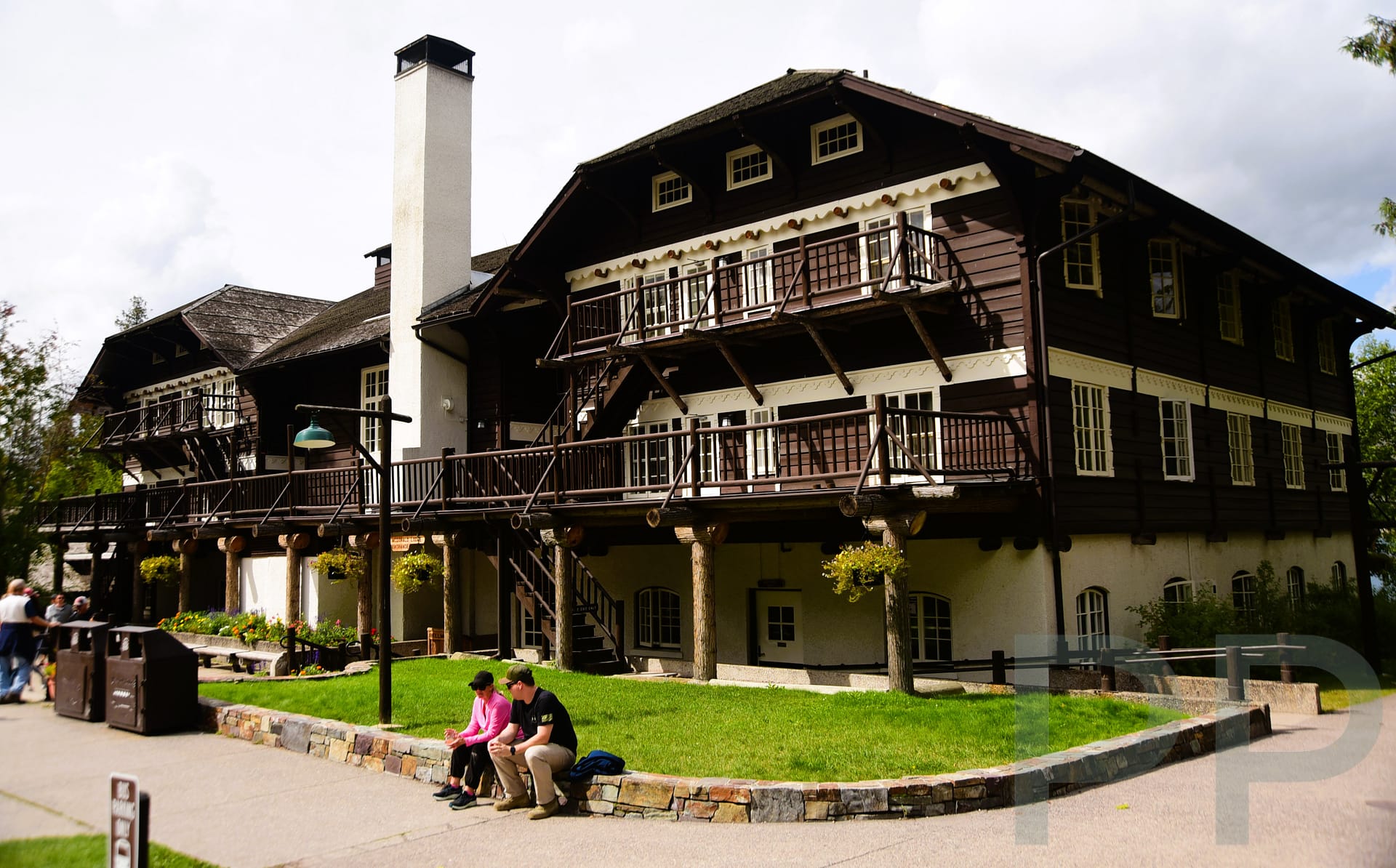
Lake McDonald Lodge
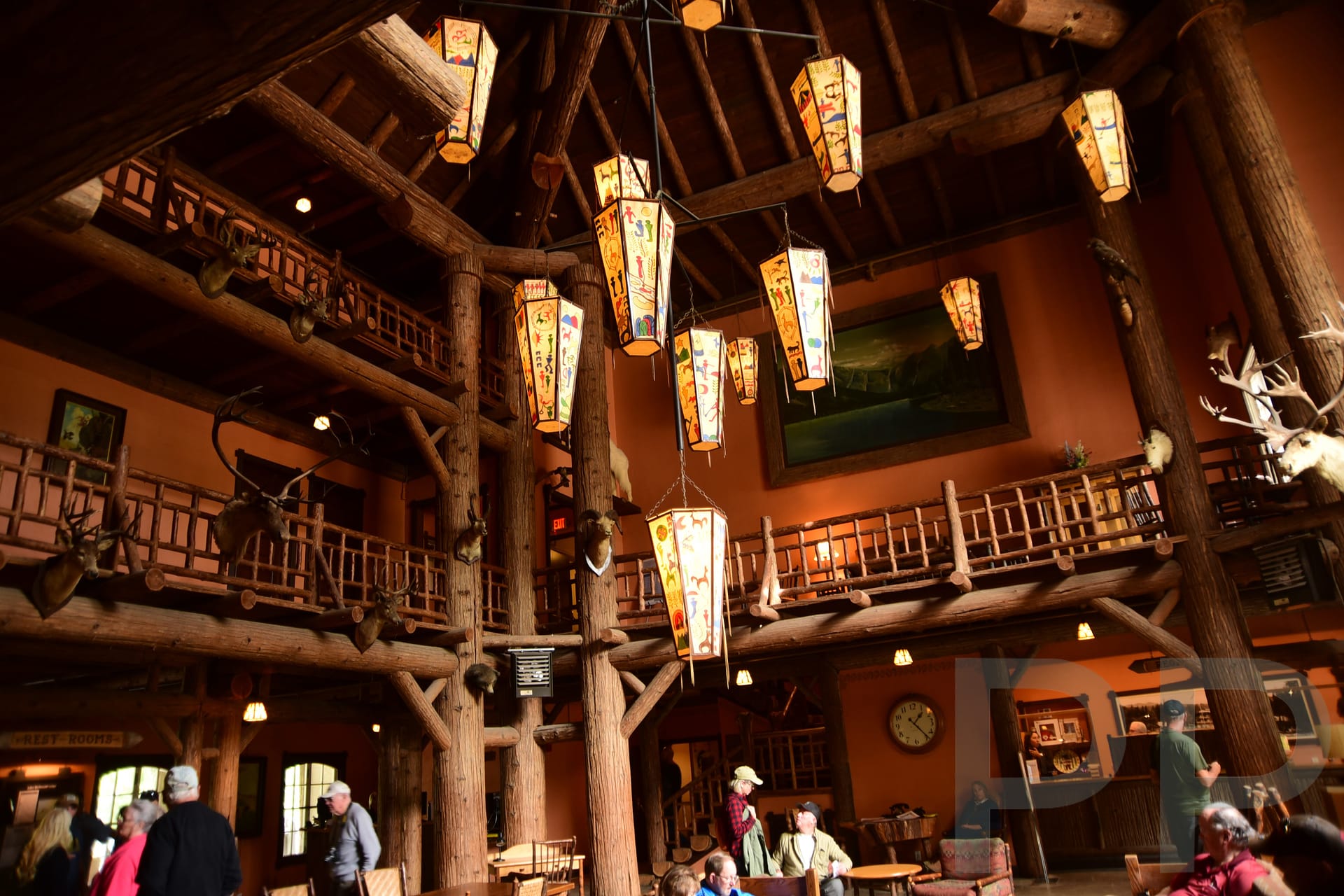
Completed in 1914, Lake McDonald Lodge sits directly on the lakeshore and is well worth a stop. Designed in a Swiss chalet style, the lodge features a soaring three-story lobby with exposed beams, rustic furnishings, and historic charm.
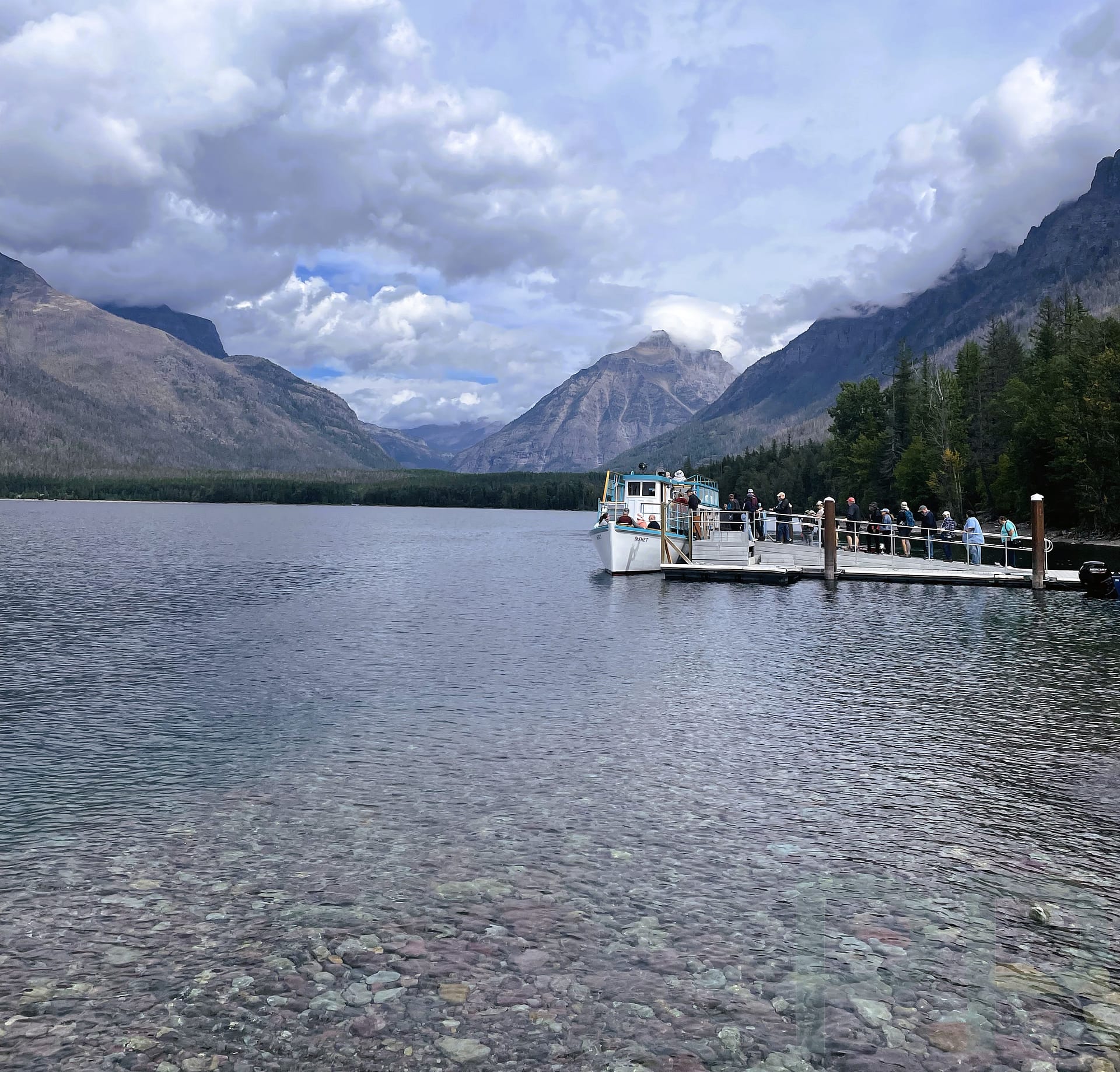
Step outside behind the lodge to access the shore of Lake McDonald, where crystal-clear water reveals smooth, multicolored stones beneath the surface.
Lake McDonald Boat Tours
Boat tours of Lake McDonald leave from behind the lodge. Seats must be reserved far in advance. Click here to reserve your spot with Glacier Park Boat Tours.
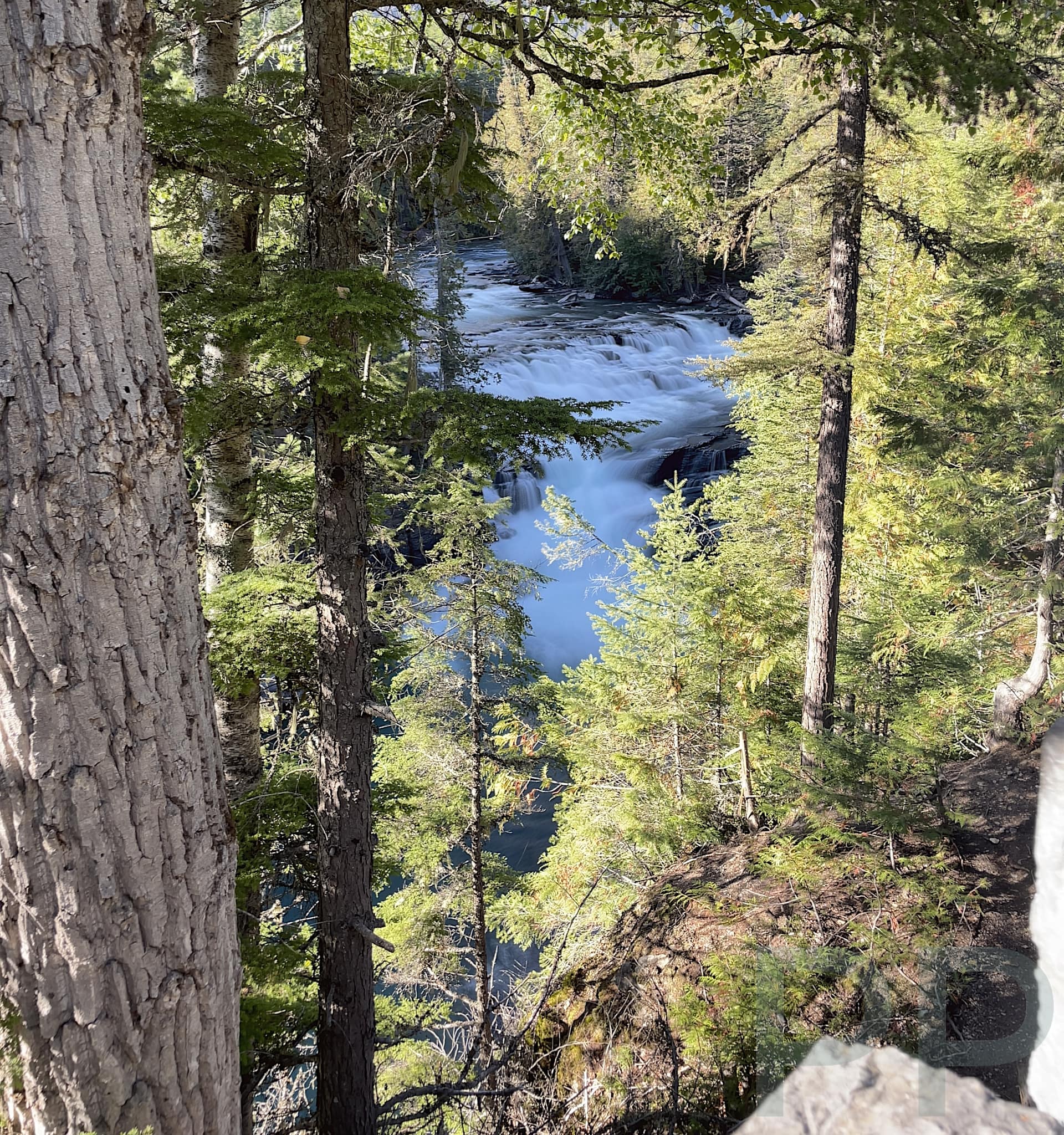
A series of trails circle the lake and take you to McDonald Falls and the Sacred Dancing Cascade (see below). See the National Park Service’s Lake McDonald area hiking map Hiking Lake McDonald – Glacier National Park (U.S. National Park Service) (nps.gov) for details.
McDonald Falls & Sacred Dancing Cascade
Sacred Dancing Cascade: A wide section of Upper McDonald Creek where it’s easy to walk down to the water’s edge. This is a great place to stretch your legs.
McDonald Falls (mile ~13): A quick roadside stop with photogenic cascades.
Trail of the Cedars & Avalanche Creek (Mile ~17)
One of the most accessible and rewarding stops along Going-to-the-Sun Road is the Trail of the Cedars.
This easy 0.9-mile loop winds through an old-growth forest of western red cedar, western hemlock, and black cottonwood. Boardwalks and well-maintained paths make this walk suitable for most visitors.
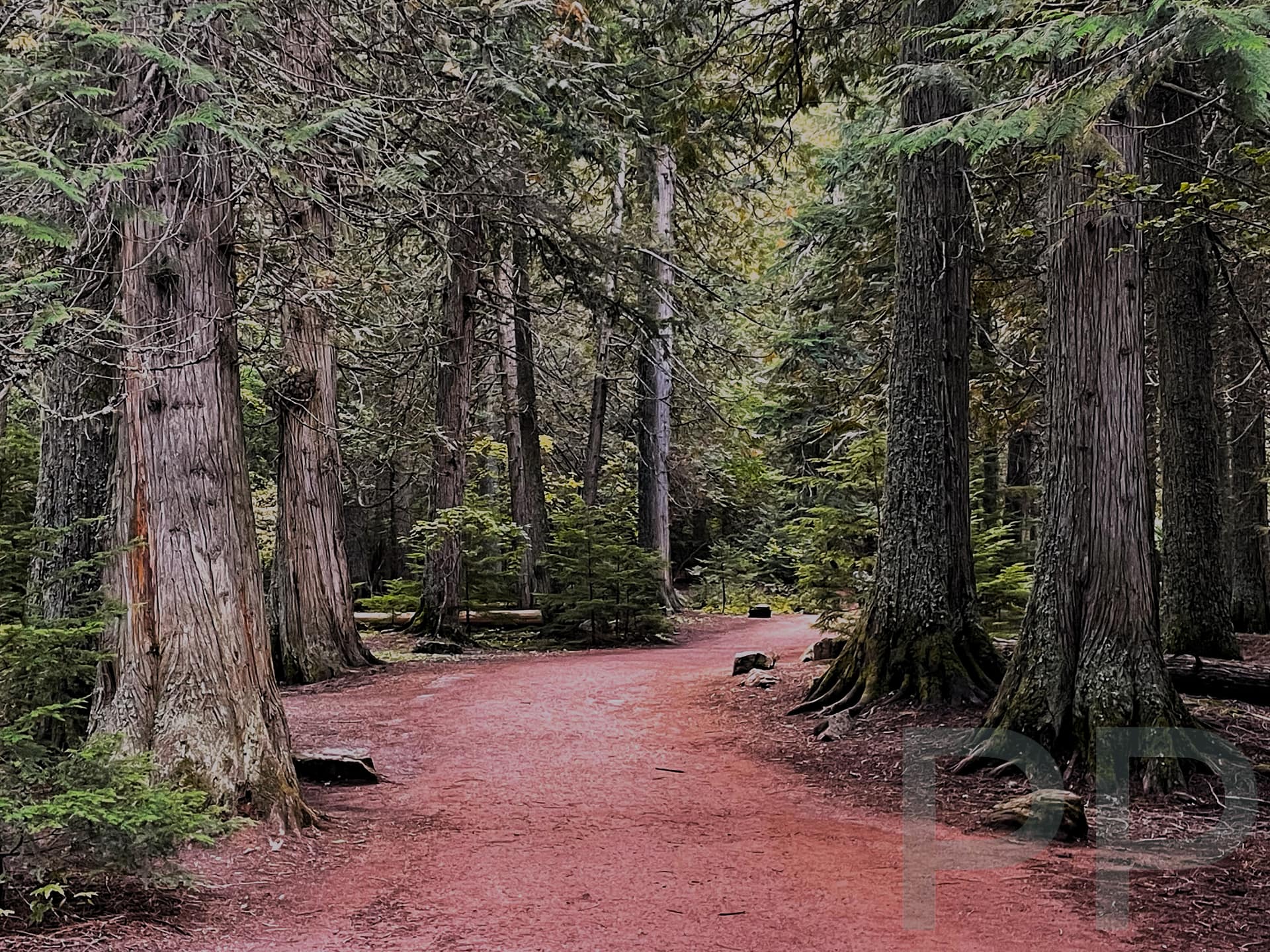
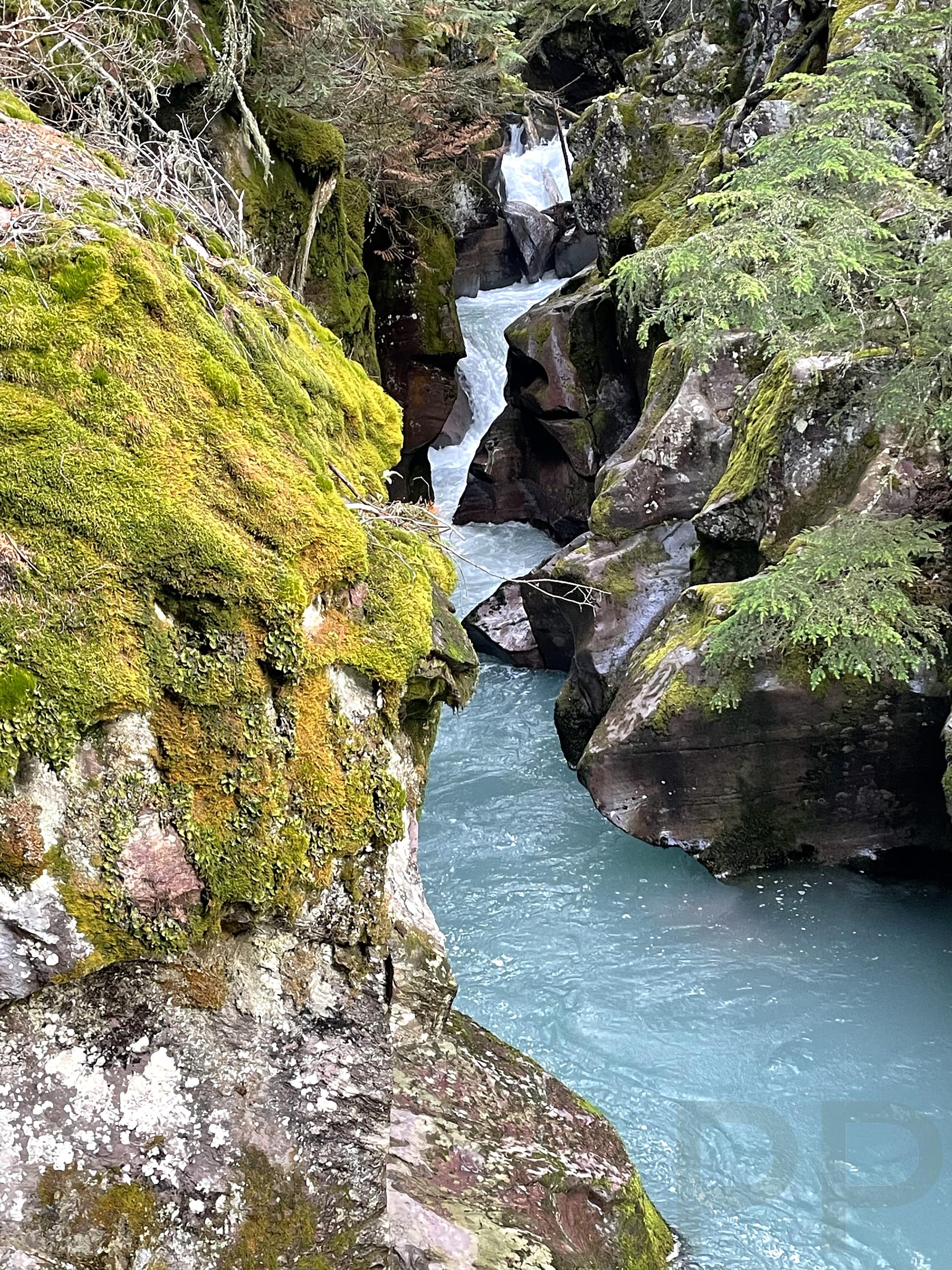
Nearby, Avalanche Creek spills through a small gorge, adding movement and sound to the forest setting.
Avalanche Campground (Recommended)
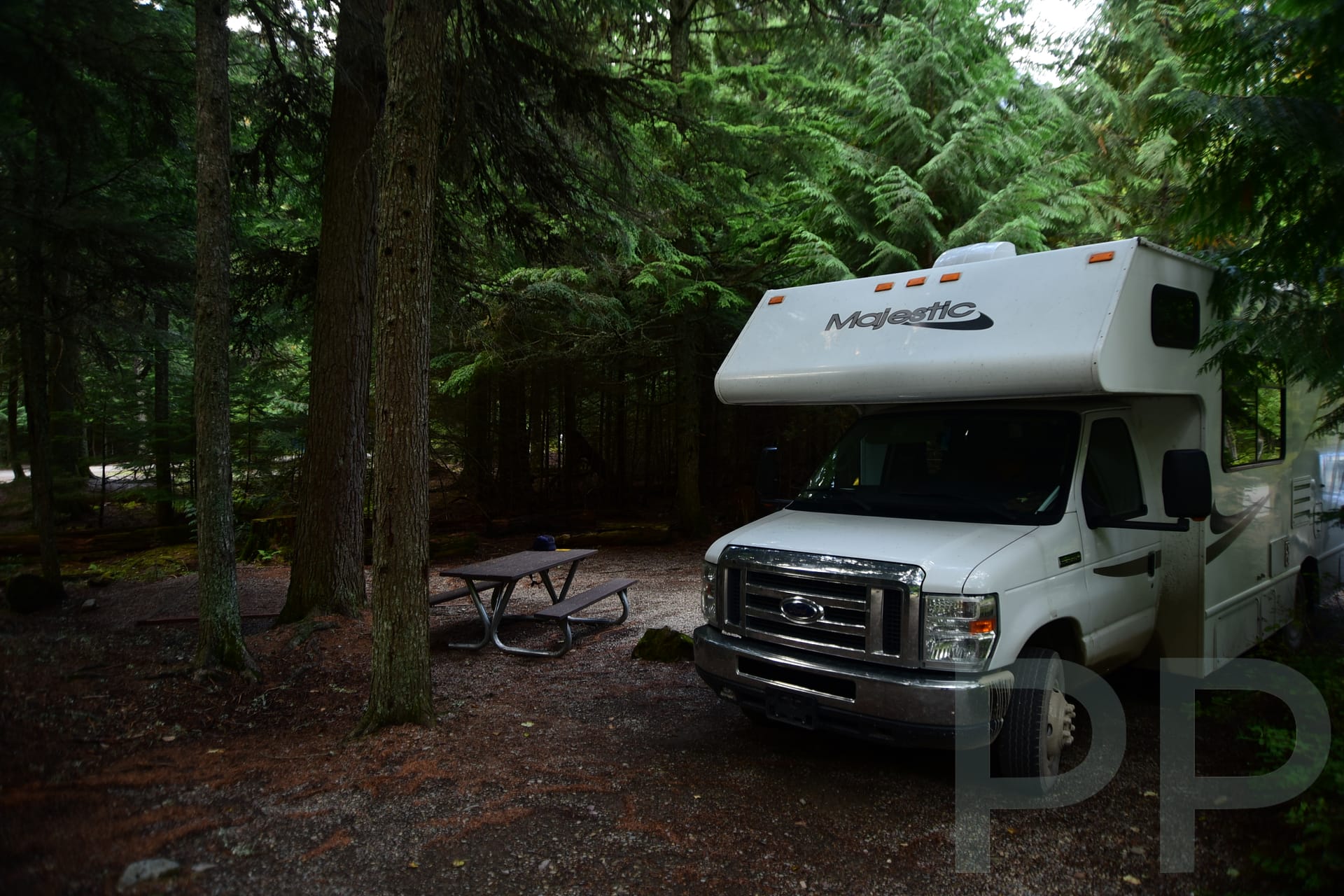
Avalanche Campground is one of the most centrally located campgrounds in Glacier National Park. Shady and quiet, it’s an excellent base for exploring Going-to-the-Sun Road. Reservations are required and typically fill quickly (book on recreation.gov).
West Tunnel (Mile ~24)
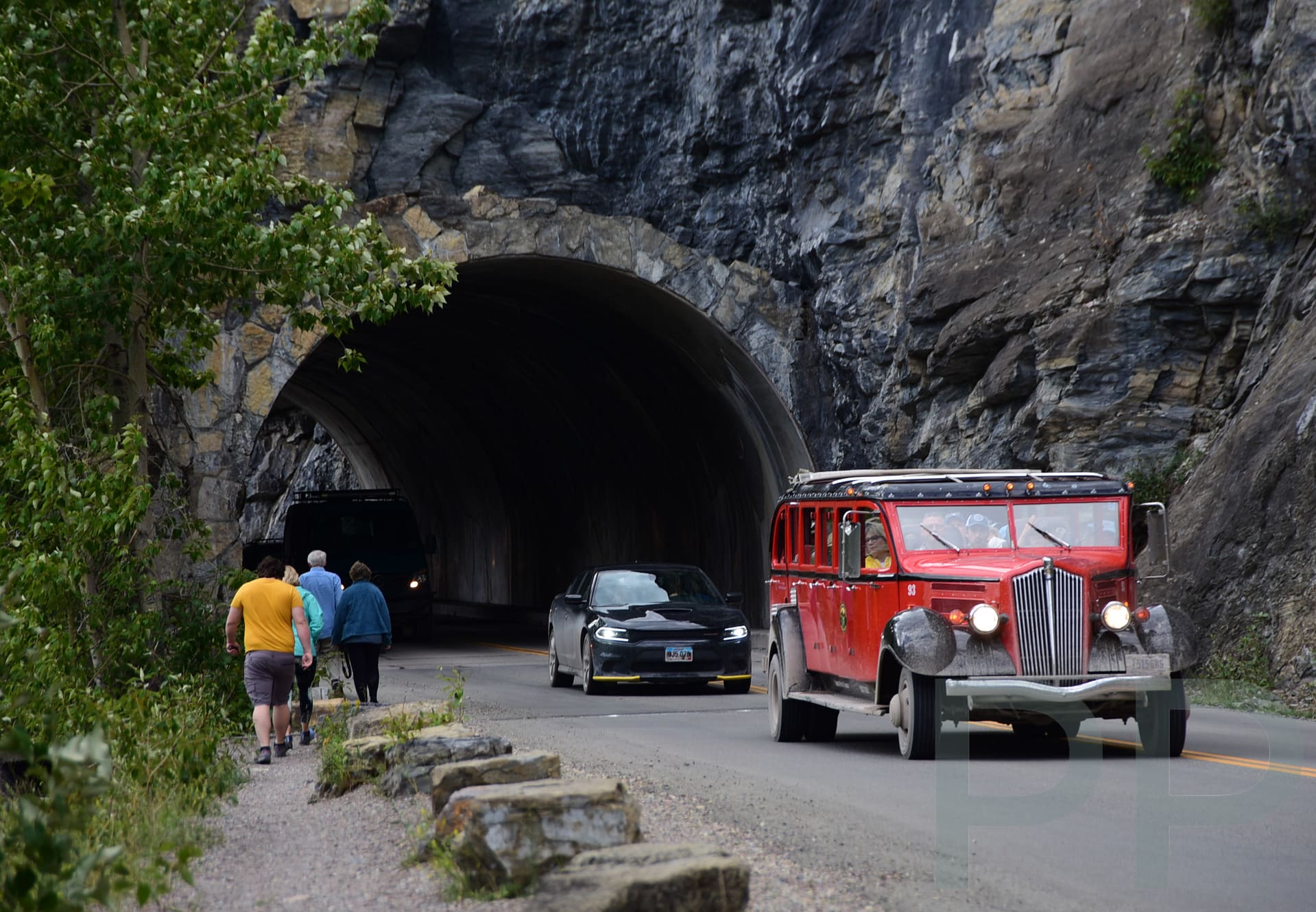
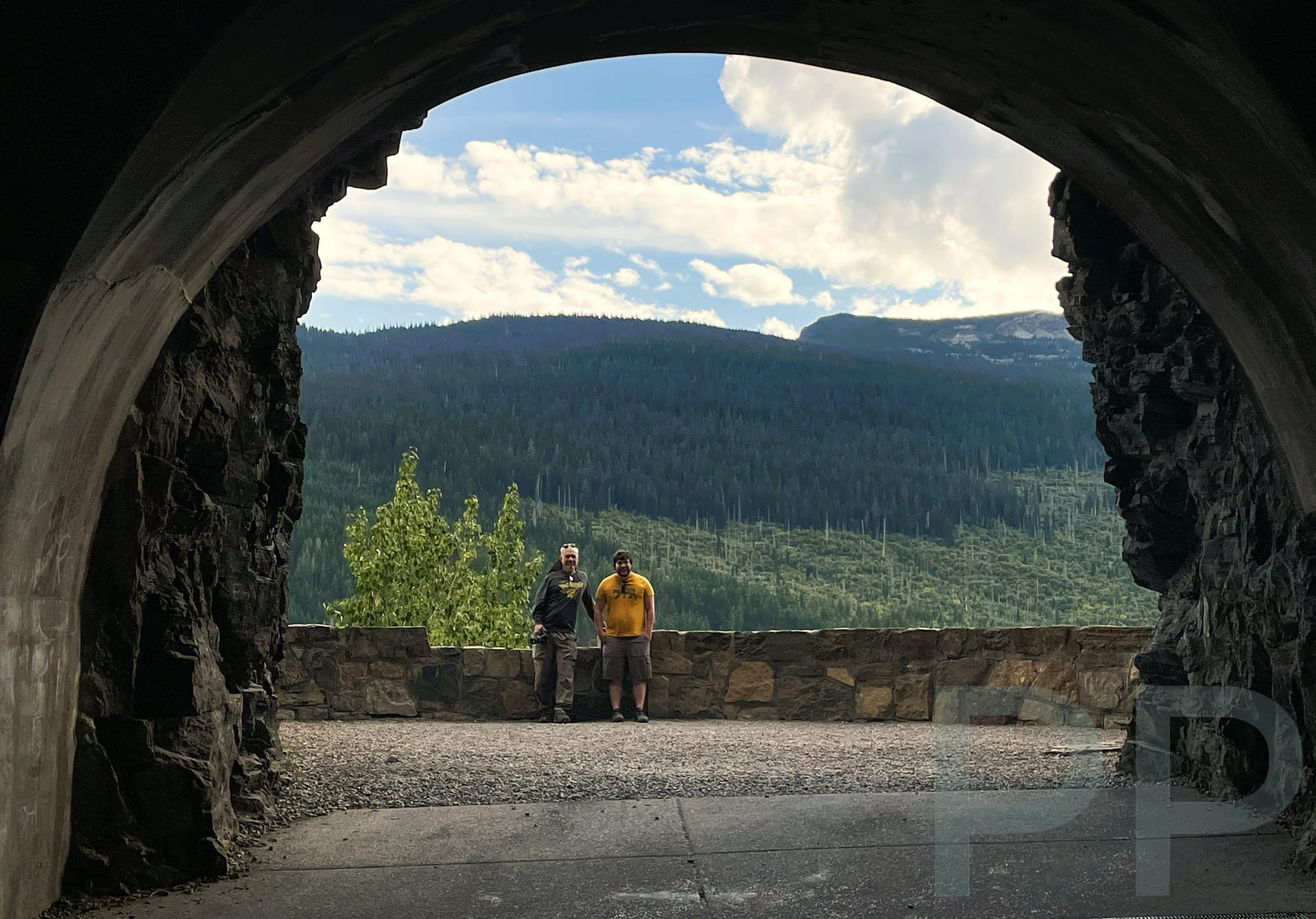
Constructed in 1926–27, the West Tunnel was bored through 192 feet of solid rock. Park nearby and walk into the tunnel to view the McDonald Creek Valley and Heaven’s Peak through its observation windows.
The Loop (Mile ~25)
The Loop is one of the most dramatic and memorable features along Going-to-the-Sun Road. This tight hairpin turn was cut into the steep mountainside to allow the road to gain elevation quickly, and it offers expansive views down the McDonald Creek Valley.
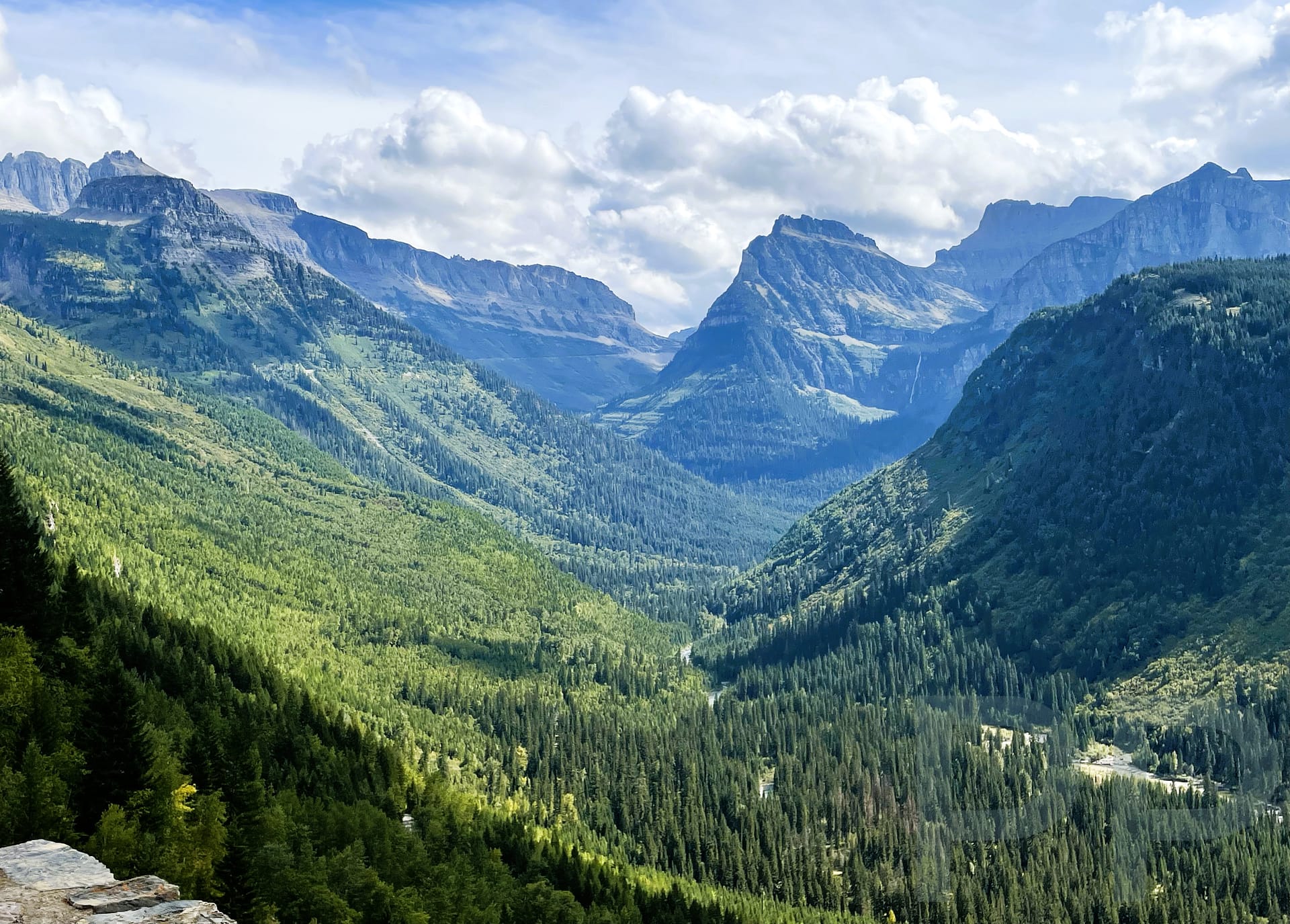
In 2026, The Loop also serves as an afternoon shuttle stop for hikers finishing the Highline Trail. Morning parking can still fill very early, especially for hikers attempting to shuttle up to Logan Pass. Parking may become available later in the day after morning traffic subsides, but spaces remain limited during peak season.
Bird Woman Falls Overlook (Mile ~27–28)
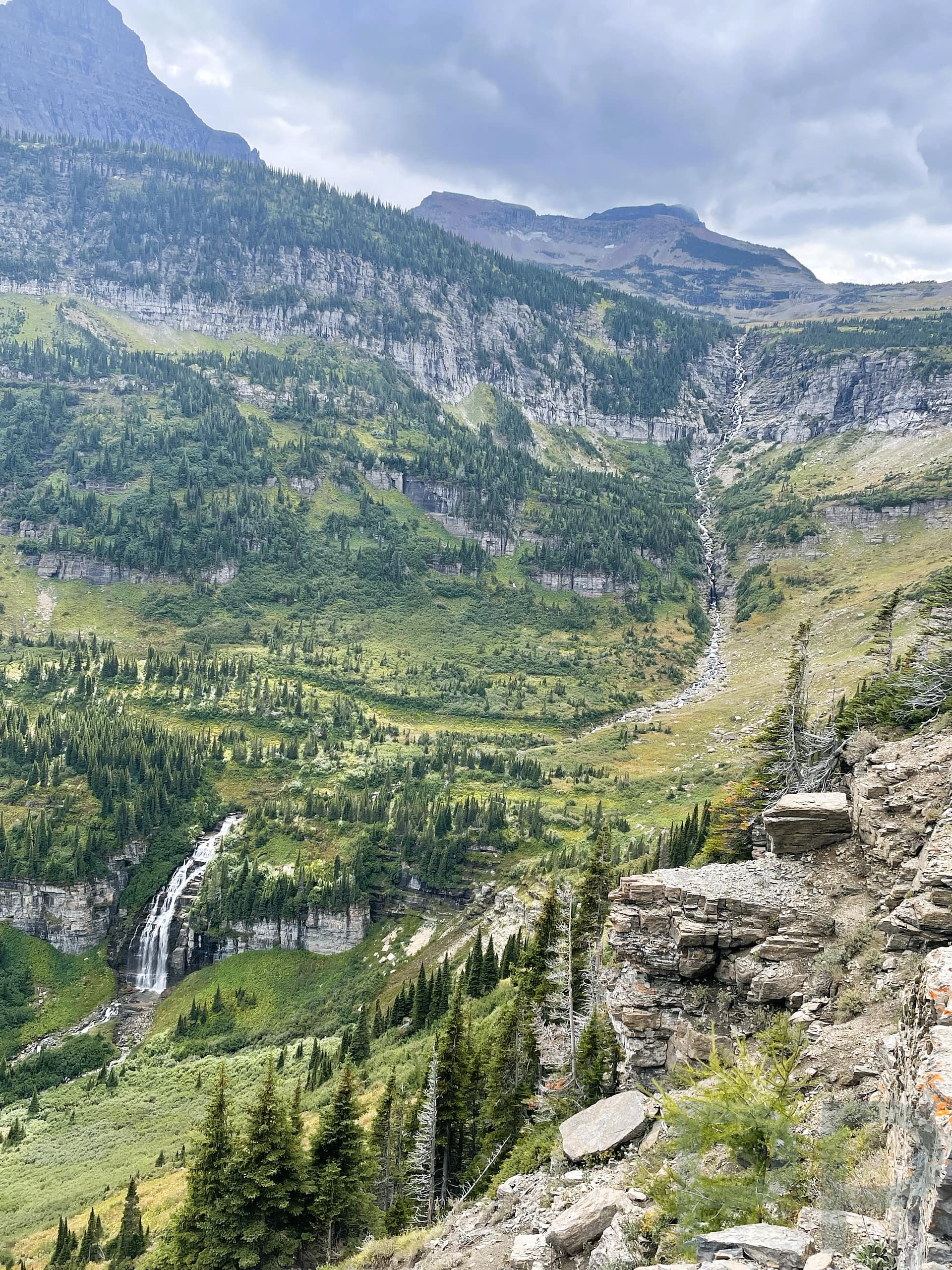
Bird Woman Falls is one of the most iconic waterfalls visible from Going-to-the-Sun Road. The falls drop nearly 500 feet down the slopes of Mount Oberlin into the valley below. While you can catch glimpses of the waterfall from several points on this stretch of the drive, the Bird Woman Falls Overlook offers one of the best, most complete views—especially in late spring and early summer when flow is strongest.
Photo tip: A zoom lens (or phone zoom) helps here; the waterfall is often more dramatic in person than it appears in wide-angle shots.
Weeping Wall (Mile ~29)
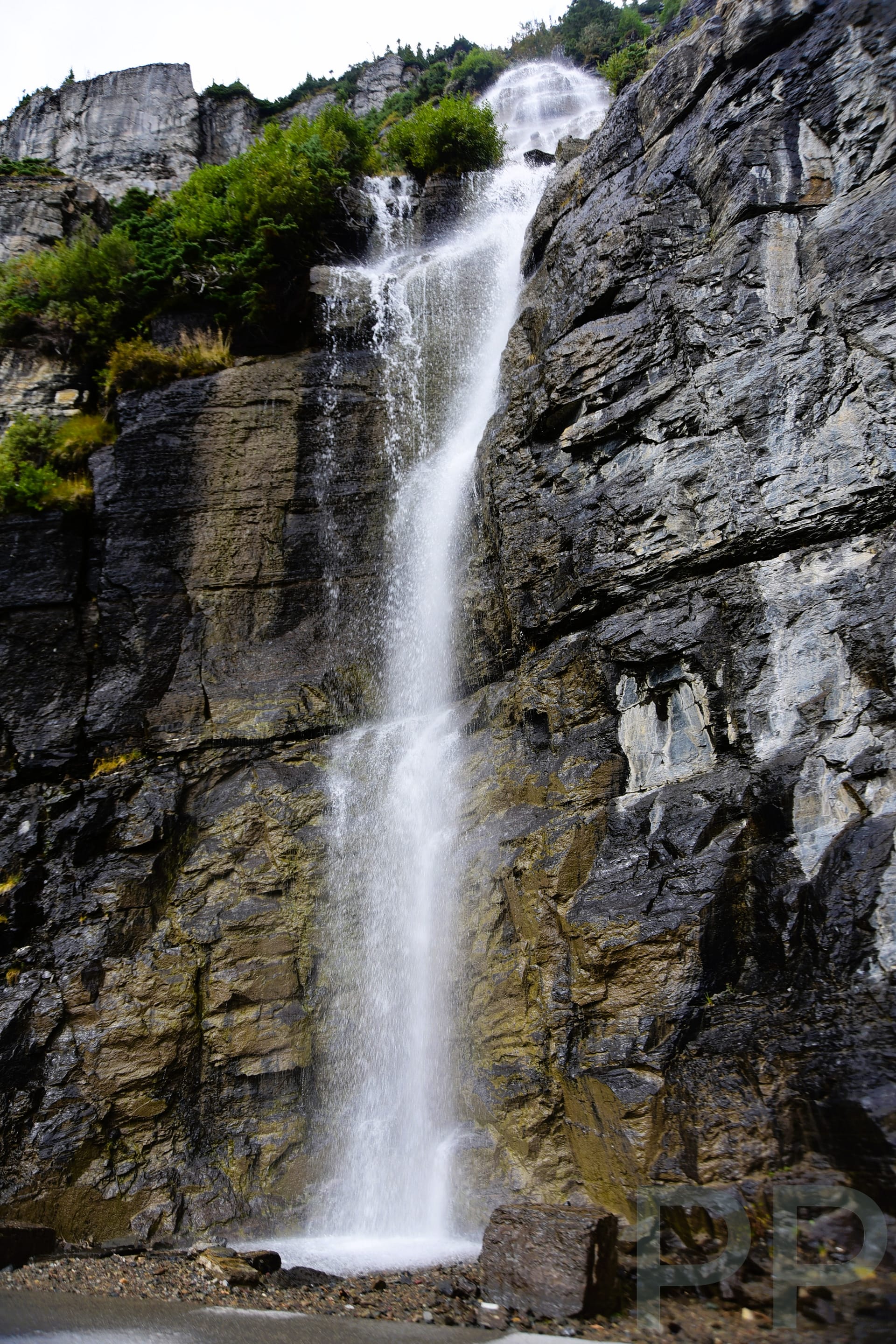
In spring and early summer, water pours directly onto the road at the Weeping Wall. By fall, the flow is often reduced—but conditions vary year to year.
Triple Arches (Mile ~30)
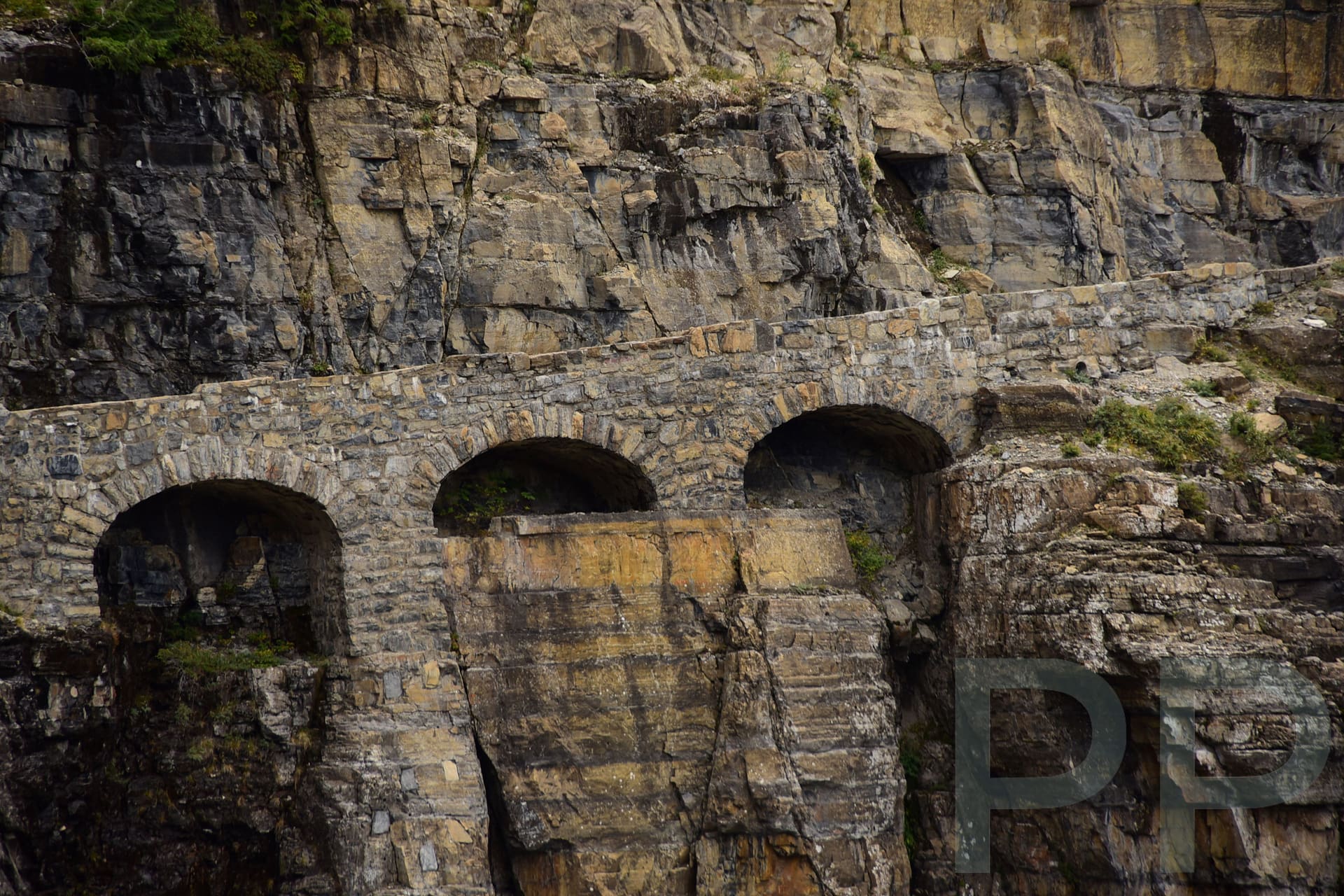
The Triple Arches are one of the most distinctive engineering features along Going-to-the-Sun Road. Built to support the roadway where the mountainside was unstable, these three stone-and-concrete arches “bridge” gaps in the cliff face and help anchor the route to the steep terrain.
There is no dedicated pullout here, so they’re best viewed as you approach them when driving west to east. If you have a passenger, have them ready with a camera—this is one of the most photogenic drive-by features on the road.
Logan Pass (Mile 32)
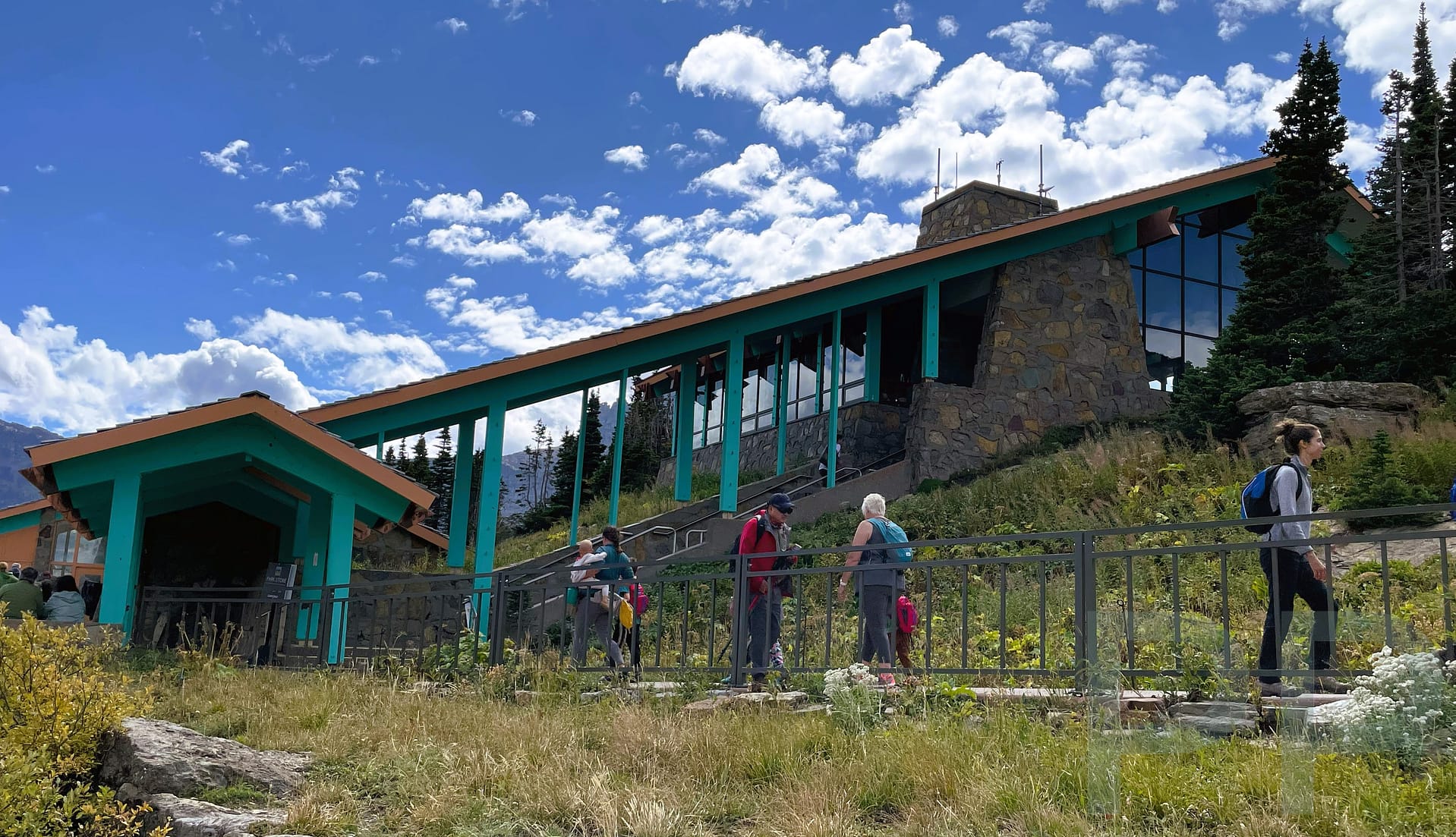
At 6,646 feet, Logan Pass is the highest point on Going-to-the-Sun Road and a major hub for hiking and wildlife viewing.
Here you’ll find:
- Logan Pass Visitor Center
- Restrooms and exhibits
- Trailheads for the Highline Trail and Hidden Lake
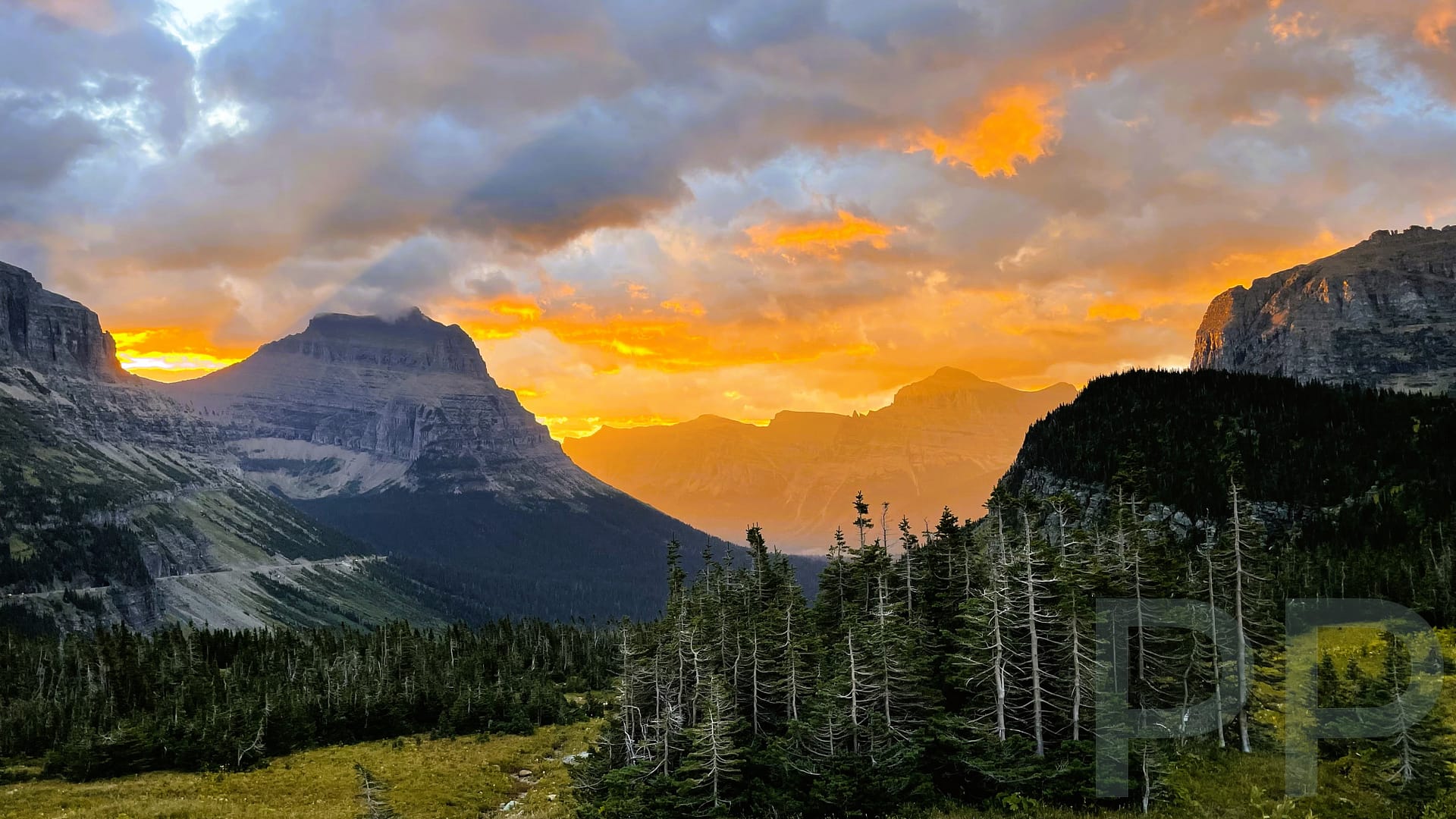
Sunrise at Logan Pass can be spectacular, with alpenglow illuminating the surrounding peaks and crowds still relatively light.
2026 Parking & Shuttle Update: Beginning July 1, 2026, Glacier National Park is limiting parking at Logan Pass to a maximum of three hours during the peak summer season. Visitors parking at Logan Pass must obtain a free timestamped parking permit from a kiosk after parking.
Because of the new time limits, Logan Pass parking is becoming much less practical for longer hikes such as the Highline Trail.” Most hikers planning full or extended hikes will likely find Glacier’s new reservation-based Logan Pass shuttle system to be the easiest option.
Shuttle reservations are required and available through Recreation.gov for a small processing fee. Some tickets are released 60 days in advance, while additional next-day tickets are released nightly during the summer season.
Even with the new system, Logan Pass remains extremely busy during peak months, and visitors should still plan for early starts, changing weather, and limited parking availability throughout the corridor.
Lunch Creek (Just East of Logan Pass)
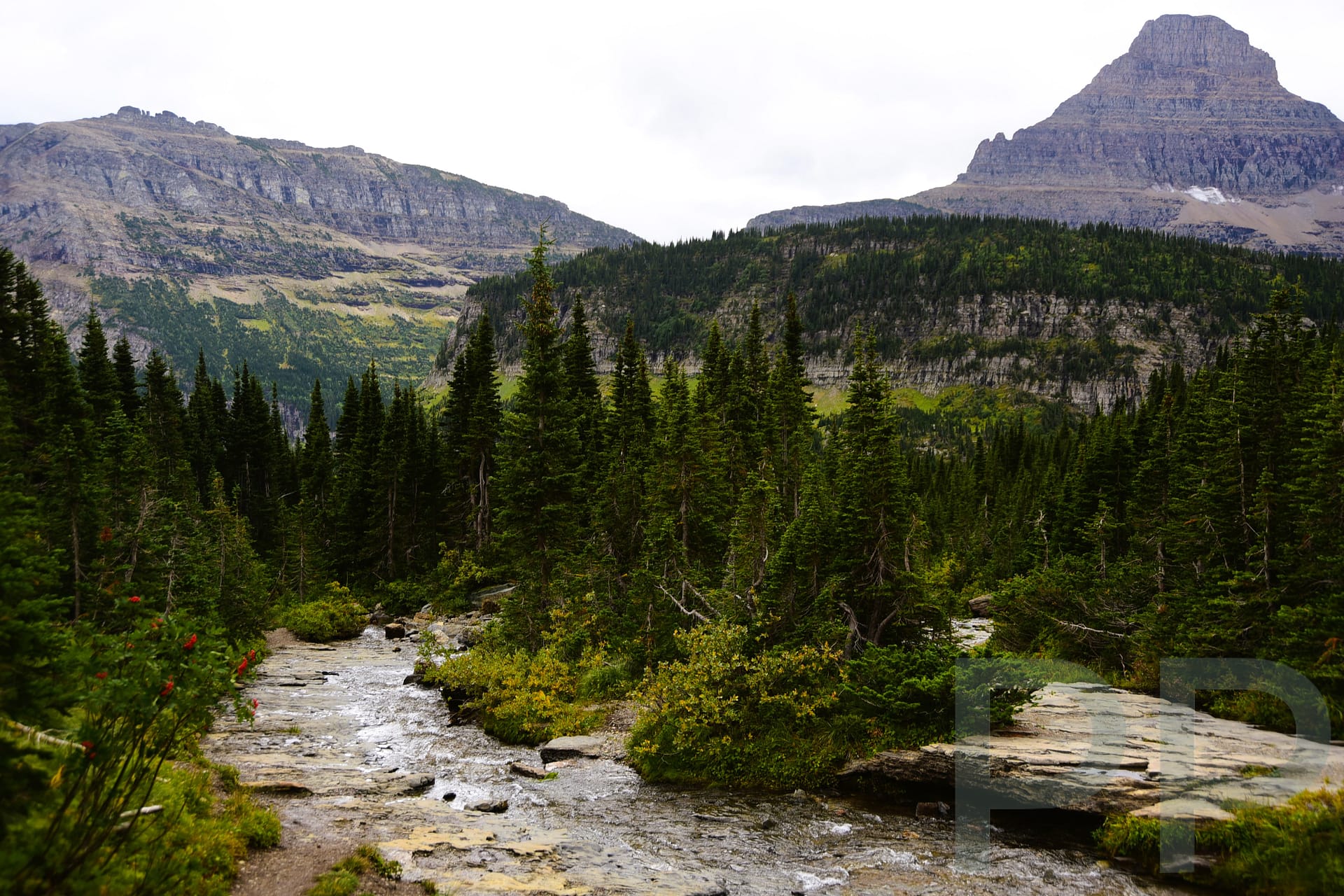
Lunch Creek is located just east of Logan Pass and is typically less crowded. Short paths follow the creek, and an observation deck across the road offers additional views. In summer, wildflowers line the banks, making this a peaceful and scenic stop.
Short Hikes Along Going-to-the-Sun Road
In addition to longer hikes like the Highline Trail, Going-to-the-Sun Road offers several short, accessible hikes that are easy to fit into a scenic drive.
- Trail of the Cedars (west side)
An easy 0.9-mile loop through old-growth forest with gentle grades and minimal elevation gain. Ideal for all ages. - Hidden Lake Overlook (from Logan Pass)
A popular out-and-back walk from Logan Pass with expansive alpine views. The overlook alone offers a rewarding experience without committing to the full lake hike. - St. Mary Falls (east side)
A moderately easy hike to a powerful waterfall, accessible from the east side of the road near St. Mary Lake. - Sunrift Gorge (east of Logan Pass)
A short stop with stairs leading to dramatic rushing water, especially impressive in early summer.
These hikes are perfect for breaking up the drive and experiencing Glacier beyond the viewpoints, without dedicating a full day to backcountry hiking.
Jackson Glacier Overlook (Miles ~37–38)
The Jackson Glacier Overlook is one of the most popular pullouts on the east side of Going-to-the-Sun Road—and for good reason. From here, you can see Jackson Glacier, one of the few remaining glaciers visible from the road.
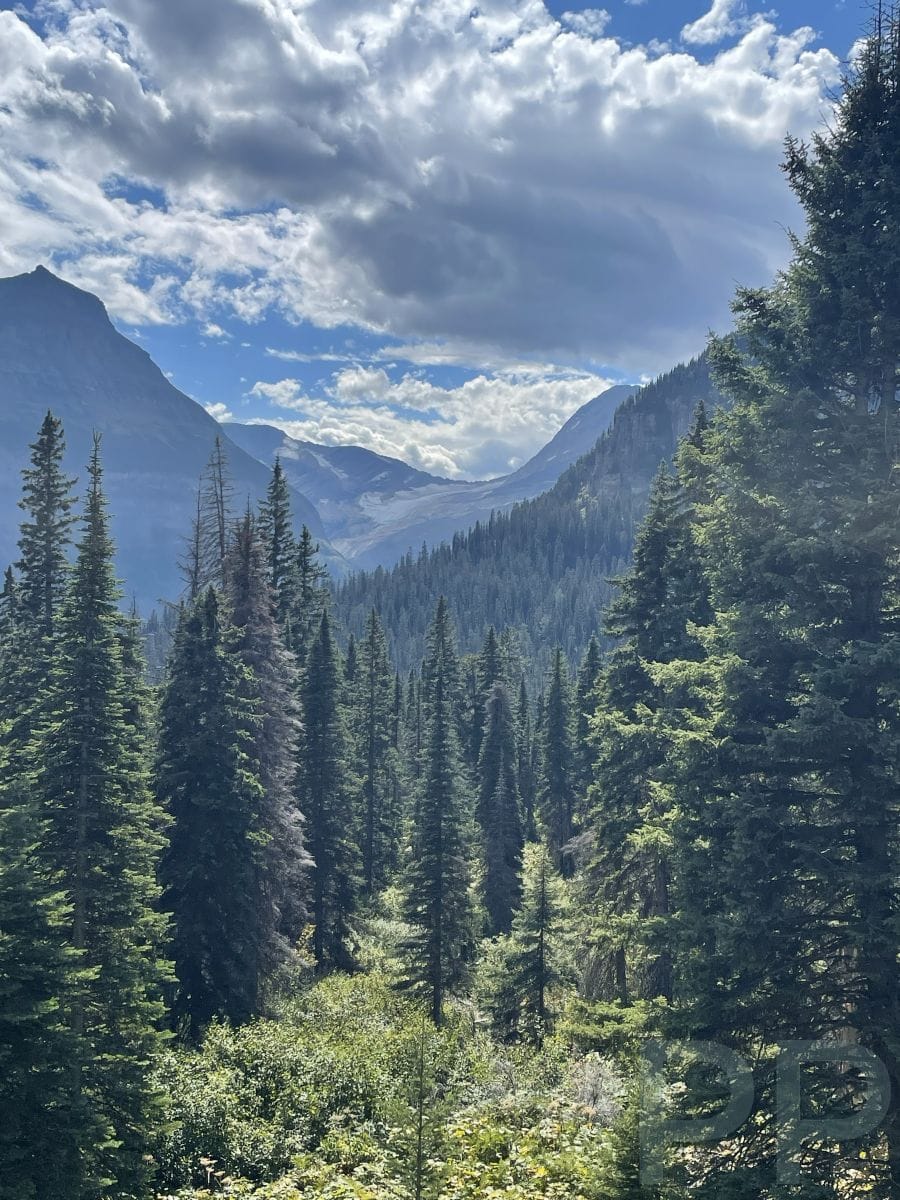
Interpretive signs explain how the glacier has changed over time and provide historical context for what you’re seeing from the overlook.
St. Mary Lake Area (Miles ~40–50)
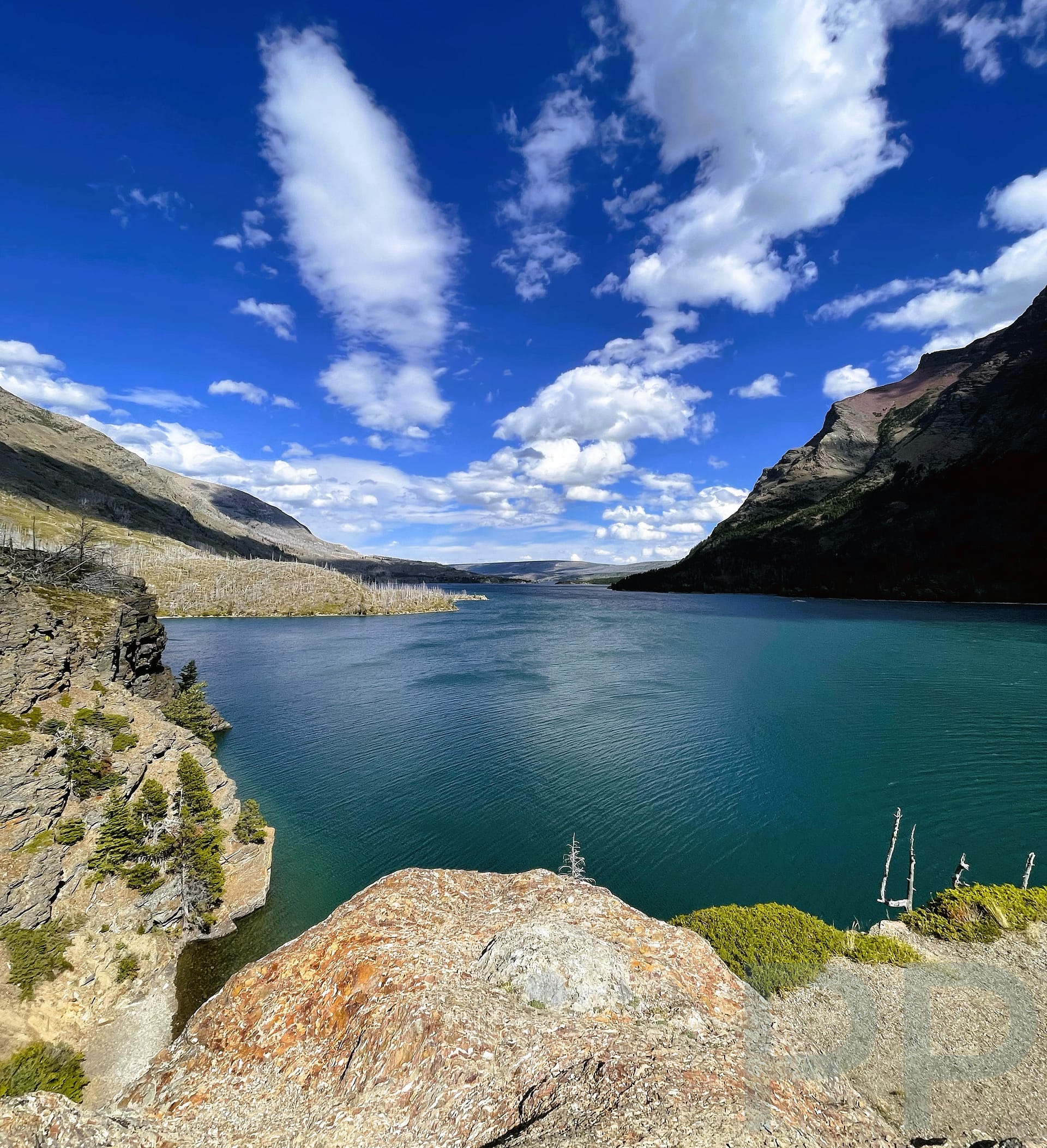
The eastern side of the park opens into broader vistas and wind-swept landscapes along St. Mary Lake.
We stopped at Sun Point Nature Trail, which offers short walks, picnic areas, and excellent lake views. From here, you can also hike to St. Mary Falls if time allows.
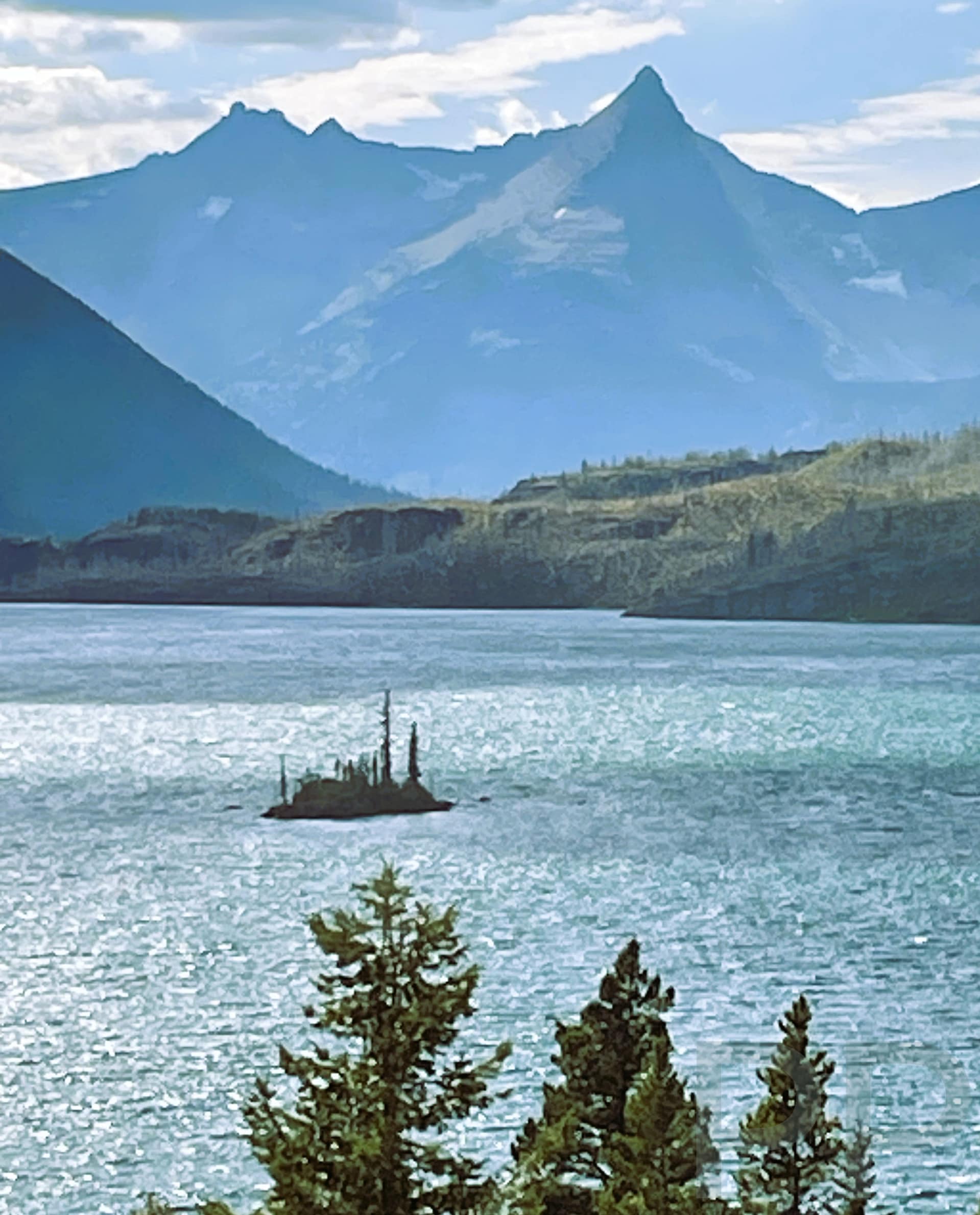
Wild Goose Island—made famous by the opening scene of The Shining—is visible from designated pullouts. While the island itself is small, the lake and surrounding peaks are stunning.
St. Mary Visitor Center & Eastern Terminus (Miles ~49–50)
The St. Mary Visitor Center, at approximately mile 49–50, marks the eastern end of Going-to-the-Sun Road. Stop here for current conditions, trip-planning information, restrooms, and exhibits highlighting the Indigenous history of the region.
Nearby St. Mary Village offers lodging, food, and coffee—welcome amenities after a full day on the road.
Getting Reservations & Access to Going-to-the-Sun Road
Access requirements for Glacier National Park — and specifically Going-to-the-Sun Road — have changed several times in recent years, so it’s important to understand how entry works before your visit.
Vehicle Reservations (What to Know)
In some recent seasons, Glacier National Park has used a timed-entry vehicle reservation system to manage congestion during peak summer months. These systems typically applied during daytime hours and were limited to certain entrances and road corridors, including Going-to-the-Sun Road.
Policies can change from year to year. Some seasons have required reservations; others have not.
👉 Before your trip, always check the official National Park Service website for current entry requirements, including:
- whether a timed-entry reservation is required
- which entrances or areas are affected
- applicable dates and hours
Separate shuttle reservations or parking restrictions may also apply in some areas, particularly around Logan Pass.
What You’ll Always Need
Regardless of whether a vehicle reservation system is in place:
- A valid park entrance pass is required (daily pass, annual pass, or America the Beautiful pass).
- Reservations are still required for lodging, campgrounds, boat tours, and guided experiences, and these often sell out well in advance.
Timing Tip
Even in years without vehicle reservations, parking constraints remain, especially at Logan Pass. Arriving early in the morning or later in the afternoon can make a significant difference.
Vehicle Size & RV Restrictions on Going-to-the-Sun Road
Before planning to drive Going-to-the-Sun Road, it’s important to know that vehicle size restrictions are strictly enforced.
Vehicle Length & Size Limits
Vehicles are not allowed on Going-to-the-Sun Road if they exceed:
- 21 feet in length
- 8 feet in width
- 10 feet in height
These restrictions apply to:
- RVs and motorhomes
- trailers of any kind
- vehicles with rooftop equipment that exceeds height limits
The road is narrow, winding, and carved into steep terrain, with limited shoulders and low clearances in places.
Our Experience (Why This Matters)
We learned this the hard way. We had rented an RV for our Glacier trip and only discovered the restriction shortly before our visit. To drive Going-to-the-Sun Road, we had to leave the RV behind and rent a separate car for the day.
It worked out — but it added cost, logistics, and stress that could have been avoided with earlier planning.
What to Do If Your Vehicle Is Too Large
If you’re traveling in an RV or oversized vehicle, you still have good options:
- Park outside the restricted corridor and rent a car locally (we were staying at a campground within the park)
- Use Glacier’s free shuttle system
- Book a Red Bus Tour or guided tour, which allows you to experience the full road without driving
Quick Tip
Even some rental SUVs and vans can exceed limits once rooftop boxes or gear are added. Always check the final height and length of your vehicle before arriving.
Different Ways to Experience Going-to-the-Sun Road
You don’t have to drive yourself to enjoy Going-to-the-Sun Road. In fact, for many visitors, alternative options can be more relaxing and informative.
Red Bus Tours
One of the most iconic ways to experience the road is aboard a vintage “jammer” with Glacier National Park Red Bus Tours.
These guided tours:
- travel the full length or major portions of Going-to-the-Sun Road
- include live narration covering park history, geology, wildlife, and engineering
- make photo stops at key viewpoints
- depart from locations on both the east and west sides of the park
Red Bus Tours are especially popular with visitors who prefer not to drive narrow mountain roads or who want interpretive context along the way. Advance reservations are strongly recommended.
Free Park Shuttle System
Glacier National Park operates shuttle service along Going-to-the-Sun Road during the peak summer season.
In 2026, portions of the system — particularly service connected to Logan Pass — require advance reservations through Recreation.gov, while some local shuttle connections may still operate on a first-come, first-served basis.
Shuttle service connects major stops such as Apgar, Logan Pass, and St. Mary and can be one of the easiest ways to avoid parking challenges during peak summer months.
Because routes, schedules, and reservation requirements may change, visitors should confirm current shuttle details directly with the National Park Service before their trip.n fill quickly during peak hours, but they offer a stress-free way to experience the road without worrying about parking.
Guided & Interpretive Tours
In addition to Red Bus Tours, commercial guided tours operate in and around Glacier National Park, including tours led by local and Indigenous guides. These experiences often focus on:
- cultural history
- regional ecology
- photography
- storytelling and place-based interpretation
These tours typically include transportation and curated stops, making them a good option for visitors seeking a deeper understanding of the landscape.
Planning a Bigger Rockies Trip?
If you’re planning a longer Rockies adventure, Glacier National Park pairs beautifully with Banff and the Canadian Rockies. We’ve put together a detailed Banff & Glacier itinerary that combines scenic drives, hikes, and must-see highlights on both sides of the border.
Final Thoughts
Driving Going-to-the-Sun Road is more than a scenic drive—it’s a journey through the very heart of Glacier National Park. From tranquil lakes and cedar forests to high alpine passes and sweeping valleys, this road showcases the park’s extraordinary diversity.
If you’re planning a Glacier visit and have questions about timing, parking, or pairing this drive with hikes and campgrounds, send us an email. We’re happy to help you plan an unforgettable trip.
Related Guides
This guide is one of multiple guides to Glacier National Park: