Rising dramatically above the Wyoming prairie, Devils Tower is one of America’s most recognizable landmarks and its first national monument. We’ve all seen photos of it. In fact, by the time we visited in June 2020, I felt like I already knew what to expect.
I was wrong. While the photos prepared me for its unusual shape, they didn’t prepare me for its scale. Devils Tower is simply bigger and more impressive in person than it appears in pictures. The nearly vertical columns seem to rise straight out of the landscape, creating a sight that feels almost surreal.
We visited as part of our Dakotas road trip – on a quick jaunt into Wyoming – and found it well worth the stop. We hiked the trail around the base of the tower, watched climbers make their way up the massive rock face, and enjoyed some of the best views of the monument from a quiet meadow just outside the main visitor area.
If you’re wondering whether Devils Tower National Monument is worth visiting, our answer is an easy yes.
Know Before You Go
For current hours, entrance fees, road conditions, and other visitor information, visit the National Park Service’s Devils Tower National Monument website.
Plan to arrive early to avoid parking problems. Alternatively, park at the picnic area just inside the monument entrance and walk 1.5 miles up to the monument) See our section on Traffic, Parking, and Summer Crowds for more information.
Bring water, sunscreen, and comfortable walking shoes. The Tower Trail is paved and relatively easy, but there is little shade in some sections and summer temperatures can be warm.
Things to Do at Devils Tower National Monument
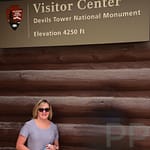
Visit the Visitor Center
Located near the Tower Trail trailhead, the visitor center is worth a quick stop before beginning your visit. Exhibits cover the tower’s geology, climbing history, wildlife, and cultural significance, and rangers can provide current trail, weather, and program information.
Walk the Tower Trail
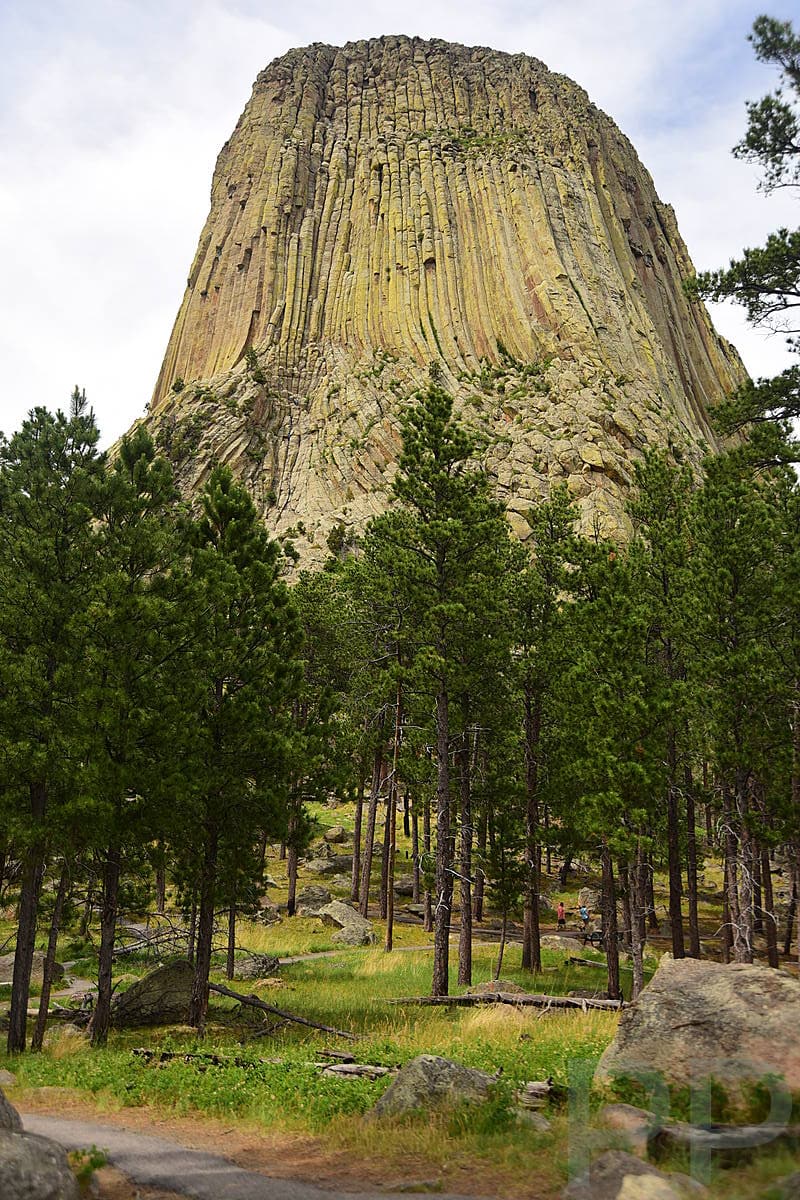
If you only do one thing at Devils Tower National Monument make it walking the Tower Trail.
This paved 1.3-mile loop circles the base of the monument and provides constantly changing perspectives of the tower’s remarkable geology.
Walking beneath the massive columns gives you a much better appreciation for its size than viewing it from a parking lot overlook.
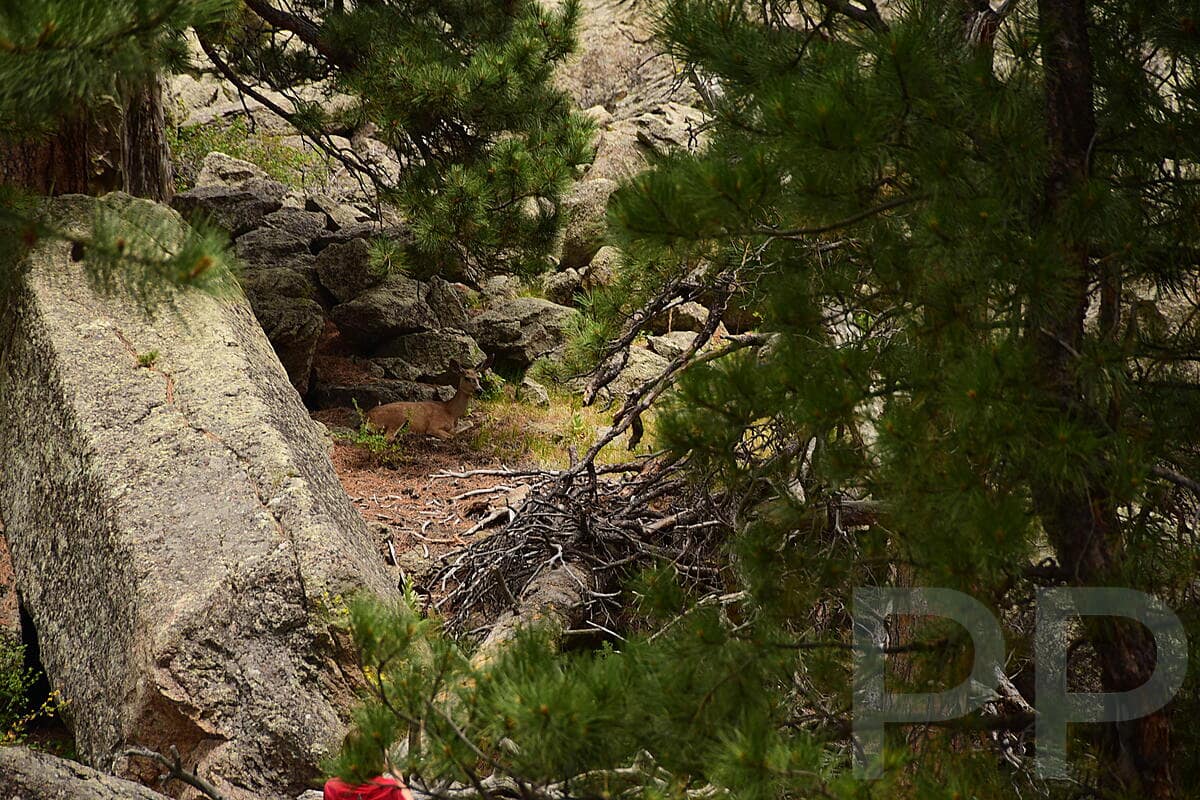
While most visitors focus on the tower itself, don’t forget to look around. We spotted a deer tucked among the boulders and pines along the Tower Trail, adding an unexpected wildlife sighting to our visit.
The trail is relatively easy and was the highlight of our visit.
Why Does Devils Tower Look Like That?
The first thing most visitors notice about Devils Tower is the remarkable pattern of vertical columns running from the base to the summit. These columns are the result of molten rock cooling underground.
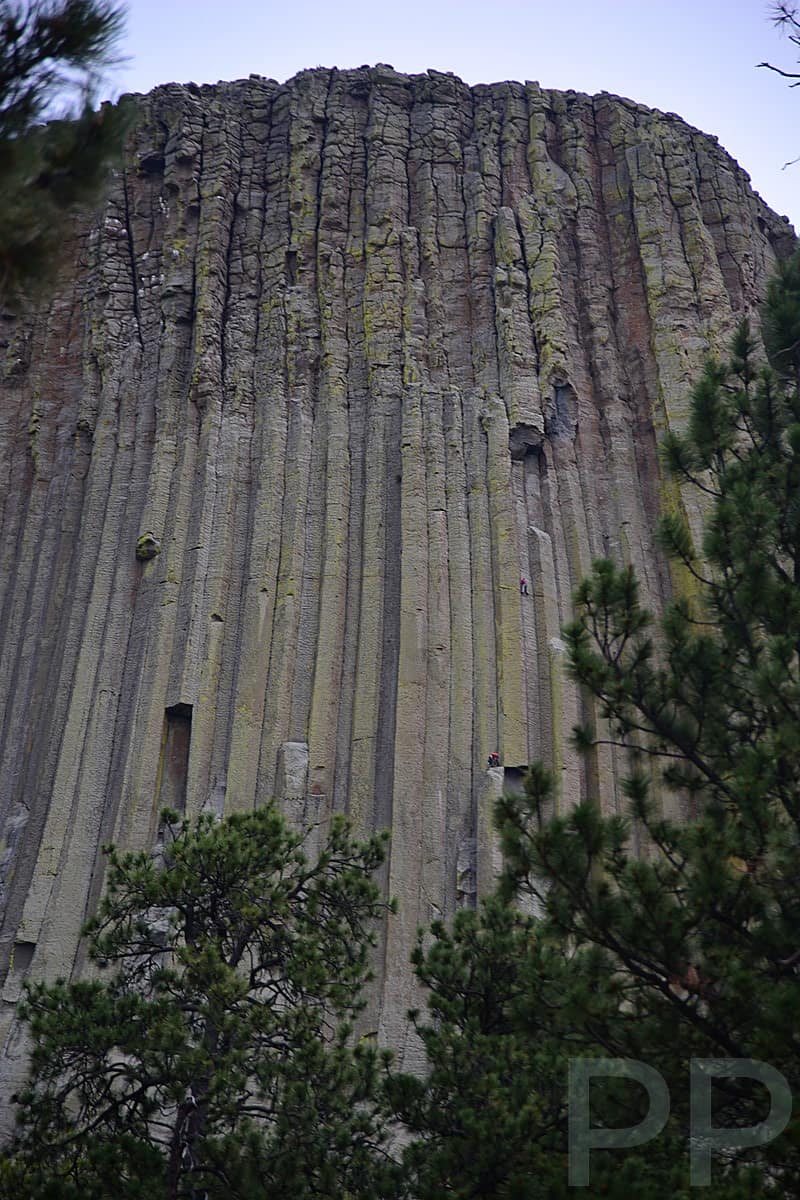
As the magma cooled, it contracted and cracked, creating long polygon-shaped columns. Most are hexagonal (six-sided), though some have five or seven sides. Over time, erosion wore away the softer surrounding rock, leaving the much harder tower exposed.
The result is one of the most distinctive geologic formations in North America.
You can see the columns from a distance, but the best place to appreciate them is on the Tower Trail. Standing at the base, the columns appear almost perfectly vertical and far larger than they look in photographs. Some are several feet across and hundreds of feet tall, giving the tower its striking appearance.
Scientists still debate exactly how Devils Tower formed. While they agree it originated from molten rock beneath the Earth’s surface, there are competing theories about whether it was the core of an ancient volcano, a volcanic plug, or a different type of igneous intrusion. Regardless of the details, the result is one of America’s most recognizable natural landmarks.
Watch the Climbers
Devils Tower is considered one of North America’s premier traditional crack-climbing destinations. Hundreds of vertical cracks divide the tower into enormous columns, creating routes that attract climbers from around the world.
Even if you have no interest in climbing yourself, it’s fascinating to watch. During our visit, we spent several minutes spotting climbers high above us. Their tiny appearance against the rock face helps bring the scale of Devils Tower into focus.
The monument maintains a long history of climbing records dating back to the 1930s.
Enjoy the Scenic Viewpoints
Some of the best views aren’t from the visitor center at all.
One of our favorite views of Devils Tower came from a meadow near the monument, where the tower rose dramatically above the surrounding prairie and pine trees. The perspective emphasized just how abruptly the formation emerges from the landscape and produced some of our favorite photographs of the day.
For more distant views, consider stopping at Joyner Ridge or other pullouts around the monument. These locations provide a broader perspective than the Tower Trail and are especially popular with photographers.
How Much Time Do You Need at Devils Tower?
Many visitors stop for a quick photograph and leave.
We recommend allowing at least two to three hours. That gives you time to walk the Tower Trail, browse the visitor center, watch climbers, and enjoy the scenery without feeling rushed.
If you’re interested in ranger programs, photography, wildlife viewing, or stargazing, a half day or longer is even better.
Traffic, Parking, and Summer Crowds
One lesson we learned the hard way: don’t underestimate the parking situation.
Before our trip, we read warnings about parking shortages and traffic delays. Like many visitors, we assumed they were exaggerated. They weren’t.
We spent well over an hour sitting in traffic just trying to enter the monument on a June morning. Limited parking remains one of the most common visitor complaints during the busy summer season.
If parking near the visitor center is full, there is another option. The National Park Service suggests parking near the picnic area shortly after entering the monument and hiking to the visitor center area. The route follows the South Side Trail and Red Beds Trail and is approximately 1.5 miles with about 440 feet of elevation gain.
Arriving early in the morning or later in the afternoon can also help avoid the worst congestion.
Can You Climb Devils Tower?
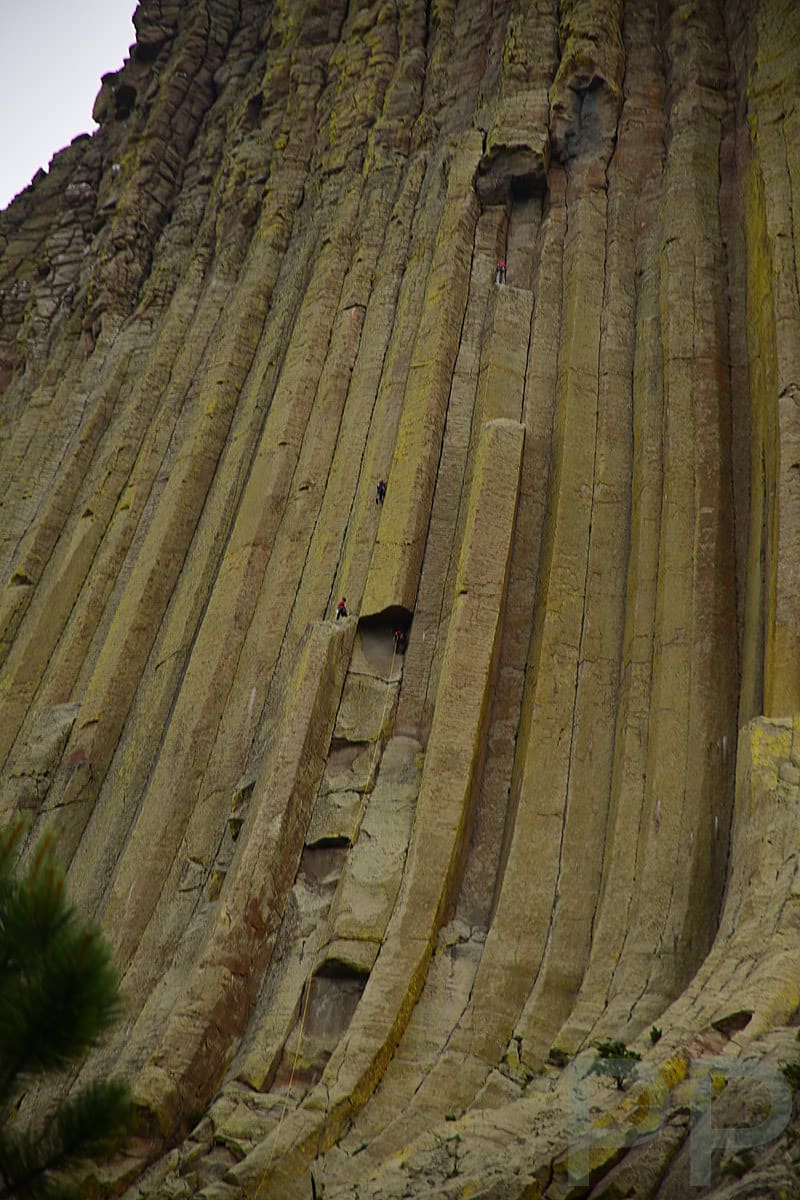
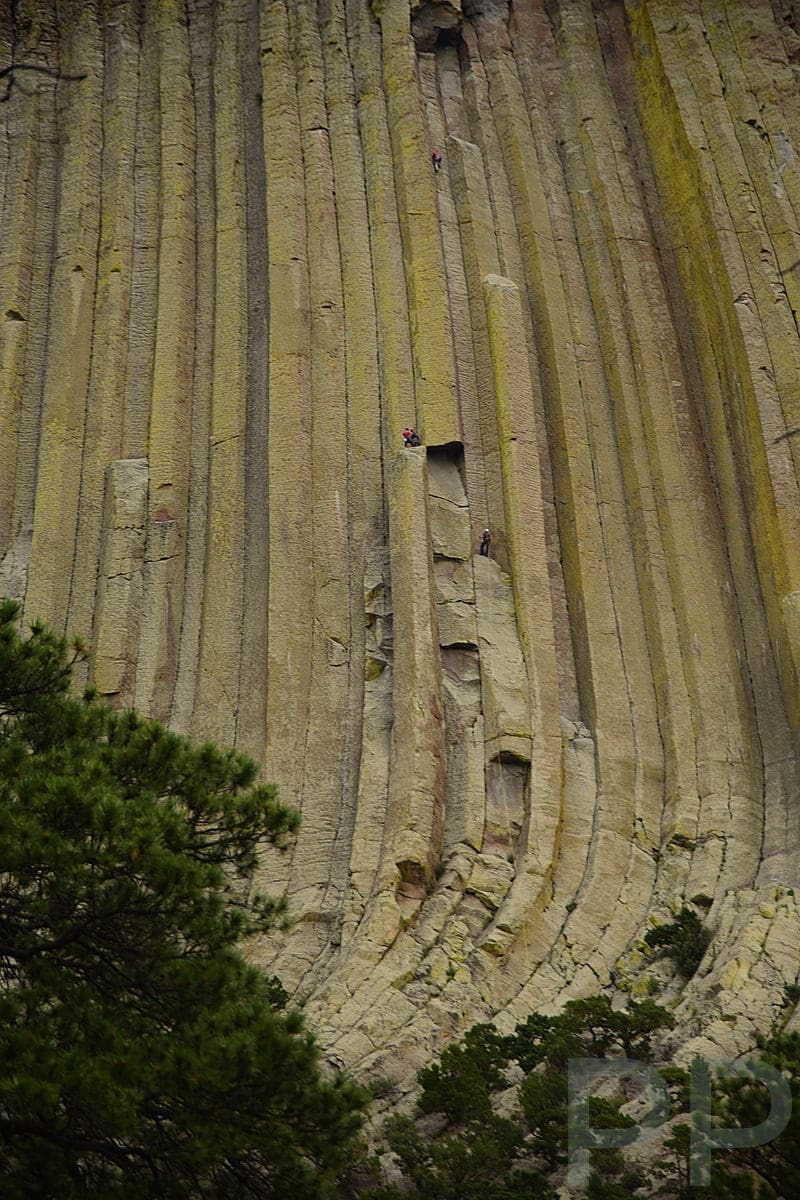
Yes, experienced climbers can climb Devils Tower.
The monument is famous for its traditional crack climbing routes, with technical ratings ranging from moderate to extremely difficult. Most routes require specialized climbing gear and experience with traditional protection systems.
Visitors who aren’t climbers can still enjoy watching others make the ascent. It’s fascinating to watch as climbers, appearing as brightly colored specks on the rock, slowly ascend up or rappel down.
Interested in climbing Devils Tower? The National Park Service provides detailed information on routes, regulations, seasonal closures, and required climber registration.
Although the summit isn’t accessible to most visitors, climbers who reach the top find a surprisingly flat, football-field-sized expanse covered with grass, wildflowers, cactus, and scattered ponderosa pines. The broad summit contrasts sharply with the tower’s sheer vertical walls and offers sweeping views across northeastern Wyoming and the surrounding prairie.
Experience Devils Tower After Dark
If you’re camping or staying nearby, consider returning after sunset.
Devils Tower is recognized as an excellent place for night sky viewing. With relatively little light pollution, the monument offers opportunities for stargazing, night photography, and ranger-led astronomy programs when offered.
The night sky also plays an important role in the cultural traditions of many Native American tribes associated with the monument.
Popular night-sky viewing locations include Joyner Ridge and the picnic area near the Circle of Sacred Smoke sculpture.
Ranger Programs
During the summer season, ranger programs are often offered between Memorial Day and Labor Day, particularly on weekends. Topics may include geology, wildlife, cultural history, climbing, and night skies.
Program schedules vary, so check at the visitor center for current offerings.
Where to Stay
Most visitors stay in the Black Hills region of South Dakota and visit Devils Tower as a day trip. The monument is less than two hours northwest of Rapid City, making it an easy addition to a Black Hills itinerary.
Visitors who want to stay inside the monument can use Belle Fourche River Campground. This first-come, first-served campground offers shaded sites beneath large cottonwood trees and accommodates both tents and RVs. There are no hookups, but drinking water and restrooms are available.
Is Devils Tower Worth Visiting?
Absolutely.
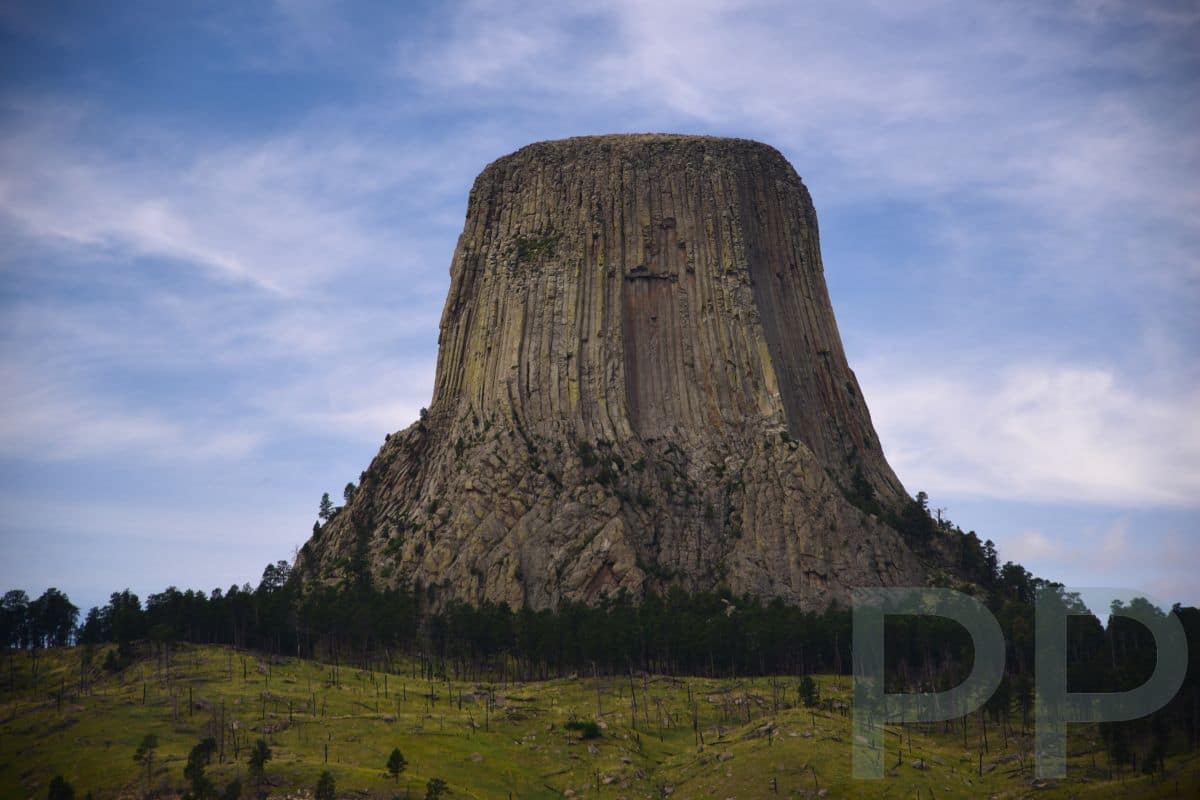
Even after seeing photos of Devils Tower for decades, we were surprised by how impressive it was in person. Walking around its base, watching climbers on the sheer rock face, and seeing the tower rise dramatically above the prairie made it one of the most memorable stops on our Dakotas road trip.
It’s easy to understand why America’s first national monument continues to inspire visitors more than a century after its designation.
Related Guides
If you’re visiting Devils Tower as part of a larger Black Hills or Dakotas adventure, be sure to check out our complete Dakotas road trip itinerary. This route combines some of the region’s most memorable destinations, including Devils Tower, Badlands National Park, Theodore Roosevelt National Park, Custer State Park, Crazy Horse Memorial, Rapid City, Wall Drug, and Medora. It was one of our favorite American road trips and offers an excellent mix of scenic drives, wildlife, hiking, history, and iconic Western landscapes.
North & South Dakota Road Trip Itinerary
Essential Guide to Badlands National Park
Theodore Roosevelt National Park: Complete Guide to the North and South Units