Long before visiting Portugal, I was drawn to photos of the Algarve’s dramatic coastline — golden cliffs plunging into turquoise Atlantic water at the southwestern edge of Europe.
By the time we reached the western Algarve during our three-week Spain and Portugal itinerary, we were ready to slow down.
After fast-moving days filled with cathedrals, historic cities, road trips, and sightseeing, the western Algarve offered something entirely different: seafood dinners overlooking the ocean, cliffside walks in the Atlantic wind, and long stretches of coastline where the goal was simply to relax.
And in many ways, it became exactly what travel guru Rick Steves famously describes:
“The Algarve is your vacation from your vacation.”
Note: Compared with the larger resort-oriented towns farther east in the Algarve, the western Algarve feels noticeably wilder, windier, and less developed.
Affiliate Disclosure: Some links in this post are affiliate links. If you make a purchase through these links, we may earn a small commission at no additional cost to you. We only recommend hotels, tours, and travel products we genuinely believe add value to your trip. Thank you for supporting Panoramic Pathways!
Lagos, Portugal
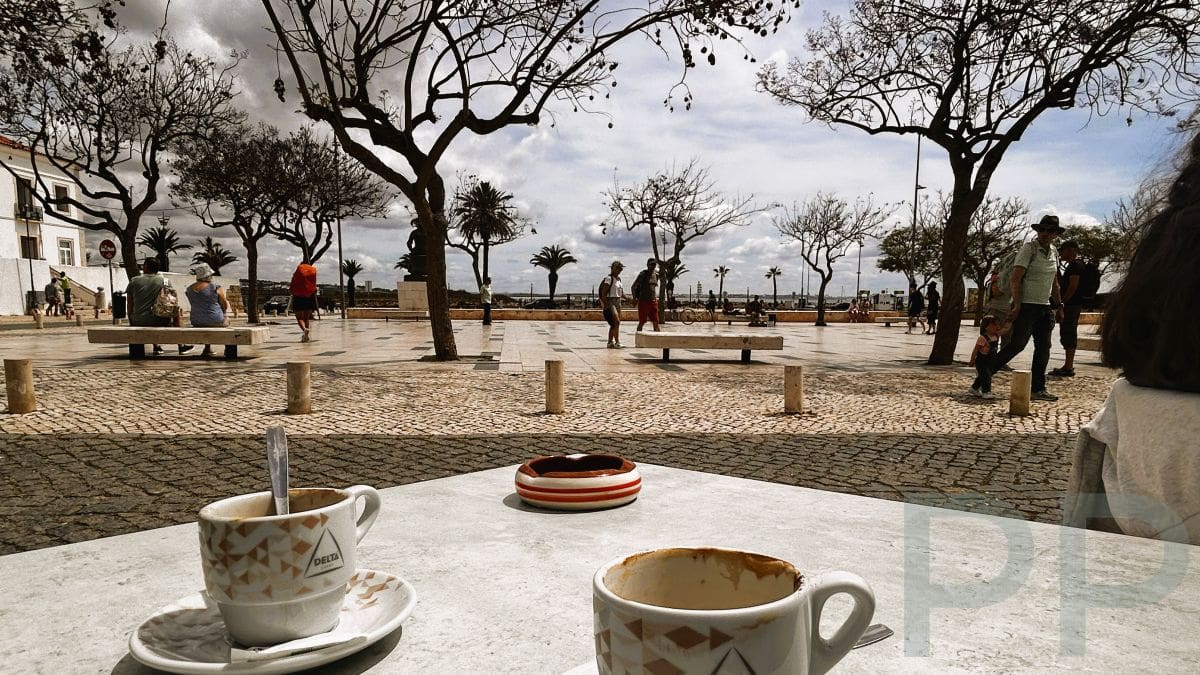
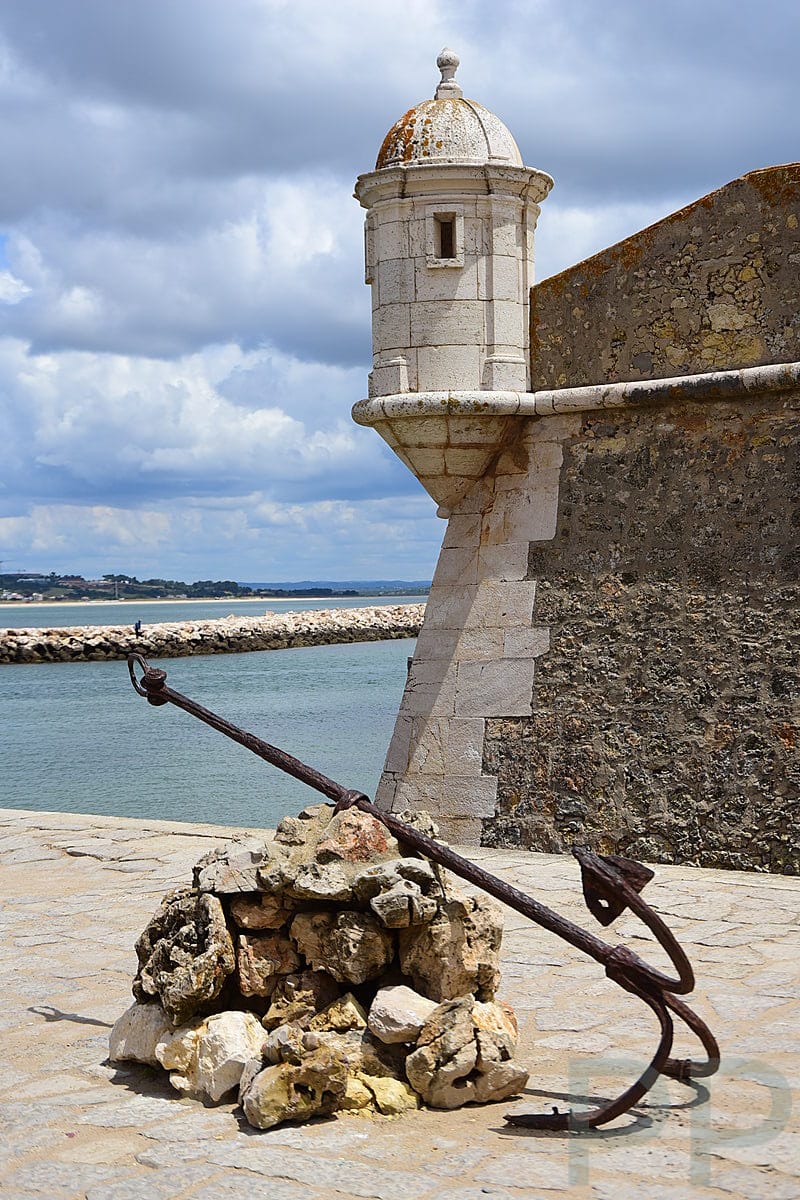
Lagos played an important role during Portugal’s Age of Discovery and was closely connected to Prince Henry the Navigator and early Atlantic exploration.
Lagos’s historic center still retains portions of its old defensive walls, giving the town a more historic atmosphere than many beach destinations in the Algarve.
Although Lagos was the busiest place we encountered during our time in the western Algarve, it still retained a relaxed coastal feel — especially earlier in the day. We arrived around 9 AM, which allowed us time to enjoy the quieter side of Lagos before the crowds.
The center of activity revolves around Praça Gil Eanes, the lively main square lined with cafés, restaurants, palm trees, a fountain, and a small carousel. It feels like the natural meeting point for the town.
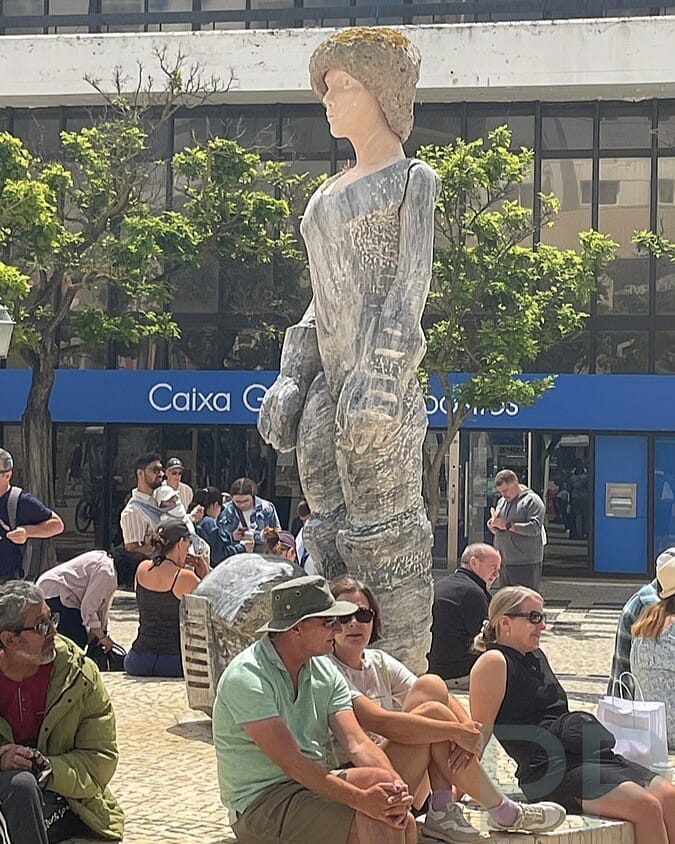
The unusual modern statue of King Dom Sebastião by Portuguese sculptor João Cutileiro hints at Lagos’s deeper historical significance during Portugal’s Age of Discovery.
Just a short walk away from the main square, the atmosphere changes considerably.
Near Praça Infante Dom Henrique — beside Igreja de Santo António and the statue of Prince Henry the Navigator — the atmosphere becomes quieter and more historic.
Though modest from the outside, Igreja de Santo António is known for its elaborate gilded Baroque interior, considered one of the finest in the Algarve.
The nearby Mercado de Escravos (the former slave market museum) was closed during our visit, but the surrounding square still made for a pleasant stop.
Overall, Lagos feels less like a city packed with major attractions and more like a scenic coastal hub — both a gateway for Algarve boat excursions and beach activities and a vacation destination in its own right, particularly for European travelers.
Benagil Cave Boat Excursions from Lagos
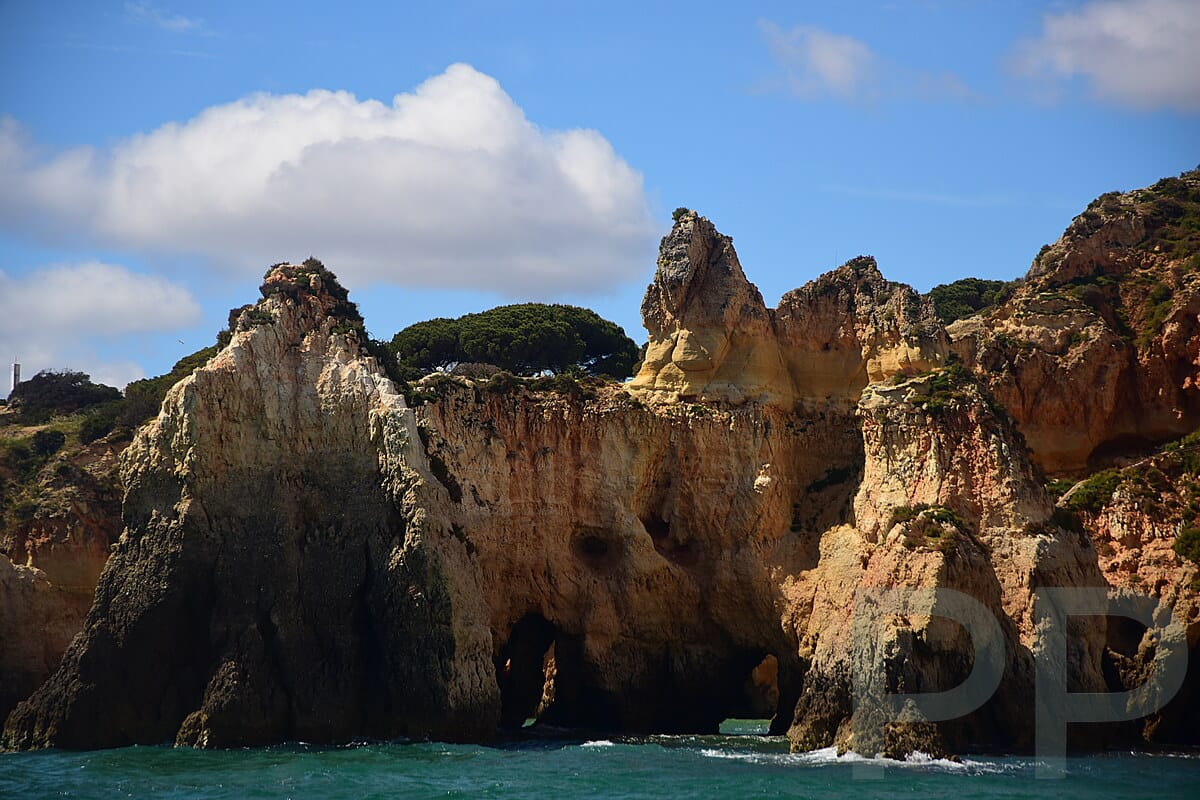
One of the highlights of visiting the Algarve is seeing the coastline from the water.
We hadn’t planned our Algarve time in much detail, assuming we’d be ready for a slower pace by this point in our Spain and Portugal itinerary. While driving toward Lagos, I started reading more carefully about the Algarve coastline and discovered the famous Benagil Cave — a sea cave with a circular opening in the ceiling that has become one of Portugal’s most recognizable natural landmarks.
It immediately became a priority stop.
For our Algarve boat excursion, we booked on Get Your Guide with Blue Fleet, which offers Benagil Cave and other Ponta da Piedade tours, including dolphin-watching trips, sunset cruises, kayaking excursions, and other coastal experiences departing from Lagos.
Tours vary from large boats to smaller speedboats and kayaking excursions, each offering slightly different access to caves and smaller inlets along the coast.
During shoulder season, it was easy to book online for a same day excursion with Blue Fleet.
The coastline itself is spectacular: arches, hidden coves, sea caves, and towering golden cliffs rising directly from turquoise water.
Benagil Cave is a massive sea cave carved into the Algarve cliffs, famous for its circular skylight opening that floods the cavern with natural light and illuminates the small beach inside.
Entering Benagil Cave feels almost surreal, as sunlight pours through the massive opening above and reflects off the golden stone walls and turquoise water inside the cavern.
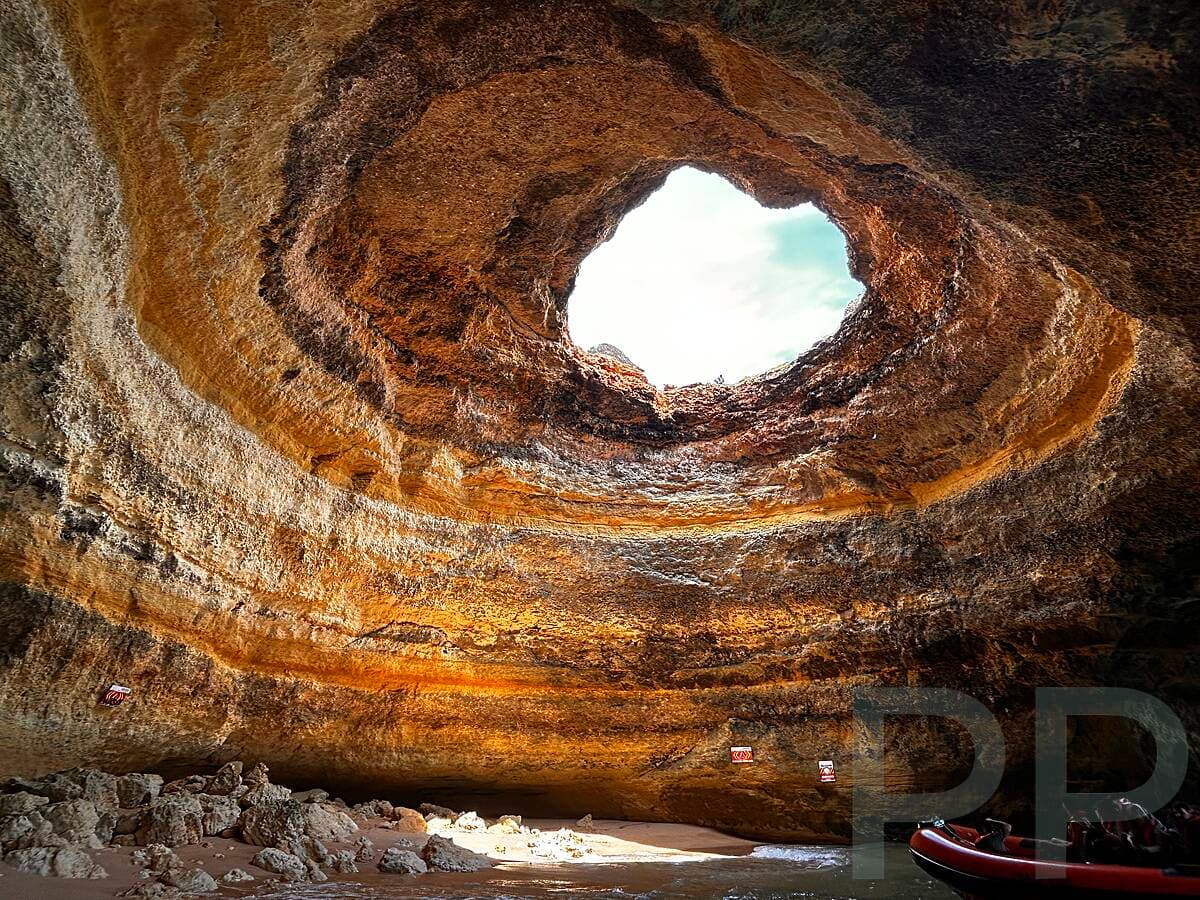
The number of tour boats allowed into the cave at any one time is regulated, which means it’s not overcrowded, but also that you don’t stay inside for more than a few minutes.
While we were in the cave, the weather suddenly changed.
A major downpour moved through, and we huddled under the wall of the cave to avoid being drenched. Our guide announced that we would have to head back in the heavy rain, but after a few minutes, the rain stopped.
Behind the storm were cooler temperatures and surprisingly calm conditions for the return ride.
Ponta da Piedade & Praia Dona Ana
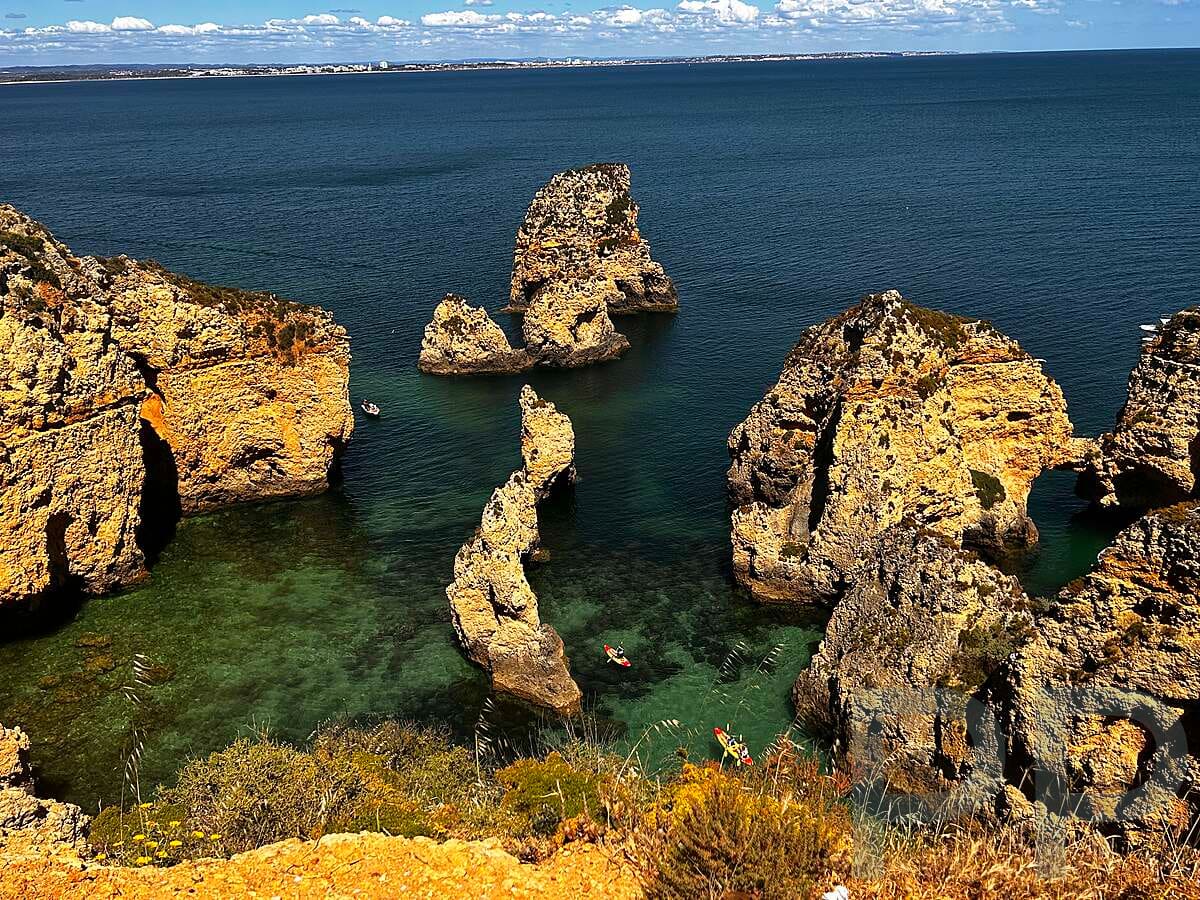
The coastline around Lagos is just as impressive from land as it is from the water. We spent most of our time exploring two of the Algarve’s most scenic coastal areas.
Ponta da Piedade Viewpoint offers some of the most dramatic scenery in the Algarve, with boardwalks and cliffside walking paths overlooking sea arches and rock formations.
Nearby Praia Dona Ana is equally scenic, with staircases descending between towering cliffs to beaches tucked into protected coves.
This stretch of coastline is ideal for wandering:
- Cliffside walking paths
- Hidden beaches
- Long staircases descending into coves
- Small tunnels carved through the cliffs
- Stunning turquoise water views
In several places, the cliffs glow deep gold in the late afternoon light against intensely blue water.
Parking near Praia Dona Ana and Ponta da Piedade required a little patience, but outside peak summer season it was manageable.
One of our favorite moments in the Algarve turned out to be one of the simplest: sitting on the beach for about an hour enjoying a picnic assembled from groceries picked up earlier that day. Look for hidden tunnels taking beachgoers to the next cove.
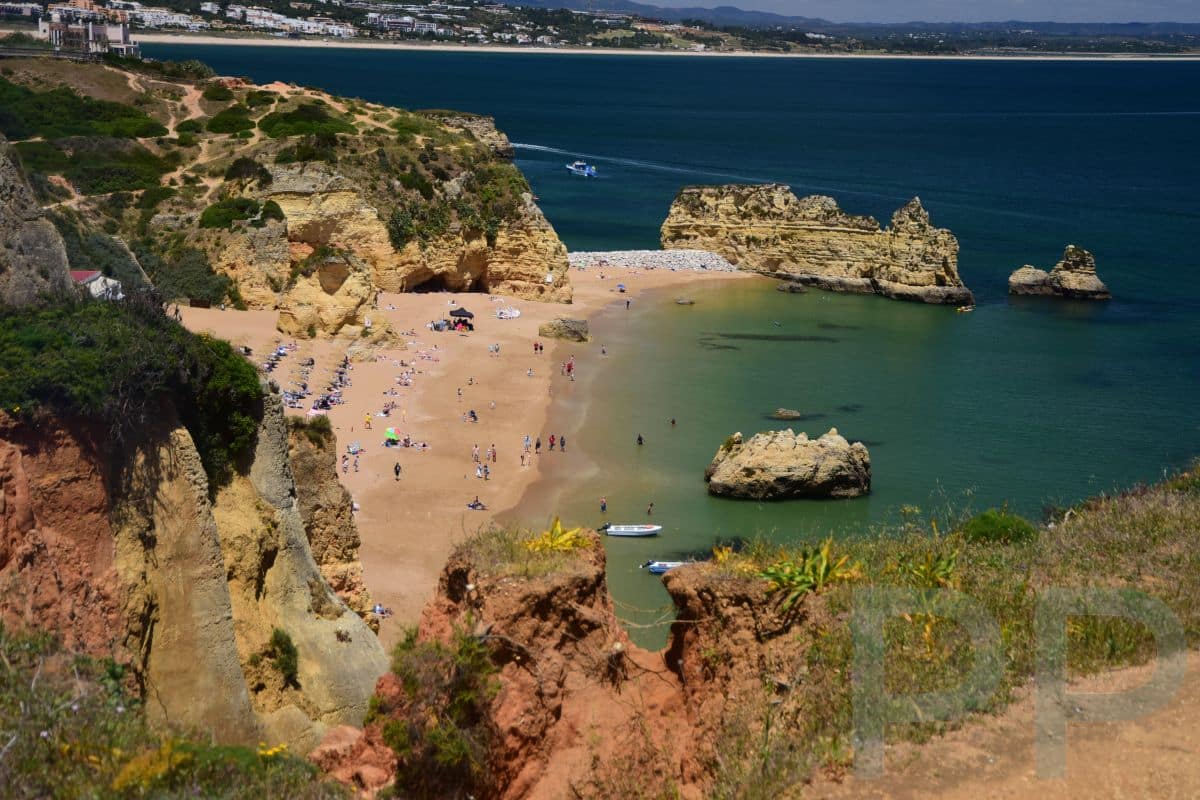
Note: Access to the beaches is via steep staircases — easier on the downward journey than on the return.
Staying in Salema, Portugal
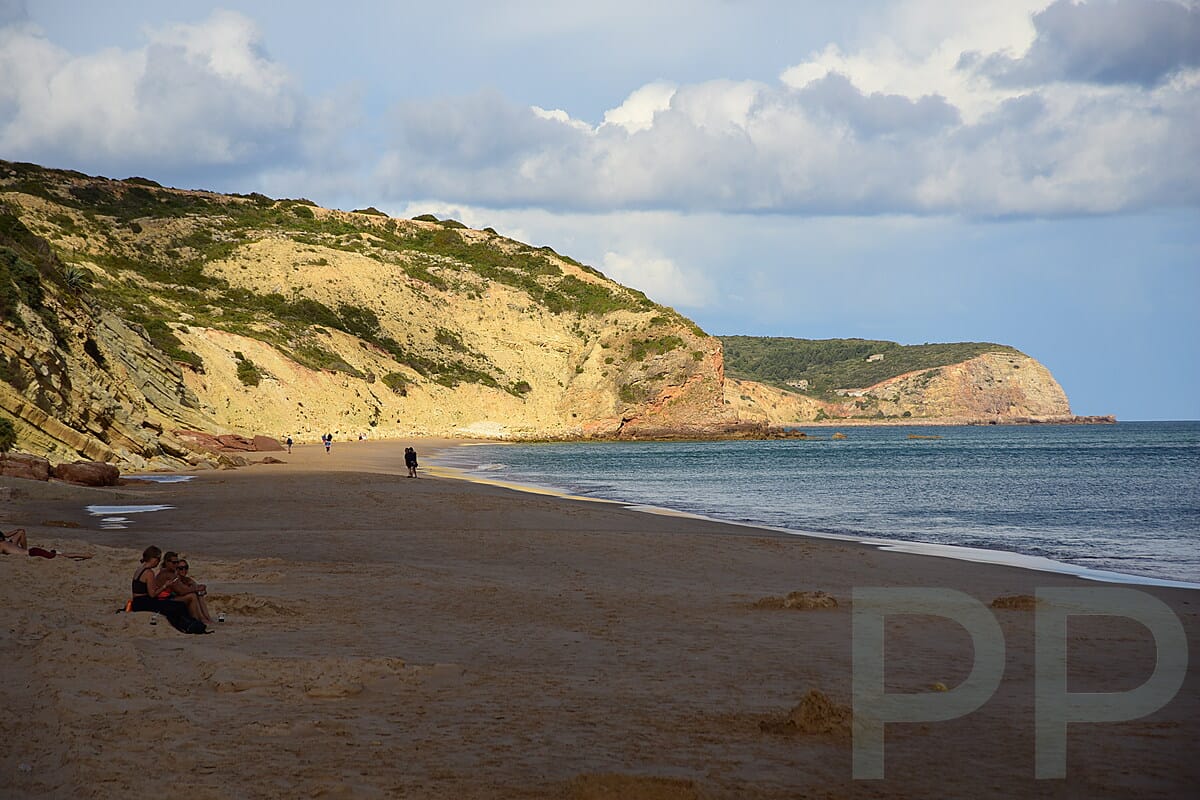
Salema was once primarily a fishing village, and despite growing tourism, traces of that identity still remain visible along the beach.
For a quieter Algarve experience, Salema makes an excellent base.
Salema still feels like a sleepy fishing village of seafood restaurants, beach accommodations, and colorful fishing boats pulled onto the sand, although significant newer development is beginning to spread across the hillsides above the water.
Beyond the beach and coastal walks, there isn’t a tremendous amount to “do” in Salema — which is precisely part of its appeal for travelers looking to slow down and relax along the Atlantic coast.
During our visit, however, the weather played a significant role in shaping the experience.
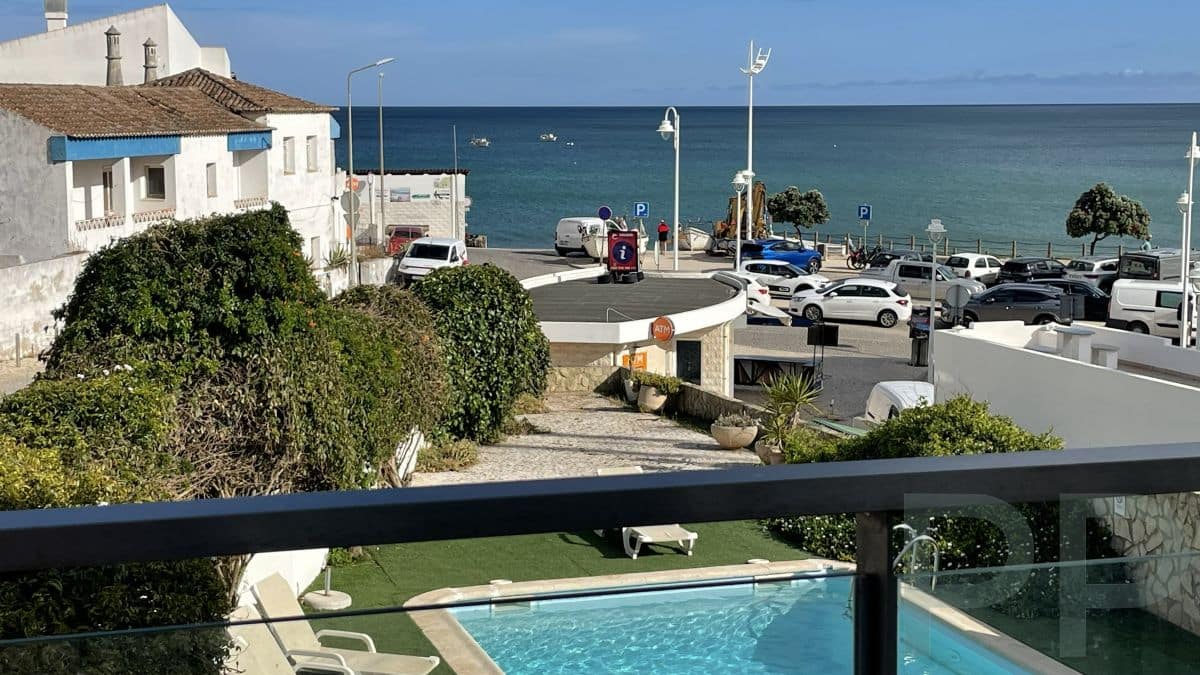
The main full day we spent in Salema was cool, cloudy, and extremely windy. Travelers expecting guaranteed calm beach weather should know that the western Algarve is far more exposed to Atlantic weather than the calmer resort towns farther east.
Even so, Salema remained memorable for its atmosphere alone. From our accommodation, we had peaceful views of fishing boats in the water, evoking a quieter era.
Long beach walks, dramatic surf, quiet streets, and seafood restaurants overlooking the water created the feeling of stepping briefly into a slower, older version of the Algarve.
We stayed at Casa Praia Mar in a balcony room overlooking the coast. Considering the location, price, and amenities (including a pool and in-room kitchenette), it was an excellent value.
For those wishing to explore other accommodations in Portugal’s Algarve:
Seafood Restaurants in Salema
Dining on fresh seafood ended up being one of the highlights of our time in Salema. And of course, Portugal’s wines are another highlight of dining in the Algarve, with excellent local reds, crisp vinho verde, and surprisingly affordable bottles appearing on nearly every menu.
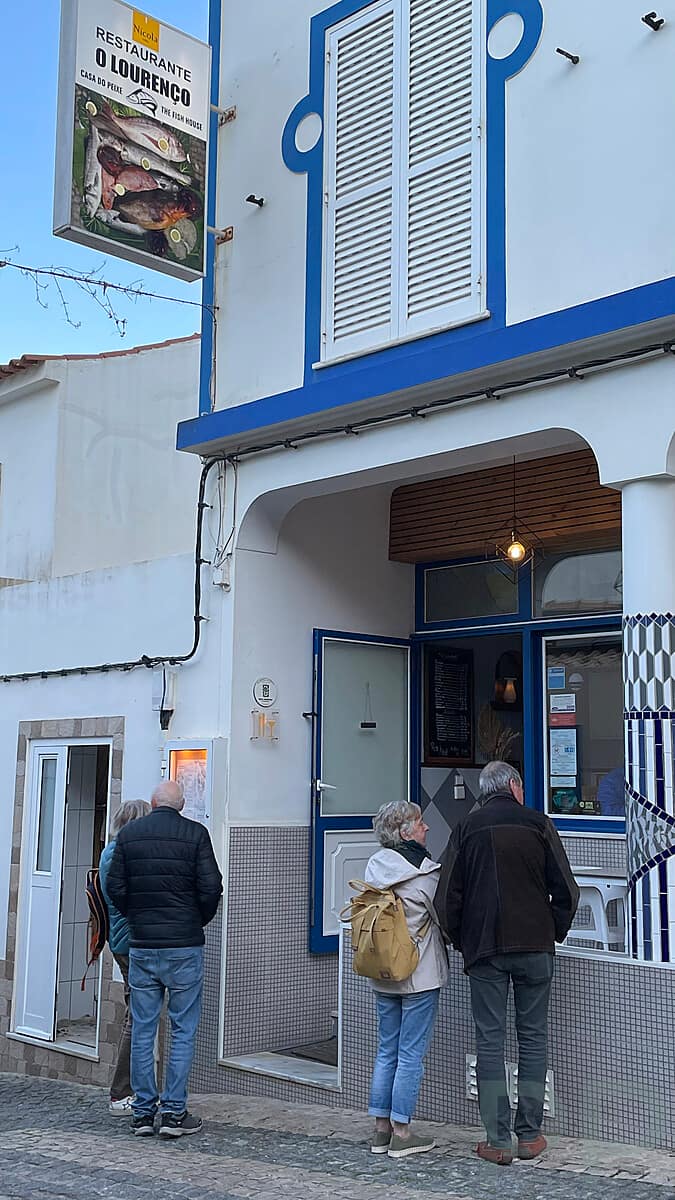
O Lourenço
While wandering around Salema, we stumbled on this restaurant and popped in to make a reservation. When we returned, there was a long wait, making us happy to have saved the wait time.
This was our favorite meal in the Algarve. The short menu is excellent — and the food is exceptionally fresh.
We ate in O Lourenço’s garden seating area across a narrow alley from the kitchen and main dining room. It was intimate and relaxed, with excellent service. But inside the main restaurant, there was a lively, convivial scene — so choose your vibe.
Reservations are strongly recommended, even outside peak summer season.
Olhos n’Água
This restaurant has an unbeatable location, directly on the water.
Terrace seating overlooks the ocean, making it an especially scenic dinner spot near sunset.
Olhos n’Água prides itself on its wine list, so have your server make recommendations.
Fresh fish is presented tableside on a tray so guests can select directly from the day’s catch. Save room for dessert!
Sagres & the Western Edge of Europe
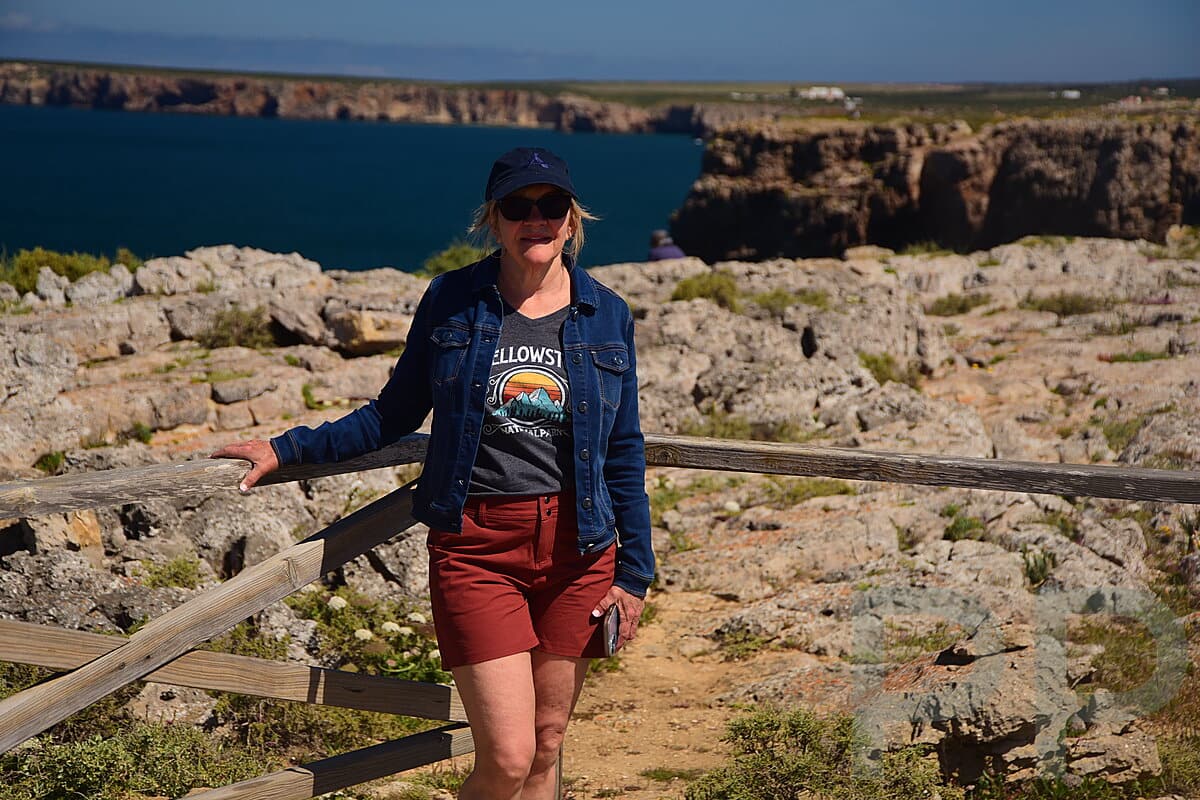
No visit to the western Algarve feels complete without continuing west toward Sagres.
The landscape becomes noticeably more rugged here.
The cliffs feel larger, the wind stronger, and the Atlantic more powerful.
For centuries, this remote corner of Portugal was viewed as the edge of the known world before the great Portuguese voyages of exploration pushed farther into the Atlantic.
Fortaleza de Sagres is worth visiting primarily for the setting rather than the fort itself. Walking along the windswept cliffs overlooking the ocean genuinely feels like standing at the edge of Europe.
Nearby Cabo de São Vicente — often described as the southwestern-most point of mainland Europe — adds even more dramatic scenery.
And because longer trips inevitably include practical realities too, this portion of the itinerary also became laundry day for us, with a stop at a convenience store laundromat in nearby Budens before returning to Salema.
Getting Around the Western Algarve
For travelers wanting to explore the western Algarve beyond a single resort town, a rental car is almost a necessity.
While trains and buses connect some of southern Portugal’s larger towns, many of the area’s highlights — cliffside viewpoints, hidden beaches, smaller fishing villages, and scenic coastal drives — are much easier to access by car.
In fact, wanting to visit the Algarve was one of the deciding factors in choosing to travel through Spain and Portugal by rental car rather than relying entirely on trains or flights between cities.
Having a car made it possible to:
- Detour spontaneously to places like Benagil Cave
- Explore scenic coastal areas around Lagos
- Stay in quieter villages like Salema
- Visit windswept destinations like Sagres at a relaxed pace
Driving in this portion of Portugal was generally straightforward, particularly outside larger cities. Parking occasionally required patience near popular beaches and viewpoints, but overall the flexibility of having a car significantly improved the experience.
Explore rental car options:
Where to Stay in the Western Algarve
For travelers wanting a livelier atmosphere with more restaurants, boat tours, and nightlife, Lagos makes an excellent base. For a quieter and more relaxed experience, we especially enjoyed staying in Salema, a small fishing village with a slower pace and beautiful beach setting.
Sagres is another good option for travelers drawn to dramatic coastal scenery, surfing, and a more rugged Atlantic atmosphere.
You can compare hotels, apartments, and guesthouses across the western Algarve here.
Final Thoughts on the Western Algarve
For travelers looking beyond large resorts and crowded beach towns, the western Algarve offers a compelling mix of:
- Dramatic coastal scenery
- Walkable cliffside paths
- Hidden beaches
- Excellent seafood
- Quiet fishing villages
- Manageable crowds outside Lagos
What stood out most to us was the atmosphere.
The western Algarve felt less focused on checking off attractions and more focused on slowing down — watching storms roll through sea caves, lingering over seafood dinners, walking beaches in strong Atlantic winds, and spending unhurried time beside some of the most beautiful coastline in Portugal.
FAQ About the Western Algarve
Is the western Algarve worth visiting?
We recommend spending at least 3–5 days in the western Algarve to fully enjoy the beaches, coastal walks, boat excursions, and slower pace of the region. However, highlights can be enjoyed in 2 days.
How many days do you need in the western Algarve?
We recommend spending at least 3–5 days in the western Algarve to fully enjoy the beaches, coastal walks, boat excursions, and slower pace of the region. However, highlights can be enjoyed in 2 days.
Is Lagos or Salema a better place to stay?
Lagos is better for travelers wanting more restaurants, nightlife, boat tours, and activity options. Salema is ideal for a quieter and more relaxed atmosphere with a small fishing village feel.
Do you need a car in the western Algarve?
Yes — we strongly recommend renting a car if you want to explore beyond a single resort town. Many beaches, viewpoints, and smaller villages are much easier to access by car.
Are Benagil Cave tours worth it?
Absolutely. Seeing the Algarve coastline from the water was one of the highlights of our trip. The cliffs, arches, caves, and turquoise water are spectacular, and entering Benagil Cave itself feels almost surreal.
When is the best time to visit the western Algarve?
Late spring and early fall (especially May, June, September, and October) offer warm weather, manageable crowds, and ideal conditions for sightseeing and coastal walks.