On our way from Lisbon to Madrid, we found ourselves searching for an interesting place to break up the long drive. With a little research and a lot of curiosity, we landed on Cáceres—a medieval, walled city in the Extremadura region of western Spain that we hadn’t even heard of before. What we discovered is a true hidden gem, full of quiet charm, incredible history, and plenty of photogenic moments.
We arrived early in the day, parked in a convenient garage just outside the old city walls, and walked a short distance to the historic center. Stepping through the Arco de la Estrella, the city’s famous gate, felt like entering a time capsule.
The Allure of Old Cáceres
Cáceres is recognized as a UNESCO World Heritage Site, and it’s easy to see why. The old town is a beautifully preserved mix of Roman, Moorish, Gothic, and Renaissance architecture. The city’s history dates back to ancient Roman times, and you can still see layers of its past etched into the stonework.
Wandering the narrow cobblestone streets, we were struck by the peacefulness. Aside from a few other early visitors, the town was nearly silent—no loud tours or major crowds. It’s a place to slow down, explore at your own pace, and let the surroundings do the talking.
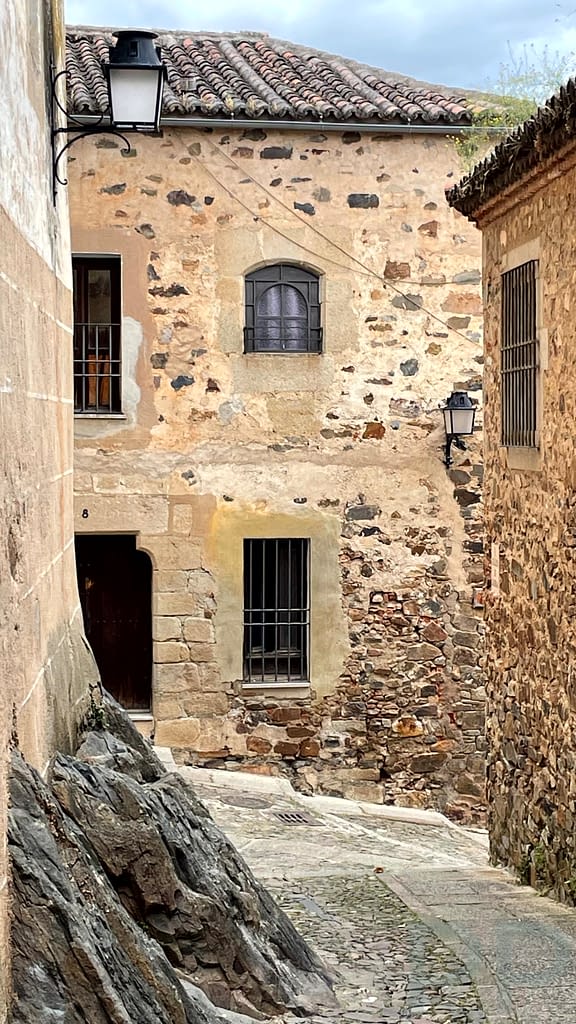
Much of the action is centered around the Plaza Mayor, but the real magic happens once you step up into the old town. You’ll find impressive landmarks like the Concatedral de Santa María, Torre de Bujaco, Palacio de los Golfines de Abajo, the Iglesia de San Francisco Javier, the Jewish Quarter, and more, all within a compact walkable area.
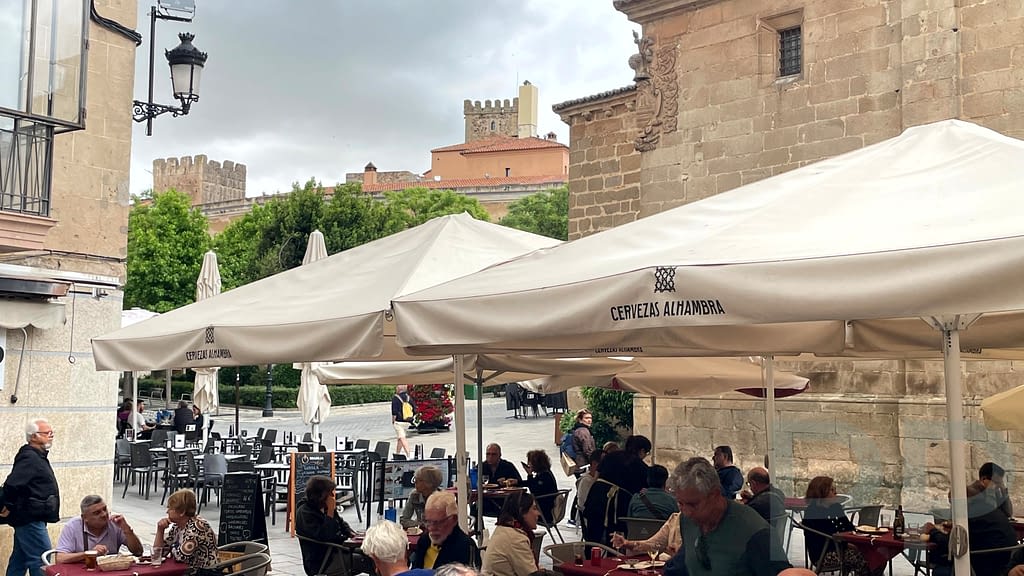
While the historic core is compact and very walkable, the modern city of Cáceres outside the medieval walls has about 95,000 residents. Hence, you’ll find modern amenities such as banks, drug and grocery stores, laundromats, or any other service you may need.
Note: Try to visit Tuesday – Saturday as many attractions are closed on other days.
Half-Day Cáceres Itinerary
If you’re short on time, here’s a suggested route to get the most out of your visit:
💡Tip: If it’s open, step into the Tourist Information office on Plaza Mayor before beginning to explore. The office has limited hours, but staff were friendly and helpful when we visited.)
1. Arco de la Estrella
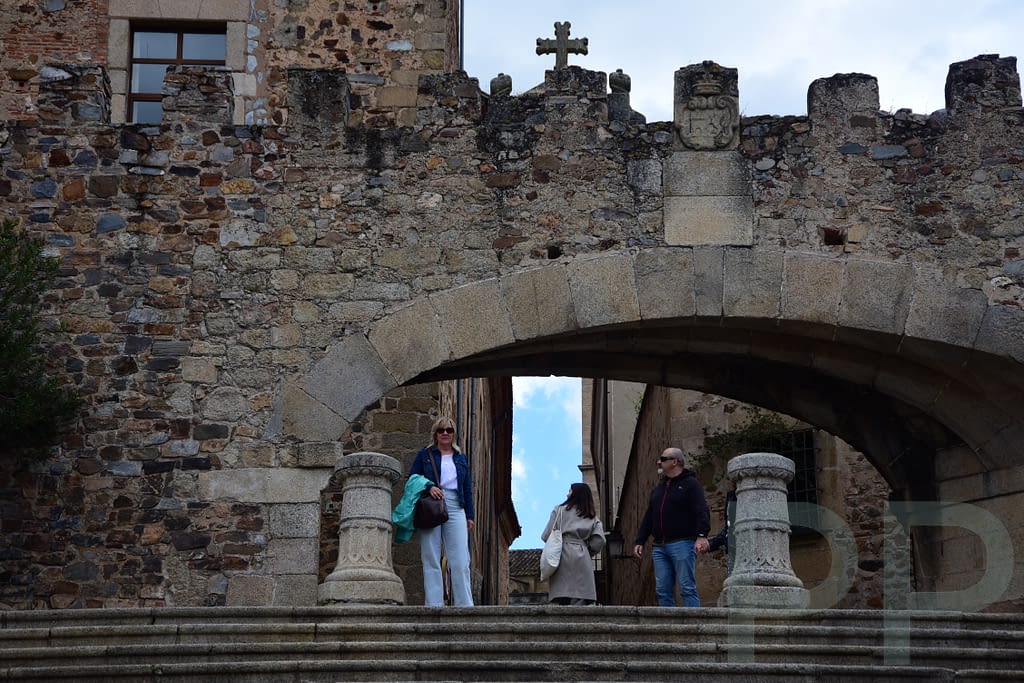
Start your journey here and step into the walled city. The Arco de la Estrella is the iconic 18th-century gateway into Cáceres’ Old Town, framing a dramatic entrance through ancient stone walls into the heart of the historic city’s medieval charm.
2. Plaza de Santa María & Concatedral de Santa María
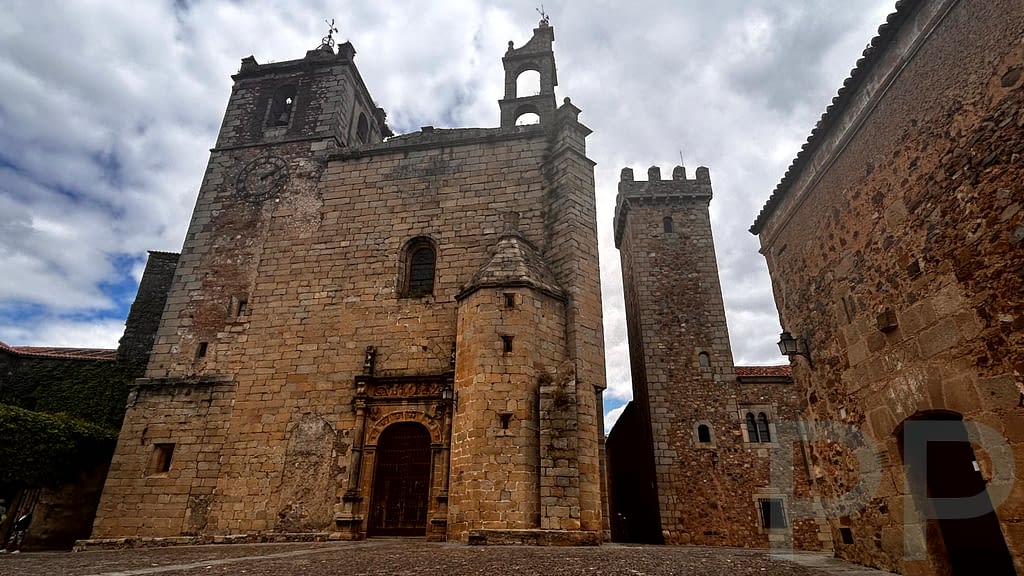
- Hours: 10:00 AM–2:00 PM, 4:00 PM–7:00 PM (Mon–Sat)
- Ticket: ~€5
- Climb the bell tower for panoramic views of the town.
- Don’t miss the famous Black Christ of Cáceres, a revered 14th-century wooden figure that has become an important symbol in local Holy Week processions.
- The audioguide provides more information about artifacts and items of interest in the cathedral.
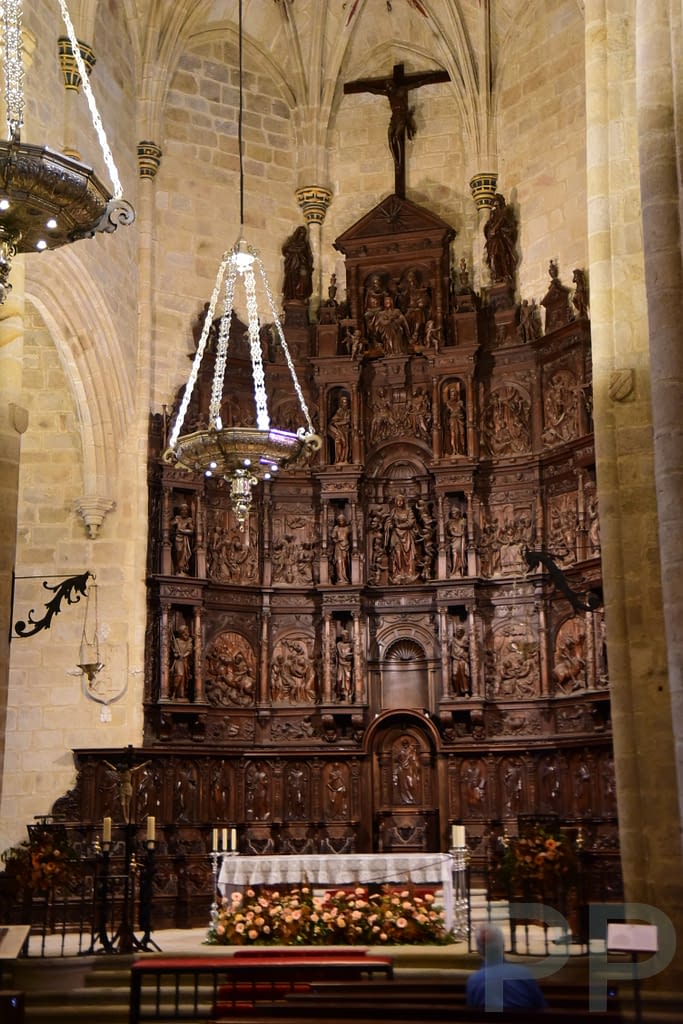
3. Torre de Bujaco
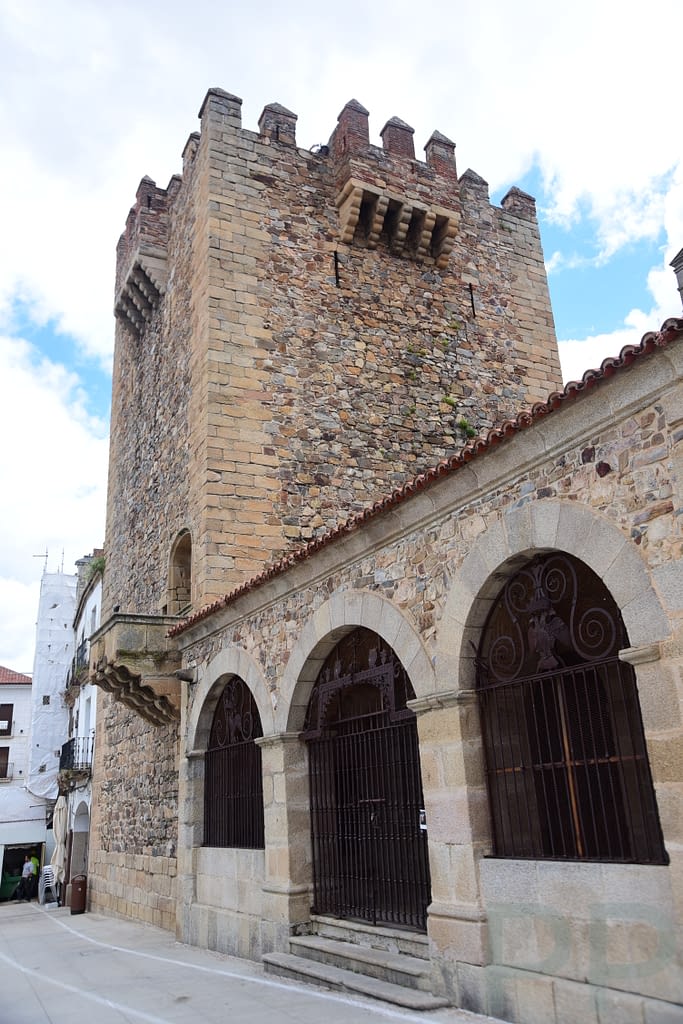
- Hours: 10:00 AM–2:00 PM, 5:30 PM–8:30 PM (Tues–Sat)
- Ticket: ~€2.50
- An iconic medieval tower offering panoramic views of the city and access to the rooftop walkway connecting other towers along the ancient walls. Walking the walls provides incredible views of the old city! Sadly, we visited on a Monday and missed this!
4. Iglesia de San Francisco Javier & Plaza de San Jorge
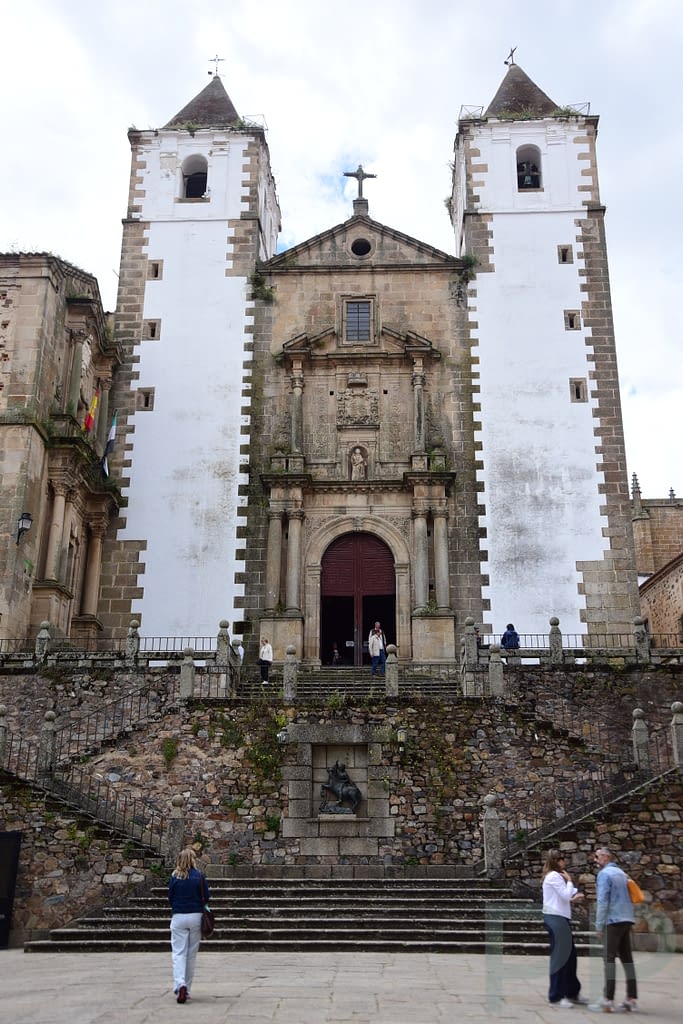
- Free entry (donations welcome)
- A striking white Baroque church with twin towers, located on the scenic Plaza de San Jorge. Also nearby are the Casa de los Becerra and the former Jesuit school—making this plaza a compact architectural gem.
5. Palacio de los Golfines de Abajo
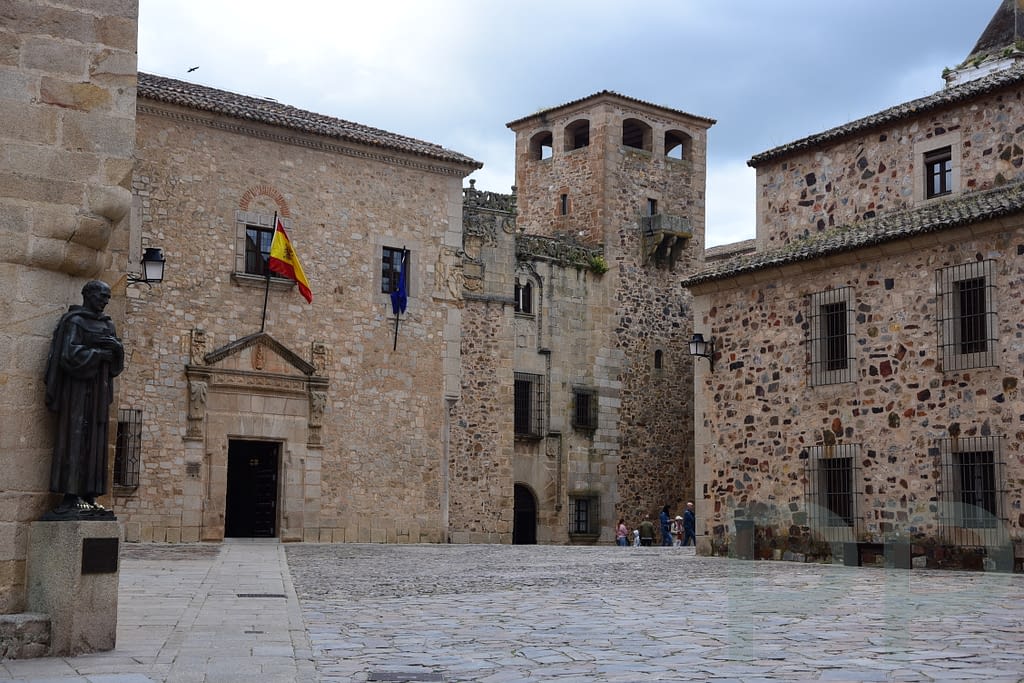
- Hours: Guided visits only, usually starting every hour (check website)
- Ticket: ~€3
- One of the best-preserved noble residences.
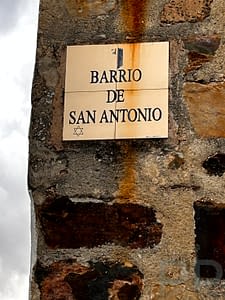
6. Jewish Quarter & Arco del Cristo
Stroll through this peaceful part of town and soak in the ambiance. Once home to a thriving Sephardic community, the Jewish Quarter of Cáceres remains one of the best-preserved in Spain.
7. Museo de Cáceres
- Hours: 9:00 AM–3:00 PM (Tues–Sat)
- Ticket: Free for EU citizens; ~€1.20 for others
- Highlights include Roman-era sculptures, Islamic artifacts, and an impressive collection of traditional Extremaduran folk art—plus the well-preserved Moorish cistern hidden beneath the building. The museum was closed when we visited on a Monday.
8. Lunch
Wrap up with a return to Plaza Mayor for a bite to eat or a coffee before continuing on your way.
Getting to Cáceres
Cáceres is geographically practically in the center between Madrid, Sevilla and Lisbon. With a rental car, it’s a doable overnight destination from any of these cities, but most likely visited along your drives between them. Multiple mid-speed daily trains service Cáceres from Madrid, taking about 3.5 hours to make the one-way trip.
Where to Eat in Cáceres
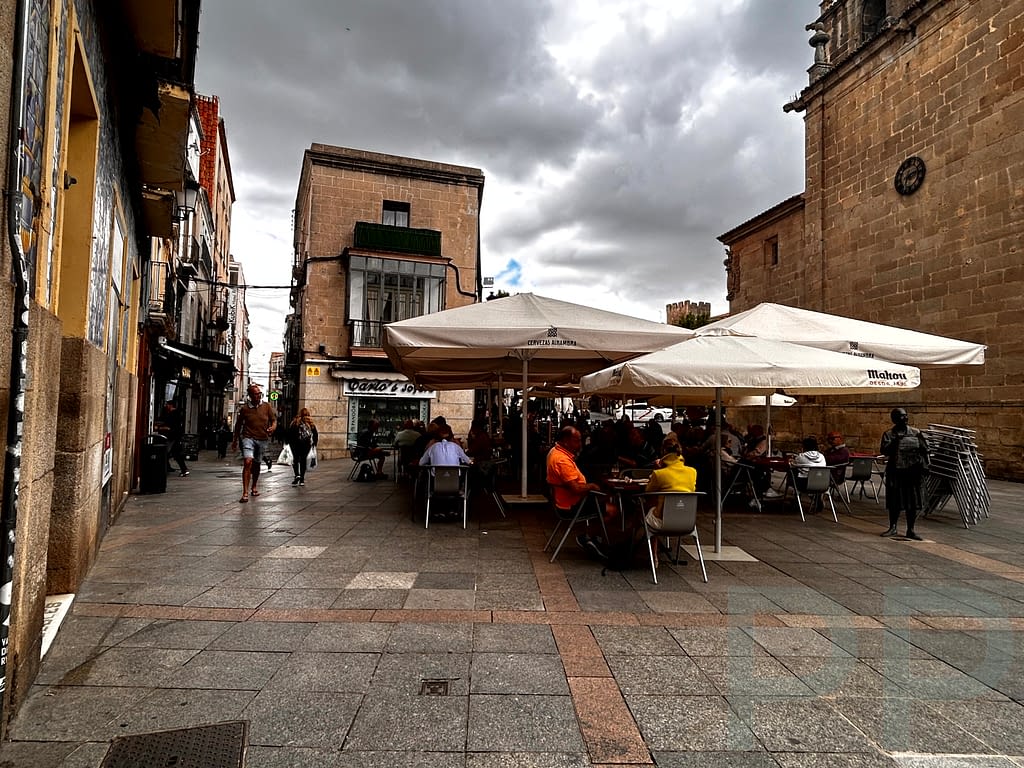
For lunch or a relaxed snack, we recommend trying:
- Tapería Yuste – Classic tapas with a local twist, right off the plaza.
- La Cacharrería – Popular for brunch and light bites, with charming decor.
- El Figón de Eustaquio – Traditional Extremaduran cuisine with hearty flavors.
All three offer good value and a casual vibe—perfect for a midday break.
Casual tapas and regional specialties make lunch in Cáceres a delight.
Staying the Night? It’s Worth It
While Cáceres works well as a half-day stop, we recommend considering an overnight stay if you can. The town has a completely different atmosphere in the evening—quiet, glowing with soft light, and incredibly romantic. Cáceres is refreshingly affordable, especially compared to Spain’s major cities.
Some affordable, well-rated accommodation options include:
- KubiK Hotel – Clean, modern, and centrally located.
- Hostal Alameda Plaza Mayor – Great views and budget prices.
- AHC Hoteles – A short walk from the old town with private parking.
You’ll find lots of budget listings on Booking.com as well.
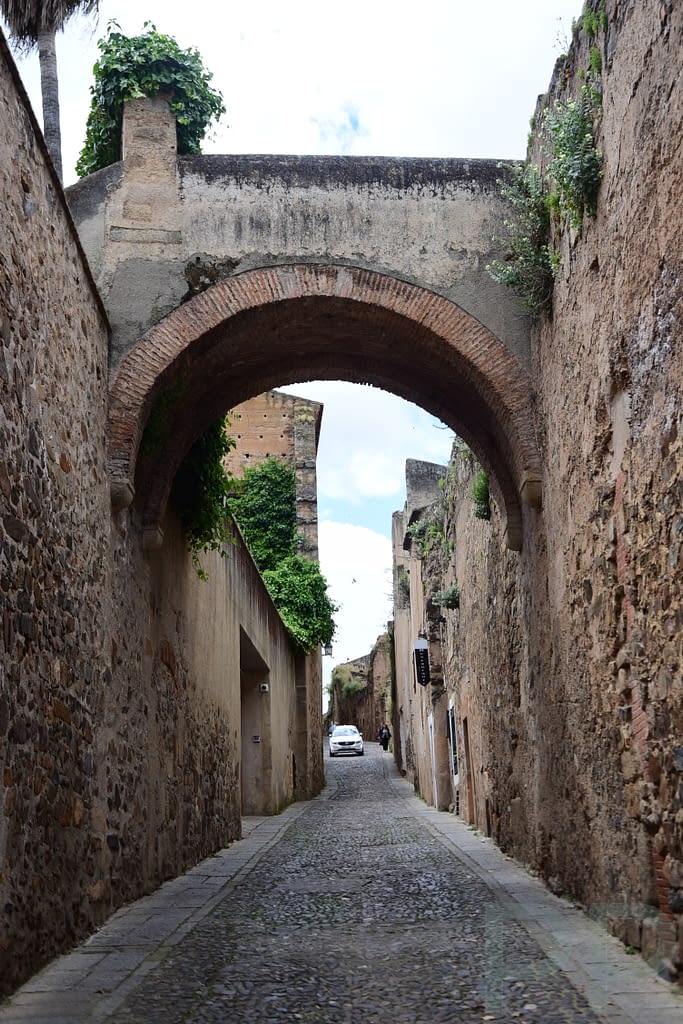
Why Cáceres Belongs in Your Spain Itinerary
Cáceres may not make it onto every tourist’s radar, but that’s exactly what makes it special. It’s uncrowded, atmospheric, and packed with character—ideal for travelers looking for something off the beaten path. Most visitors we saw were Spanish or European; it felt like a true local favorite, not a tourist trap.
Whether you stop in for a few hours or stay the night, Cáceres is a place you won’t soon forget. Add it to your Spain itinerary—you’ll be glad you did!
Related Guides
Epic 3-Week Spain and Portugal Itinerary (with Maps & Tips)
Madrid: A 2-Day Itinerary For Spain’s Regal and Grand Capital
Hiking the Caminito del Rey: Spain’s Most Thrilling Gorge Walk